




Finding effective and affordable marketing ideas for small businesses often feels like navigating a maze. With limited budgets and even more limited time, every marketing pound and every hour spent must deliver a tangible return. The challenge isn’t a lack of options; it’s the overwhelming volume of them, each demanding attention and investment. This is where a clear, strategic roadmap becomes not just helpful, but essential for survival and growth.
This guide is designed to be that roadmap. We’ve cut through the noise to bring you 10 practical, proven marketing strategies tailored specifically for UK small and medium-sized enterprises (SMEs). There’s no abstract theory or generic advice here. Instead, you will find a comprehensive collection of actionable tactics spanning the full marketing spectrum, from powerful digital channels like PPC and local SEO to relationship-driven approaches like partnerships and customer loyalty programmes. Each idea is broken down into clear, manageable steps you can implement immediately.
Whether you’re an ecommerce retailer aiming to dominate Google Shopping, a marketing manager juggling complex campaigns, or a busy entrepreneur ready to scale, these insights will help you make smarter decisions. Our goal is to equip you with the knowledge to build a robust marketing engine that generates consistent leads, boosts brand awareness, and fosters a loyal customer base. Consider this your definitive playbook for achieving sustainable growth and making your mark in the year ahead. We’ll explore everything from content and email marketing to community engagement and referral schemes, ensuring you have a diverse toolkit to drive your business forward.
1. Marketing Ideas for Small Businesses in 2026: Social Media Marketing
Social media marketing is a powerful tool for leveraging platforms like Instagram, TikTok, Facebook, and LinkedIn to build brand awareness, engage with customers, and drive sales. For small businesses, it offers a cost-effective way to reach a vast audience, cultivate a loyal community, and communicate a brand’s personality directly to consumers. It moves beyond simple promotion, focusing on creating valuable content that fosters connection and trust.

This method is one of the most essential marketing ideas for small businesses because it provides direct access to potential customers where they spend their time. Brands like Dollar Shave Club achieved viral success with witty videos, while beauty brand Glossier built its entire empire through an Instagram-first strategy, relying heavily on user-generated content (UGC) to create an authentic, community-driven image.
How to Implement a Social Media Strategy
To get started, focus on the platforms where your target audience is most active rather than trying to be everywhere at once. A local café might thrive on Instagram’s visual appeal, whereas a B2B consultancy will find more value on LinkedIn.
Actionable Tips:
- Post Consistently: Aim for 3-5 high-quality posts per week to stay top-of-mind with your audience.
- Embrace Platform-Specific Formats: Use Instagram Reels, TikTok videos, and LinkedIn articles. Content should be tailored to each platform’s unique style and algorithm.
- Engage Authentically: Respond to comments and direct messages promptly. Ask questions in your captions to encourage conversation and make your followers feel heard.
- Leverage User-Generated Content: Encourage customers to share photos with your products and re-post them (with permission). This acts as powerful social proof.
- Analyse Your Performance: Use built-in analytics to track which content types perform best. This data is crucial for refining your strategy over time.
While organic content is vital for community building, paid advertising can significantly accelerate growth. Exploring targeted campaigns is an excellent next step. You can find out more about leveraging paid strategies in our guide to social media advertising for small businesses.
2. Email Marketing
Email marketing involves building and nurturing a subscriber list to send targeted messages, promotions, and valuable content directly to customers’ inboxes. For small businesses, it remains one of the highest-return marketing channels available, offering a direct line of communication you own, free from the volatility of social media algorithms. This method is about more than just sending offers; it’s about building lasting relationships and guiding customers through their buying journey with personalised, relevant content.
This tactic is one of the most powerful marketing ideas for small businesses because of its remarkable ROI, with studies showing an average return of £35 for every £1 spent. Grammarly excels with educational email sequences that provide genuine value, while Amazon’s highly personalised product recommendations keep customers returning. These examples show how email can be used to educate, convert, and retain an audience effectively.
How to Implement an Email Marketing Strategy (Marketing Ideas for Small Businesses in 2026)
The first step is to build your email list organically. Avoid purchasing lists, as this can harm your sender reputation and deliverability. Instead, focus on providing a clear value exchange, such as a discount, a free guide, or exclusive content in return for an email address.
Actionable Tips:
- Offer a Compelling Opt-in: Use pop-ups or embedded forms on your website offering a 10% discount on the first purchase or a free downloadable resource to incentivise sign-ups.
- Segment Your Audience: Group subscribers based on their purchase history, browsing behaviour, or demographics. This allows you to send far more relevant and effective campaigns.
- Personalise Your Communication: Use the subscriber’s name in the subject line or email body to instantly make the message feel more personal and increase open rates.
- Create a Clear Call-to-Action (CTA): Every email should have a single, clear goal. Use bold, clickable buttons like “Shop Now” or “Read More” to guide users to the next step.
- Optimise for Mobile: The majority of emails are opened on mobile devices. Ensure your design is responsive, with a single-column layout, large fonts, and easily tappable buttons.
- Maintain a Consistent Schedule: Whether it’s weekly or fortnightly, a consistent sending schedule keeps your brand top-of-mind without overwhelming your subscribers.
While building a list and sending campaigns are key, automation is where email marketing truly scales. Setting up welcome sequences for new subscribers or abandoned cart reminders can drive revenue automatically. You can learn more about optimising these campaigns in our guide to e-commerce marketing strategies.
3. Marketing Ideas for Small Businesses in 2026: Content Marketing
Content marketing is the strategic practice of creating and distributing valuable, relevant, and consistent content to attract and retain a clearly defined audience. Rather than pitching your products or services, you are providing genuinely useful information that helps your ideal customers solve their problems. This approach establishes your business as a trustworthy authority in its field, building brand loyalty and driving organic traffic over time.
This is one of the most powerful marketing ideas for small businesses because it builds a long-term asset that appreciates in value. For instance, HubSpot became a software giant by offering free, comprehensive marketing guides and blogs, while Moz built its reputation on world-class SEO resources long before it promoted its tools. These companies attracted loyal followings by giving away value first, which created immense trust.
How to Implement a Content Marketing Strategy
Begin by identifying the biggest pain points and questions your target audience has. Your content’s primary goal should be to answer these questions better than anyone else. A local accountancy firm, for example, could create blog posts about “Navigating Self-Assessment for Freelancers” rather than just advertising its services.
Actionable Tips:
- Focus on Solving Problems: Every piece of content, whether a blog, video, or guide, should provide a clear solution or valuable insight for your reader.
- Publish Consistently: Aim to publish at least one new, high-quality piece of content per week to build momentum with both your audience and search engines.
- Research Keywords: Use tools like Google Keyword Planner or Ahrefs to find the terms your audience is searching for and build your content around them.
- Promote Your Content: Don’t just publish and forget. Share every new piece of content across your social media channels, in your email newsletter, and on relevant forums.
- Update Older Content: Keep your best-performing articles fresh and relevant by updating statistics, adding new information, and checking for broken links.
Content marketing is a marathon, not a sprint, but its cumulative impact can transform your business. You can learn more about how to apply these principles in our guide to content marketing for ecommerce.
4. Local SEO and Google My Business
Local SEO is the practice of optimising your online presence to attract more business from relevant local searches. This strategy focuses on ranking for location-specific keywords, making it crucial for businesses with physical premises or those serving specific geographic areas. At its core is a complete and verified Google Business Profile (formerly Google My Business), which acts as a digital storefront on Google Search and Maps.
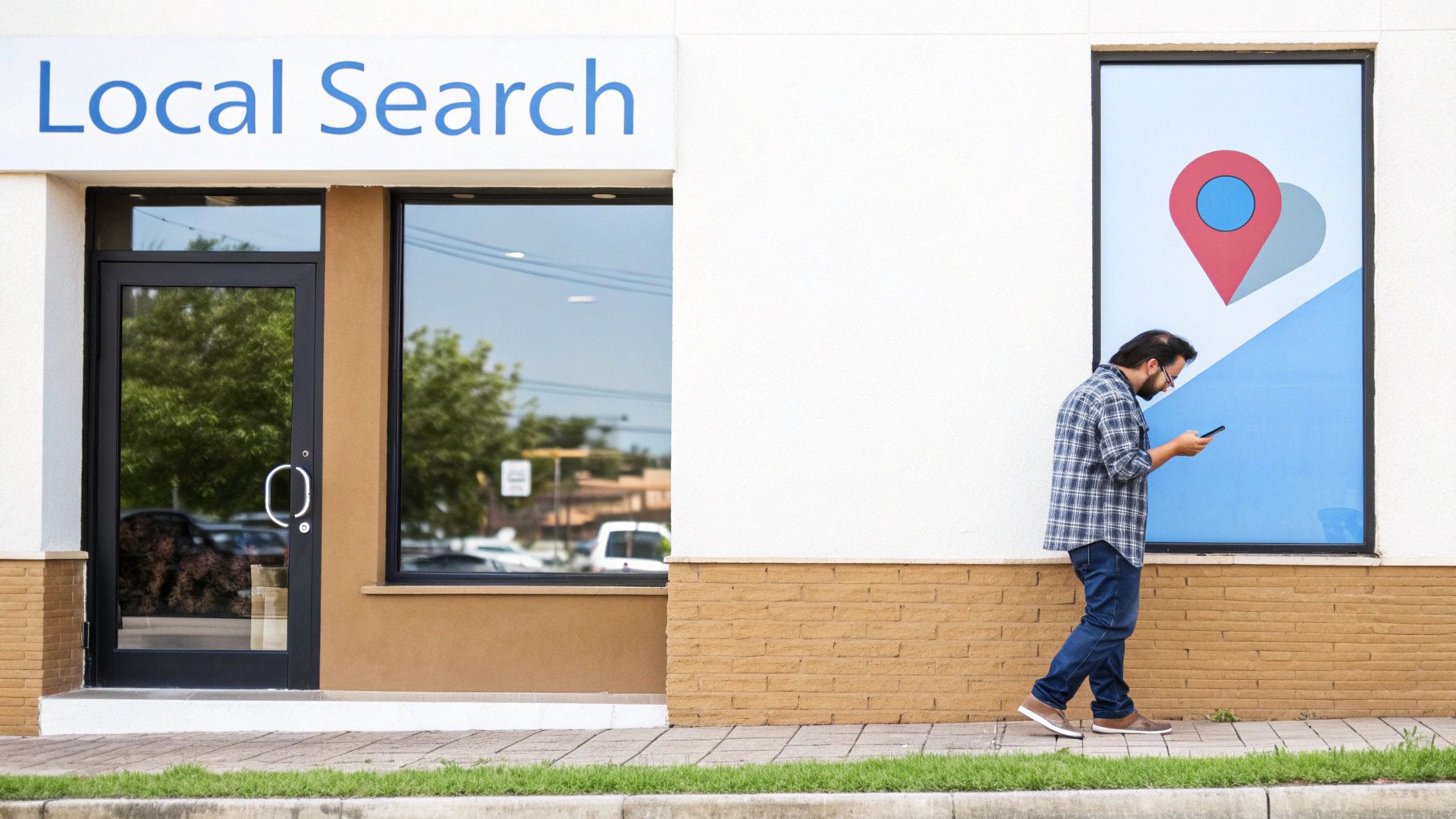
This method is one of the most powerful marketing ideas for small businesses because it connects you directly with customers actively seeking your services now. For example, a local plumber who ranks for “emergency plumber near me” captures high-intent leads, while a café that appears in the Google Maps “local pack” for “best coffee in Manchester” can expect immediate footfall. With 76% of consumers who conduct a local search on their phone visiting a business within 24 hours, the impact is direct and measurable.
How to Implement a Local SEO Strategy (Marketing Ideas for Small Businesses in 2026)
Getting started with local SEO means treating your Google Business Profile as your most important local asset. From there, you build authority through consistent information across the web and by actively managing your online reputation.
Actionable Tips:
- Claim and Fully Optimise Your Google Business Profile: Fill out every section, including services, products, opening hours, photos, and attributes. An incomplete profile is a missed opportunity.
- Maintain Consistent NAP Information: Ensure your Name, Address, and Phone number are identical across all online directories like Yelp, Yell, and Thomson Local.
- Actively Encourage Customer Reviews: Ask satisfied customers to leave a review on Google. Positive reviews significantly boost local rankings and build trust.
- Respond to All Reviews: Engage with both positive and negative feedback professionally. This shows potential customers that you value their opinion and are committed to good service.
- Create Location-Specific Website Content: Develop landing pages for each town or area you serve, using local keywords like “accountants in Leeds” throughout your website content.
A strong local SEO foundation ensures your business is visible when it matters most: at the precise moment a local customer needs what you offer. You can explore more advanced techniques in our guide to local business online marketing.
5. Marketing Ideas for Small Businesses in 2026: Referral and Word-of-Mouth Marketing
Referral and word-of-mouth marketing is the process of encouraging satisfied customers to recommend your business to their network. It transforms your happiest clients into a powerful, voluntary sales force, generating trust and credibility in a way traditional advertising cannot. This method harnesses the power of personal recommendations, which remain one of the most influential factors in consumer purchasing decisions.
This strategy is one of the most cost-effective marketing ideas for small businesses because it leverages your existing customer base for growth. Dropbox famously achieved a 60% increase in sign-ups by offering extra storage space to both the referrer and the new user. Similarly, Uber and Airbnb built their initial user bases by providing credits and discounts for successful referrals, creating a viral loop of acquisition.
How to Implement a Referral Strategy
Start by identifying your most loyal customers and creating a simple, seamless process for them to share your brand. The key is to make referring as effortless as possible while providing a compelling incentive for both parties involved. A well-structured programme feels like a thank you, not a transaction.
Actionable Tips:
- Make it Simple: The referral process should be frictionless. Use unique, shareable links or simple online forms that customers can complete in seconds.
- Offer Two-Sided Incentives: Reward both the existing customer and the new one. This could be a discount, a free product, store credit, or exclusive access.
- Promote Your Programme: Integrate referral information into your customer communications, such as in order confirmation emails, newsletters, and on your website.
- Recognise Top Advocates: Create a system to acknowledge and reward your most active referrers, making them feel valued and encouraging continued support.
- Follow Up Personally: When a new customer signs up via referral, a personal welcome can make a significant impact and starts their journey on a positive note.
A strong referral programme not only drives new business but also increases the loyalty of your current customers, reinforcing their decision to choose you. For more insights on building customer loyalty, consider our guide on customer retention strategies.
6. Video Marketing
Video marketing involves creating and sharing engaging video content across platforms like YouTube, TikTok, and Instagram to connect with audiences and promote your brand. With video proven to generate significantly more shares than text and images combined, it has become an essential tool for modern marketing. For small businesses, it offers a dynamic way to demonstrate product value, share brand stories, and capture attention in a crowded digital landscape.

This method is one of the most powerful marketing ideas for small businesses because it humanises a brand and simplifies complex information. Blendtec’s “Will It Blend?” series is a classic example of turning product demonstrations into must-see entertainment, while Dollar Shave Club’s viral launch video used humour and a straightforward message to disrupt an entire industry. These campaigns show how creativity can be more impactful than a large budget.
)
How to Implement a Video Marketing Strategy (Marketing Ideas for Small Businesses in 2026)
You don’t need a Hollywood studio to start. High-quality smartphone cameras and affordable editing software have made video production accessible to everyone. The key is to focus on creating valuable, authentic content that resonates with your target audience, whether it’s a behind-the-scenes look at your workshop or a helpful tutorial.
Actionable Tips:
- Hook Viewers Immediately: Capture attention within the first three seconds to prevent users from scrolling past.
- Keep It Concise: Aim for videos under two minutes for social media platforms to maintain viewer engagement.
- Add Captions: A large portion of social media videos are watched without sound, so captions are crucial for accessibility and message delivery.
- Prioritise Storytelling: Focus on telling a compelling story rather than a hard sell. Showcase how your product or service solves a problem for your customer.
- Include a Clear Call-to-Action (CTA): Tell viewers what you want them to do next, whether it’s visiting your website, subscribing, or sharing the video.
- Repurpose Content: Edit a long-form YouTube video into shorter clips for Instagram Reels or TikTok to maximise your reach with minimal extra effort.
7. Marketing Ideas for Small Businesses in 2026: Partnership and Collaboration Marketing
Partnership marketing is a strategic approach where two or more businesses join forces to promote each other’s products or services. By collaborating with complementary, non-competing brands, small businesses can tap into new, relevant audiences, share marketing costs, and gain credibility through association. It’s about leveraging another brand’s established trust to accelerate your own growth.
This tactic is one of the most powerful marketing ideas for small businesses as it provides an instant boost in reach and authority without a massive budget. A prime example is Spotify’s collaboration with podcast creators, which expanded its content library while giving podcasters access to a huge listener base. Similarly, GoPro’s partnerships with athletes and adventurers provide authentic, high-octane content that perfectly showcases its product’s capabilities.
How to Implement a Partnership Strategy
Start by identifying businesses that share your target audience but don’t directly compete with you. A local wedding photographer, for instance, could partner with a florist, a venue, and a caterer to create a bundled package or co-host an open day. The goal is to create a win-win scenario where both partners benefit.
Actionable Tips:
- Identify Synergistic Partners: Look for businesses whose offerings complement yours. A personal trainer could collaborate with a healthy meal delivery service.
- Define Clear Expectations: Create a simple agreement outlining each partner’s responsibilities, deliverables, timelines, and how success will be measured.
- Start Small: Begin with a simple cross-promotion on social media or a mention in a newsletter before committing to a larger campaign.
- Co-Create Valuable Content: Host a joint webinar, write a collaborative blog post, or create a co-branded guide. This provides genuine value to both audiences.
- Build Long-Term Relationships: Nurture your partnerships beyond a single campaign. A strong network of allies can become a sustainable source of referrals and growth.
Successful collaborations are built on shared values and mutual benefit. Always focus on how the partnership will serve your customers first. For more ideas on expanding your local presence, consider combining this with our guide to local SEO strategies.
8. Customer Retention and Loyalty Programmes
Customer retention and loyalty programmes focus on keeping existing customers engaged and encouraging repeat purchases through structured rewards. For small businesses, this is a highly efficient strategy, as retaining a customer is significantly cheaper than acquiring a new one. These programmes foster a deeper connection with your audience, turning one-time buyers into loyal advocates who feel valued and appreciated.
This method is one of the most impactful marketing ideas for small businesses because it directly boosts customer lifetime value. Iconic examples like the Starbucks Rewards programme gamify purchasing with points-for-prizes, while Sephora’s Beauty Insider programme creates an exclusive community with tiered benefits. These models show how rewarding loyalty can build a powerful, self-sustaining customer base.
How to Implement a Loyalty Programme (Marketing Ideas for Small Businesses in 2026)
Start by defining what you want to achieve, whether it’s increasing purchase frequency or average order value. A simple points-based system is often the easiest to launch, where customers earn points for every pound spent, which can then be redeemed for discounts or free products.
Actionable Tips:
- Keep It Simple: Ensure the rules are easy to understand. A customer should immediately grasp how to earn and redeem rewards.
- Offer Meaningful Rewards: Provide perks that your customers genuinely want. This could be a discount, a free item, or exclusive access to new products.
- Personalise the Experience: Use purchase history to send personalised offers. A simple “happy birthday” discount can make a customer feel seen and valued.
- Make Enrolment Frictionless: Allow customers to sign up easily at the point of sale or with just an email address online.
- Communicate Benefits Clearly: Regularly remind customers of their points balance and the rewards they are close to unlocking through email or in-app notifications.
Building a loyal following takes time, but the return on investment is immense. A well-designed programme not only increases sales but also provides valuable data on your most engaged customers, helping to refine your marketing efforts.
9. Marketing Ideas for Small Businesses in 2026: Paid Advertising (PPC, Facebook Ads, Google Ads)
Paid advertising encompasses strategies like Pay-Per-Click (PPC) that allow businesses to place ads on search engines and social media platforms. It’s a direct way to drive immediate, targeted traffic to your website by paying for placements that appear in front of potential customers who are actively searching for your products or services, or who fit a specific demographic profile. This method bypasses the slow build of organic growth, offering measurable results and precise control over your budget and audience.
This approach is one of the most effective marketing ideas for small businesses because it provides rapid visibility and a clear return on investment (ROI). For instance, e-commerce stores can use Google Shopping Ads to display products directly in search results, while a local service business can use targeted Facebook Ads to reach homeowners in a specific postcode. The key benefit is the ability to connect with high-intent audiences at the exact moment they are ready to buy.
How to Implement a Paid Advertising Strategy
To begin, define a clear objective for your campaign. Are you aiming for online sales, lead generation, or brand awareness? Your goal will determine which platforms (Google Ads for search intent, Instagram for visual products) and ad formats will be most effective.
Actionable Tips:
- Target High-Intent Keywords: On platforms like Google, focus on keywords that signal a user is ready to make a purchase, such as “emergency plumber in Bristol” instead of just “plumbing tips”.
- Segment Your Audience: On social media, use detailed targeting to reach users based on their interests, behaviours, and demographics. A fashion brand could target users interested in specific designers.
- Write Compelling Ad Copy: Your ad must grab attention and clearly state your unique selling proposition (USP). A/B test different headlines and descriptions to see what resonates.
- Optimise Your Landing Pages: Ensure the page users land on after clicking your ad is relevant, professional, and has a clear call-to-action (CTA). A poor landing page will waste your ad spend.
- Track Everything: Implement conversion tracking pixels from the start. This allows you to measure exactly which ads are driving sales or leads, enabling you to optimise your budget effectively.
While starting small is wise, a well-managed paid campaign can be scaled to drive significant growth. To learn more, explore our complete guide on PPC strategies for small businesses in the UK.
10. Community Building and Engagement
Community building and engagement focus on creating dedicated spaces where customers can connect with each other and your brand. This strategy transforms customers from one-time buyers into loyal advocates who feel a genuine sense of belonging. By fostering these connections, small businesses can generate organic word-of-mouth marketing, gather invaluable feedback, and build lasting relationships that go far beyond a simple transaction.
This approach is one of the most powerful marketing ideas for small businesses because it builds a defensive moat around your brand that competitors can’t easily replicate. Brands like Peloton have mastered this, creating a fitness community where members motivate each other, while software companies often use Slack or Discord servers to allow users to share tips and solutions, reducing support costs and increasing product loyalty.
How to Build an Engaged Community (Marketing Ideas for Small Businesses in 2026)
The key is to select a platform where your audience already feels comfortable and to facilitate conversations rather than just broadcasting messages. For tech-savvy audiences, a Discord server is ideal, whereas a Facebook Group or a platform like Circle might be better for other demographics.
Actionable Tips:
- Set Clear Guidelines: Establish rules of conduct from day one to ensure the space remains positive, welcoming, and on-topic.
- Facilitate Meaningful Conversations: Don’t just post promotions. Ask open-ended questions, share behind-the-scenes content, and start discussions relevant to your audience’s interests.
- Host Regular Events: Organise virtual or in-person events like Q&As, workshops, or member meetups to strengthen connections.
- Offer Exclusive Benefits: Provide community members with early access to new products, exclusive discounts, or content not available elsewhere. This makes them feel valued.
- Empower Your Members: Spotlight member contributions and consider appointing dedicated members as moderators or ambassadors to help manage and grow the community.
10 Small Business Marketing Ideas Comparison
| Channel | Implementation Complexity 🔄 | Resource Requirements ⚡ | Expected Outcomes 📊 | Ideal Use Cases 💡 | Key Advantages ⭐ |
|---|---|---|---|---|---|
| Social Media Marketing | Medium 🔄🔄 — ongoing content & platform management | Low–Medium ⚡ — time, creative assets, optional ad spend | Strong brand awareness & engagement; variable direct sales 📊 ⭐⭐⭐⭐ | Consumer brands, promotions, community building | Direct audience access; low entry cost; real-time feedback |
| Email Marketing | Medium 🔄🔄 — list building & automation setup | Low ⚡ — email platform, content, segmentation effort | High ROI and measurable conversions 📊 ⭐⭐⭐⭐⭐ | Retention, promotions, onboarding, repeat purchases | Exceptional ROI; highly targetable; automation-driven |
| Content Marketing | High 🔄🔄🔄 — consistent production and SEO work | Medium ⚡ — writing/video resources, SEO tools, time | Long-term organic traffic and authority growth 📊 ⭐⭐⭐⭐ | Thought leadership, organic lead generation, SEO growth | Builds trust; evergreen value; supports other channels |
| Local SEO & Google My Business | Medium 🔄🔄 — ongoing listing & review management | Low ⚡ — listing maintenance, local citations, time | Increased local visibility and foot traffic 📊 ⭐⭐⭐⭐ | Brick‑and‑mortar, service-area businesses, local search | Highly targeted local customers; cost-effective acquisition |
| Referral & Word‑of‑Mouth Marketing | Medium 🔄🔄 — program design and tracking | Low–Medium ⚡ — incentives, tracking systems, support | Very high conversion and LTV from referred customers 📊 ⭐⭐⭐⭐⭐ | Viral growth, subscription products, high‑quality service offerings | Lowest CAC; high trust and lifetime value |
| Video Marketing | High 🔄🔄🔄 — production, editing, platform optimization | Medium–High ⚡ — equipment, editing skills, time | Exceptional engagement, shareability, and conversions 📊 ⭐⭐⭐⭐ | Product demos, brand storytelling, social platforms (YouTube/TikTok) | High engagement; strong storytelling; SEO benefits |
| Partnership & Collaboration Marketing | Medium 🔄🔄 — coordination & partner management | Low–Medium ⚡ — co-created assets, shared promotion | Expanded reach and credibility via partner audiences 📊 ⭐⭐⭐⭐ | Complementary brands, influencers, co‑marketing campaigns | Access to new audiences; shared costs; credibility boost |
| Customer Retention & Loyalty Programs | Medium 🔄🔄 — program setup and ongoing ops | Medium ⚡ — platform, rewards budget, personalization | Higher repeat purchase rate and increased customer LTV 📊 ⭐⭐⭐⭐⭐ | Subscription services, retail brands, frequent‑purchase businesses | Lowers acquisition cost; increases margins; builds advocacy |
| Paid Advertising (PPC, FB/Google Ads) | Medium 🔄🔄 — campaign setup and optimization | High ⚡⚡ — ad spend, analytics tools, creative & expertise | Immediate visibility and measurable conversions 📊 ⭐⭐⭐⭐ | Fast growth, product launches, high‑intent traffic capture | Rapid scaling; precise targeting; measurable ROI |
| Community Building & Engagement | High 🔄🔄🔄 — moderation and continual value delivery | Medium ⚡ — platform management, events, moderation resources | Strong loyalty, organic advocacy, qualitative insights 📊 ⭐⭐⭐⭐ | Niche brands, SaaS, memberships, products needing advocacy | Deep customer relationships; user‑generated content; peer support |
Choosing the Right Marketing Mix for Your Business
We’ve explored a comprehensive list of powerful marketing ideas for small businesses, from the community-building potential of social media to the targeted precision of paid advertising. Navigating this landscape of options can feel overwhelming, but the goal isn’t to implement every single idea at once. The secret to sustainable growth lies in strategic selection, consistent execution, and data-driven optimisation. The most successful SMEs don’t just do marketing; they build an integrated marketing engine where different channels support and amplify one another.
Your journey begins not with a frantic attempt to be everywhere, but with a focused strategy. The key is to create a bespoke marketing mix that is uniquely tailored to your business, your budget, and most importantly, your customer. Think of the ideas in this article not as a checklist to be completed, but as a menu of opportunities from which to build your perfect marketing meal.
Synthesising a Strategy: From Ideas to Action
The first step is to move from inspiration to implementation. Start by selecting two or three strategies that feel most aligned with your immediate business goals. Are you trying to build brand awareness in your local community? Then a combination of Local SEO, a robust Google Business Profile, and community engagement events might be your most effective starting point. Are you an e-commerce brand looking to drive immediate sales? A blend of targeted Google Shopping ads, email marketing to nurture leads, and video marketing to showcase your products could deliver the fastest return.
Consider these critical factors when making your selection:
- Audience Behaviour: Where do your ideal customers spend their time online? Are they active on Instagram, searching on Google, or engaged in niche online forums? Your marketing efforts must meet them where they are.
- Resource Allocation: What is your most valuable resource: time or money? Content marketing and organic social media are more time-intensive, while PPC advertising requires a financial investment but can deliver quicker results. Be realistic about your capacity.
- Business Goals: Is your primary objective lead generation, direct sales, brand loyalty, or market education? Each goal is best served by a different combination of marketing channels. For instance, customer loyalty programmes are designed for retention, not initial acquisition.
The Power of Measurement and Iteration
Once you’ve chosen your initial marketing channels, the real work begins. Marketing is not a “set it and forget it” activity. It’s a continuous cycle of testing, measuring, and refining. For every campaign you run, define what success looks like. Is it website clicks, email sign-ups, phone calls, or completed purchases? Use tools like Google Analytics, social media insights, and email marketing dashboards to track your performance against these key performance indicators (KPIs).
Don’t be afraid to pivot. If your Facebook Ads aren’t delivering the expected ROI, analyse the data. Is it the ad creative, the audience targeting, or the landing page? Make adjustments based on these insights. Perhaps you discover that your audience responds exceptionally well to behind-the-scenes video content. Double down on that strategy. This iterative process is what separates thriving businesses from those that stagnate. It ensures your marketing budget is always working as hard as possible, driving tangible results and contributing directly to your bottom line.
Ultimately, mastering these marketing ideas for small businesses is about building a resilient and adaptable growth framework. It’s about understanding that a well-placed Google Ad can be amplified by a strong email follow-up sequence, which in turn can be supported by engaging social media content. By carefully selecting, testing, and optimising your unique marketing mix, you transform a list of tactics into a powerful, cohesive strategy that not only attracts new customers but also fosters the long-term loyalty that fuels sustainable success.
If you’re ready to make paid advertising a core part of your growth strategy but want to ensure every pound is spent effectively, our team can help. As specialists in PPC for SMEs, PPC Geeks can build and manage campaigns that deliver measurable ROI. Get your free, no-obligation PPC audit today and discover your business’s true potential.