
9 Marketing Strategies for Small Business Success in 2025

Marketing Strategies for Small Business: Navigating the world of marketing can be a daunting prospect for any small business owner. With limited budgets, stretched resources, and even more constrained time, choosing the right approach isn’t just important; it’s fundamental for survival and growth. Many traditional marketing playbooks feel designed for corporate giants with bottomless pockets, leaving UK small and medium-sized enterprises (SMEs) struggling to find practical, effective tactics that deliver a tangible return on investment. This guide is built to cut through that noise.
We have compiled a comprehensive list of the most impactful marketing strategies for small business success, specifically tailored for the unique challenges and opportunities within the UK market. Forget high-level theories and vague advice. We are diving deep into actionable steps you can implement immediately. This article will serve as your strategic roadmap, covering everything from mastering local SEO to building a community on social media, and from creating a powerful email marketing engine to executing clever, low-cost guerrilla campaigns.
Each strategy is broken down into a practical, easy-to-digest format, designed for busy entrepreneurs and marketing managers. Our goal is to equip you with a toolkit to connect with your ideal customers, foster genuine loyalty, and achieve sustainable, scalable growth without an enterprise-level budget. Whether you’re an ecommerce retailer aiming to optimise your digital ads or a startup looking to make your mark, these proven methods will help you compete and win. Let’s explore the strategies that will unlock your business’s full potential.
1. Content Marketing (Marketing Strategies for Small Business)
Content marketing is a powerful long-term strategy centred on creating and sharing valuable, relevant, and consistent content to attract and retain a specific audience. Instead of directly pitching your products or services, you provide genuinely useful information that solves your audience’s problems, builds trust, and establishes your business as an industry authority. This approach is one of the most effective marketing strategies for small business because it generates organic interest and fosters customer loyalty without the need for a huge advertising budget.

This strategy works by nurturing potential customers through their buying journey. By consistently offering high-quality content like blog posts, videos, or guides, you build a relationship with your audience, making them more likely to choose your brand when they are ready to make a purchase.
How to Implement Content Marketing
A great starting point is to brainstorm topics based on the questions your customers frequently ask. This ensures your content is immediately relevant and helpful. For instance, a local bakery could create a blog post titled “5 Simple Tricks for Baking the Perfect Sourdough at Home,” while a financial advisor could publish a guide on “Navigating ISAs for First-Time Investors.”
Focus on creating a pillar piece of content, such as a comprehensive guide, and then repurpose it into smaller assets. A detailed guide could be broken down into:
- Several shorter blog posts
- An infographic for social media
- A series of short video clips for TikTok or Instagram Reels
- A checklist for your email newsletter subscribers
Why It Works for Small Businesses
Content marketing is highly effective because it builds a sustainable asset for your business. A well-written blog post can attract organic traffic through search engines for years, continually generating leads without ongoing investment. It allows you to compete with larger companies by demonstrating expertise and building authentic connections with your target audience.
Key Insight: The goal is not just to sell, but to educate, entertain, and inspire. When you prioritise solving your audience’s problems, you create a loyal community that trusts your brand and advocates for your business.
2. Social Media Marketing
Marketing Strategies for Small Business: Social media marketing is a vital strategy that involves using platforms like Instagram, Facebook, LinkedIn, and TikTok to connect with your audience, build your brand, and drive website traffic. Rather than simply broadcasting sales messages, this approach focuses on creating a community and engaging in two-way conversations. For small businesses, it offers an unparalleled, cost-effective way to reach niche audiences and build brand loyalty, making it one of the most accessible marketing strategies for small business available today.

This strategy works by meeting customers where they already spend their time. By sharing valuable, entertaining, or inspiring content, you can build authentic relationships that translate into trust and sales. Platforms like Instagram are perfect for visual brands like local fitness studios, while B2B companies can leverage LinkedIn to generate high-quality leads.
How to Implement Social Media Marketing
Start by identifying which platforms your target audience uses most. A tradesperson might find a highly visual presence on Instagram effective for showcasing their work, whereas a consultant will likely find more success on LinkedIn. Don’t try to be everywhere at once; focus on mastering one or two channels first.
Once you have chosen your platforms, create a content plan. Your goal should be to provide value, not just to sell. A local café could post behind-the-scenes videos, while a tech start-up could share industry news and tips. Plan for a mix of content types to keep your feed engaging:
- Behind-the-scenes looks into your business operations
- User-generated content from happy customers
- Educational posts, such as “how-to” guides or tips
- Interactive content like polls, quizzes, and Q&A sessions in Stories
- Promotional posts highlighting special offers or new products
Why It Works for Small Businesses
Social media marketing levels the playing field, allowing small businesses to build a brand personality and connect with customers on a human level. It provides direct access to customer feedback and market trends, enabling you to adapt quickly. Furthermore, paid advertising options on these platforms can be highly targeted and cost-effective; for more information, you can explore guides on Facebook lead generation ads.
Key Insight: Authenticity trumps perfection. Customers on social media value genuine interaction and transparency. Focus on building a real community around your brand, and the sales will follow.
3. Email Marketing
Email marketing is a direct and highly effective digital strategy that involves sending targeted messages to a list of subscribers. It consistently delivers one of the highest returns on investment (ROI) because it allows for personalised communication, nurtures customer relationships, and drives sales directly. As one of the most reliable marketing strategies for small business, it gives you a direct line to your audience, independent of algorithm changes on social media or search engines.

This strategy works by building a list of engaged contacts who have opted in to hear from you. By delivering valuable content, promotions, and updates straight to their inbox, you can guide them from initial interest to loyal customers. It is an ideal channel for everything from weekly newsletters, like those from a local restaurant sharing menu updates, to automated sequences like abandoned cart reminders for an e-commerce store.
How to Implement Email Marketing
Begin by building your email list ethically. Offer a valuable “lead magnet,” such as a free guide, a discount code, or exclusive content, in exchange for an email address. This ensures you attract subscribers who are genuinely interested in what you offer. For example, a home decor shop could offer a “Style Your Living Room” checklist to attract new subscribers.
Once you have a list, focus on segmentation and personalisation. Organise your audience into smaller groups based on their interests, purchase history, or engagement level. This allows you to send more relevant messages. A few key tactics include:
- Writing compelling, curiosity-driven subject lines to improve open rates.
- Including a single, clear call-to-action (CTA) in each email.
- Automating welcome emails for new subscribers to make a strong first impression.
- Regularly cleaning your list by removing inactive subscribers to improve deliverability.
Why It Works for Small Businesses
Email marketing is exceptionally cost-effective and provides complete ownership of your audience. Unlike social media followers, your email list is a business asset you control. It allows you to build deeper relationships through personalised content, leading to higher customer lifetime value and retention. For a small business, this direct and controlled communication is invaluable for driving repeat business and building a loyal community around your brand.
Key Insight: Treat your subscribers’ inboxes as a privileged space. Every email should offer genuine value, whether it’s an exclusive offer, useful information, or entertaining content. Trust is the foundation of successful email marketing.
4. Search Engine Optimisation (SEO)
Search Engine Optimisation (SEO) is the practice of improving your website to increase its visibility when people search for products or services related to your business in Google, Bing, and other search engines. The better visibility your pages have in search results, the more likely you are to garner attention and attract prospective and existing customers to your business. This is one of the most fundamental marketing strategies for small business because it targets users who are actively looking for solutions you provide, resulting in high-quality organic traffic.
This strategy works by signalling to search engines that your content is the most relevant and authoritative answer to a user’s query. By optimising technical elements, on-page content, and building external authority, you can achieve higher rankings, driving sustainable, long-term traffic to your site without paying for each click.
How to Implement SEO
Marketing Strategies for Small Business: For most small businesses, the best starting point is local SEO. This focuses on appearing in searches from customers in your immediate geographic area. For example, a local plumber in Manchester would want to rank for “emergency plumber in Manchester,” while a boutique fitness studio in Bristol would optimise for “yoga classes Bristol.”
Key actions to get started include:
- Claiming and fully optimising your Google Business Profile with accurate hours, services, and photos.
- Conducting keyword research to find local search terms your customers use.
- Creating location-specific landing pages if you serve multiple areas.
- Actively encouraging and responding to customer reviews on Google and other platforms.
- Ensuring your website is mobile-friendly and loads quickly.
Why It Works for Small Businesses
SEO levels the playing field, allowing small businesses to compete with larger corporations by dominating niche and local search results. Unlike paid advertising, which stops when you stop paying, the value of SEO compounds over time. A high-ranking page can generate leads for years, making it a highly cost-effective and powerful asset. It builds credibility and trust, as consumers often perceive organic search results as more authentic than paid ads.
Key Insight: The goal of SEO is to become the best possible answer to a potential customer’s question. By focusing on local relevance and user experience, you can capture high-intent customers at the exact moment they are ready to buy.
5. Referral Marketing
Referral marketing is a powerful strategy that turns your existing happy customers into a proactive sales force. It encourages them to recommend your business to friends, family, and colleagues, typically in exchange for an incentive. This word-of-mouth approach leverages the immense power of trust in personal relationships to acquire new, high-quality customers at a fraction of the cost of traditional advertising. It is one of the most cost-effective marketing strategies for small business because it builds on existing customer satisfaction.
This strategy works because a recommendation from a trusted friend is far more persuasive than a paid advertisement. When a customer advocates for your brand, they transfer their positive experience and credibility to the new lead, making them much more likely to convert and become loyal customers themselves.
How to Implement Referral Marketing
The key to a successful referral programme is to make it incredibly simple and rewarding for everyone involved. For example, a local hairdressing salon could offer a “£10 off for you, £10 off for your friend” deal. This dual-sided incentive motivates both the existing client to share and the new client to book their first appointment.
To get started, define a clear, valuable offer and make the referral process seamless. You could:
- Create simple, shareable links or codes for your customers.
- Automate the tracking and reward process using software like ReferralCandy or Friendbuy.
- Promote your programme at key moments, such as on the thank-you page after a purchase or in a follow-up email.
- Train your staff to mention the referral programme after a positive customer interaction.
Why It Works for Small Businesses
Referral marketing is exceptionally effective for small businesses because it generates high-quality leads with minimal upfront investment. Customers acquired through referrals often have a higher lifetime value and are more loyal because they come pre-qualified with trust. This allows you to build a self-sustaining growth engine, where one happy customer organically leads to another, creating a powerful network effect.
Key Insight: Don’t wait for referrals to happen organically. Proactively ask for them and create a structured programme that makes it easy and rewarding for your best customers to become your most enthusiastic advocates.
6. Influencer and Micro-Influencer Marketing
Influencer marketing involves partnering with individuals who have an established audience and credibility in a specific niche to promote your products or services. While it might sound like a strategy reserved for huge brands, it’s one of the most accessible marketing strategies for small business, especially when focusing on micro-influencers. These are creators with smaller, highly engaged followings (typically 1,000 to 100,000) who often deliver a more authentic connection and a higher return on investment.
This strategy works by leveraging the trust an influencer has built with their audience. A recommendation from a trusted creator feels more like a genuine suggestion from a friend than a traditional advertisement, making it incredibly effective for driving brand awareness and sales.
How to Implement Influencer and Micro-Influencer Marketing
Marketing Strategies for Small Business: start by identifying micro-influencers whose audience perfectly aligns with your target customer. For instance, a local restaurant in Manchester could collaborate with a food blogger who reviews eateries in the North West, or a sustainable fashion brand could partner with a UK-based style blogger focused on ethical clothing.
Once you have identified potential partners, build a relationship before pitching a collaboration. Engage with their content genuinely. When you reach out, offer a clear value exchange, which could be a fee, free products, or an exclusive experience.
Your campaign could involve:
- A dedicated review post or video.
- Inclusion in a “top picks” or gift guide.
- A social media takeover of your brand’s account.
- A unique discount code or affiliate link to track conversions.
Why It Works for Small Businesses
Micro-influencer collaborations are often far more cost-effective than campaigns with macro-influencers or celebrities. Their smaller, niche audiences typically have higher engagement rates, meaning their followers are more likely to listen and act on their recommendations. This authenticity builds genuine trust and can generate a significant buzz around your brand in a targeted community.
Key Insight: Focus on building long-term, authentic relationships with a few well-chosen micro-influencers. A sustained partnership feels more genuine to their audience and can provide more value over time than a single, one-off sponsored post.
7. Local Community Marketing
Local community marketing is a powerful grassroots strategy centred on building relationships and brand awareness within your business’s immediate geographical area. Instead of broad, impersonal campaigns, this approach involves direct engagement with the people who live and work nearby. It is one of the most authentic marketing strategies for small business because it fosters genuine local connections, builds a loyal customer base, and establishes your brand as a valued part of the community fabric.
This strategy works by demonstrating that your business is more than just a place to buy things; it’s a committed neighbour. By actively participating in and contributing to local life, you build invaluable trust and word-of-mouth promotion that digital advertising alone cannot replicate.
How to Implement Local Community Marketing
A great starting point is to identify local events or groups that align with your brand’s values. For instance, a coffee shop could host an exhibition for local artists, while a gym could sponsor a youth sports team. This creates positive associations and introduces your brand to potential customers in a meaningful context.
Consider these practical steps to embed your business in the community:
- Sponsor a local school fete or a community sports team.
- Partner with other nearby, non-competing businesses for a joint promotion.
- Host a free workshop or a charity event at your premises.
- Join a local business association to network and collaborate on community initiatives.
Why It Works for Small Businesses
Local community marketing is highly effective because it builds deep, lasting roots. People prefer to support businesses that they feel are invested in their local area. This strategy humanises your brand, creating advocates who will choose you over larger, faceless competitors. While it requires time and effort, the return is a resilient customer base built on trust and mutual respect, which is a cornerstone of sustainable growth. For more ideas, you can explore detailed guides on local business online marketing.
Key Insight: The goal is to become an indispensable part of the local community, not just another business in it. When you genuinely invest in your neighbourhood, your neighbours will genuinely invest in you.
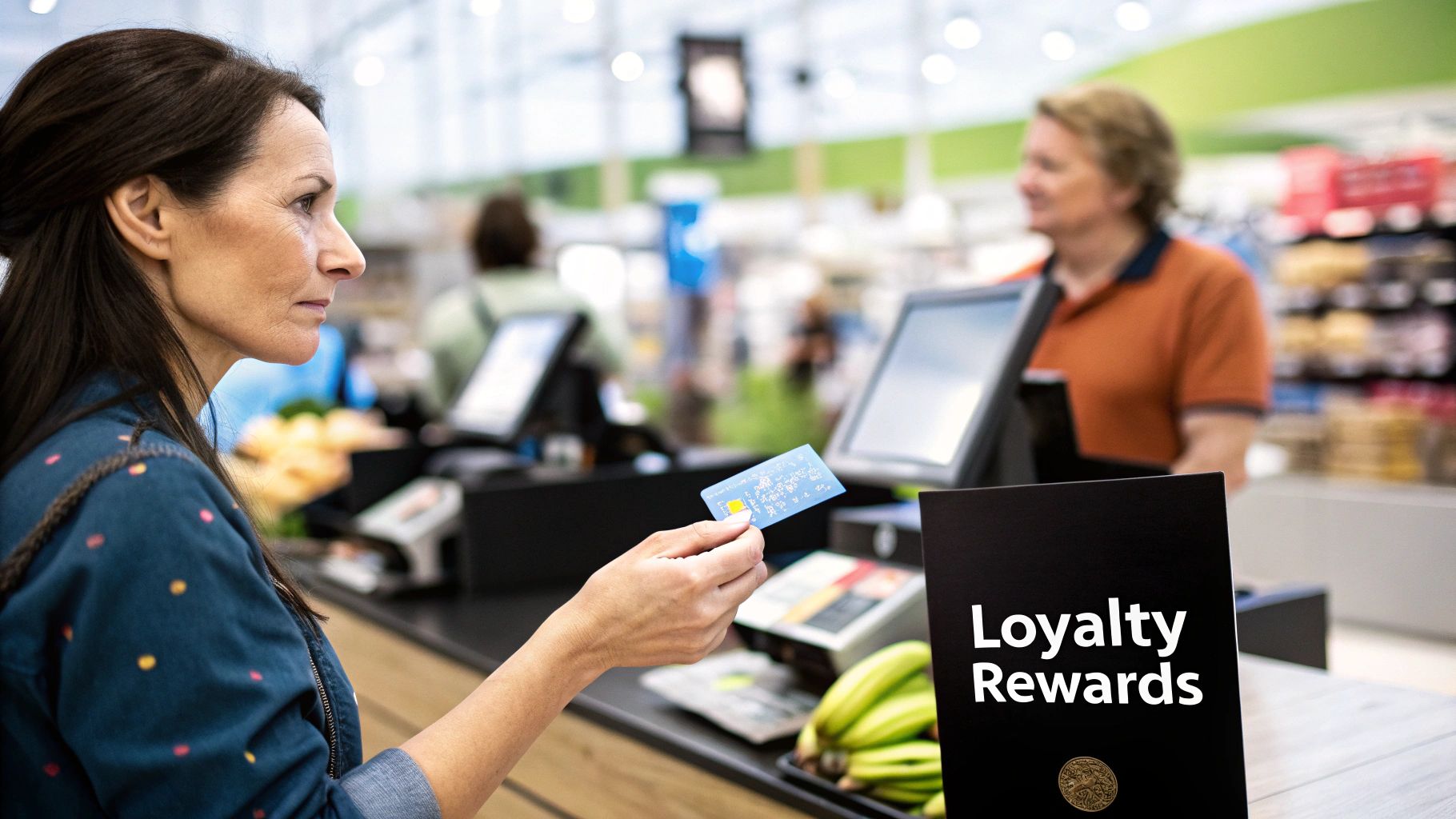
8. Customer Retention and Loyalty Programs
Customer retention marketing focuses on keeping existing customers engaged and encouraging repeat purchases through loyalty programmes, personalised experiences, and exceptional customer service. While many businesses chase new leads, retaining current customers is often more profitable. Since acquiring a new customer can cost five times more than keeping an existing one, this is one of the most financially astute marketing strategies for small business owners to prioritise.
This strategy works by acknowledging and rewarding the people who already support your business, turning them into repeat buyers and, eventually, brand advocates. By creating a system that offers tangible value for their continued custom, you build a powerful emotional connection that competitors find difficult to break.
How to Implement Customer Retention and Loyalty Programmes
Marketing Strategies for Small Business: You don’t need a complex system to get started. A local coffee shop’s simple “buy nine, get the tenth free” punch card is a classic and effective loyalty programme. For a retail business, this could be a points-based system where customers earn points for every pound spent, which can be redeemed for discounts or exclusive products, similar to Sephora’s successful Beauty Insider programme.
To implement this effectively, consider these steps:
- Start with a simple system like a punch card or a basic points programme.
- Personalise rewards based on a customer’s purchase history or preferences.
- Make the redemption process straightforward and ensure the rewards are valuable.
- Acknowledge and celebrate customer milestones, such as birthdays or anniversaries.
- Use your retention data to identify and re-engage customers who may be at risk of leaving.
Why It Works for Small Businesses
This strategy is highly effective for small businesses because it directly impacts your bottom line by increasing customer lifetime value. A small increase in customer retention can lead to a significant rise in profits. It also provides invaluable data on your most loyal customers, allowing you to understand what you’re doing right and how to attract more people like them. It transforms a transactional relationship into a relational one, building a community around your brand.
Key Insight: The most powerful marketing comes from your happiest customers. Focusing on loyalty doesn’t just secure future revenue; it creates an army of advocates who will promote your business for free.
9. Guerrilla Marketing
Guerrilla marketing is an unconventional and creative strategy that relies on surprise, humour, or ingenuity to generate buzz. Instead of a large advertising spend, it uses time, energy, and imagination to create memorable brand experiences in unexpected places. This approach is one of the most impactful marketing strategies for small business because it can create a huge impression with a minimal budget, often going viral and generating significant media attention.
This strategy works by disrupting people’s daily routines and creating a shareable moment. By placing advertisements in unusual locations or staging public stunts, businesses can capture attention in a way that traditional advertising cannot, fostering a strong emotional connection with the audience.
How to Implement Guerrilla Marketing
Start by thinking about where your target audience spends their time and how you can intersect their daily life in a surprising way. The key is to be creative and contextually relevant. For example, a local coffee shop could use stencils and water-repellent spray to create temporary “adverts” on pavements that only appear when it rains, or a gym could place stickers on elevator floor buttons to look like weight plates.
To get started, consider these low-cost ideas:
- Chalk Art: Create eye-catching, temporary art on public pavements pointing towards your business.
- Creative Flyers: Design flyers that do more than just provide information, such as ones that fold into an interesting shape related to your business.
- Sticker Campaigns: Place branded stickers in clever, relevant locations (with permission) where your audience will see them.
- Flash Mobs: Organise a surprise, coordinated performance in a public space that ties back to your brand’s message.
Why It Works for Small Businesses
Guerrilla marketing levels the playing field, allowing small businesses to compete with larger corporations by being clever rather than costly. A well-executed campaign can generate significant word-of-mouth and social media buzz, providing free publicity that far exceeds the initial investment. It’s effective because it creates memorable, authentic experiences that people want to talk about and share.
Key Insight: The goal of guerrilla marketing is not just to be seen, but to be remembered and talked about. Focus on creating a unique, positive, and surprising interaction that leaves a lasting impression and makes people feel part of an exclusive event.
Marketing Strategies for Small Business: 9-Point Comparison Guide
| Marketing Strategy | Implementation Complexity 🔄 | Resource Requirements ⚡ | Expected Outcomes 📊 | Ideal Use Cases 💡 | Key Advantages ⭐ |
|---|---|---|---|---|---|
| Content Marketing | Moderate 🔄 (requires consistent creation) | Medium ⚡ (time, content skills/outsource) | Long-term brand authority & organic traffic 📊 | Small businesses building brand & expertise | Cost-effective, SEO boost, evergreen assets ⭐ |
| Social Media Marketing | High 🔄 (multiple platforms, constant posting) | Medium ⚡ (time, ad spend optional) | Fast audience engagement & viral potential 📊 | Brands engaging customers directly | Real-time feedback, low entry cost, targeting ⭐ |
| Email Marketing | Moderate 🔄 (list building & automation setup) | Low ⚡ (email tools, content creation) | High ROI, direct personalized communication 📊 | Businesses focused on retention & conversion | Highly measurable, automated, cost-effective ⭐ |
| Search Engine Optimization (SEO) | High 🔄 (technical skills, ongoing effort) | Medium ⚡ (tools, content, expertise) | Long-term organic traffic & credibility 📊 | Local & niche businesses aiming for search rankings | Passive lead generation, cost-effective ⭐ |
| Referral Marketing | Moderate 🔄 (program setup & tracking) | Low-Medium ⚡ (incentives, software) | High-quality leads with better conversion 📊 | Businesses with satisfied customers | Lower acquisition cost, viral growth potential ⭐ |
| Influencer & Micro-Influencer Marketing | Moderate 🔄 (veting, relationship management) | Medium ⚡ (payments, product gifting) | Quick brand awareness & engagement 📊 | Niche markets & product promotions | Authentic content, targeted reach, affordable ⭐ |
| Local Community Marketing | Moderate 🔄 (relationship building, events) | Low-Medium ⚡ (local sponsorships, time) | Strong local brand presence & trust 📊 | Retail, service, healthcare, restaurants | Emotional connection, word-of-mouth ⭐ |
| Customer Retention & Loyalty Programs | Moderate 🔄 (program management, tech setup) | Medium ⚡ (platforms, rewards) | Increased lifetime value & repeat business 📊 | Businesses focused on repeat customers | Builds loyalty, consistent revenue, data insights ⭐ |
| Guerrilla Marketing | High 🔄 (creative planning & risk) | Low ⚡ (mostly creativity, low budget) | High impact buzz & memorable experiences 📊 | Creative, entertainment, fashion, food sectors | Low cost, viral potential, brand differentiation ⭐ |
Choosing Your Path: Implementing the Right Strategy for Your Business
Navigating the landscape of modern marketing can feel like a monumental task, especially for a small business where every minute and every pound counts. We have journeyed through a comprehensive collection of powerful marketing strategies, from the foundational pillars of SEO and Content Marketing to the community-centric approaches of Local and Referral Marketing. We’ve explored the dynamic worlds of Social Media, the direct-line communication of Email Marketing, and the creative flair of Guerrilla campaigns. Each strategy offers a unique pathway to connect with your audience, build your brand, and drive tangible growth.
The sheer volume of options, however, is not a signal to do everything at once. In fact, the opposite is true. The most successful small businesses don’t spread themselves thin by attempting to master all nine tactics simultaneously. Instead, they achieve success through strategic focus. Your primary task now is to synthesise this information and select the one or two approaches that resonate most deeply with your specific business model, your ideal customer, and your current resources.
Distilling Your Action Plan
The path forward begins with a candid assessment of your business. Are you a local, service-based business like a cafe or a boutique? Then Local Community Marketing and a robust customer loyalty programme might be your most potent starting points. Are you an e-commerce brand with a visually appealing product? A focused campaign combining Social Media Marketing with Micro-Influencer collaborations could generate significant momentum. For a B2B consultancy, a sophisticated Content and Email Marketing strategy will be invaluable for establishing authority and nurturing leads.
The core principle is alignment. Don’t choose a strategy just because it’s popular; choose it because it is the most direct and effective route to reaching the people who need what you offer. Consider these critical questions:
- Where does my audience spend their time? If they are active on Instagram, that’s where you need to be. If they rely on Google searches to find solutions, SEO must be a priority.
- What is my budget? Strategies like Content Marketing and local outreach can be initiated with a “sweat equity” investment, while others like Influencer Marketing require a dedicated financial budget from the outset.
- What are my immediate goals? Are you focused on brand awareness, lead generation, or immediate sales? The right marketing strategies for a small business will differ based on these objectives.
The Power of Measurement and Iteration
Once you have selected your initial focus, the next crucial step is to commit to a cycle of implementation, measurement, and refinement. Marketing is not a “set it and forget it” activity. It is a dynamic process of testing hypotheses. Launch your email campaign, but track your open rates and click-throughs. Start your blog, but monitor which posts drive the most traffic and engagement.
This data-driven approach removes guesswork and allows you to double down on what works and pivot away from what doesn’t. Consistency is your most powerful ally in this process. A single blog post or a sporadic social media update will achieve very little. However, a sustained, focused effort over several months will build momentum, create brand recognition, and deliver compounding returns. Mastering these concepts is not just about gaining customers; it’s about building a resilient, adaptable business that can thrive in a competitive marketplace. It’s about transforming your marketing from an expense into your most valuable growth-driving investment.
Feeling overwhelmed by the options but know you need to generate leads and sales now? For many small businesses, Pay-Per-Click (PPC) advertising offers the most direct and measurable path to ROI. If you want to ensure your budget is spent effectively, partner with the UK-based experts at PPC Geeks who specialise in creating targeted, high-performance campaigns for businesses just like yours. Visit PPC Geeks to learn how we can accelerate your growth and let us handle the complexities of digital advertising while you focus on running your business.
Author

Search Blog
Free PPC Audit
Subscribe to our Newsletter

The Voices of Our Success: Your Words, Our Pride
Don't just take our word for it. With over 100+ five-star reviews, we let our work-and our satisfied clients-speak for us.

"We have been working with PPC Geeks for around 6 months and have found Mark and the team to be very impressive. Having worked with a few companies in this and similar sectors, I rate PPC Geeks as the strongest I have come across. They have taken time to understand our business, our market and competitors and supported us to devise a strategy to generate business. I value the expertise Mark and his team provide and trust them to make the best recommendations for the long-term."
~ Just Go, Alasdair Anderson