
PPC for Building Suppliers: How to Drive Higher Order Values – Boost ROI

For building suppliers, a standard PPC strategy is often a fast track to wasting ad spend on low-value, single-item sales. The real goal isn’t just clicks; it’s about landing profitable, large-scale orders from contractors, developers, and trade professionals. This guide lays out a specialised blueprint for the building supply industry, showing you how to turn your PPC campaigns into a machine for driving up your average order value (AOV).
PPC for Building Suppliers: Moving Beyond Clicks to High-Value Contracts

Generic e-commerce tactics just don’t cut it in the unique world of building supplies. A DIYer buying one tin of paint has a completely different search intent—and order potential—than a project manager sourcing materials for a whole housing development. Your PPC strategy has to reflect this crucial difference.
The heart of a high-AOV campaign is a conscious pivot from chasing cheap traffic to cultivating bigger transactions. This means rethinking everything, from how your campaigns are structured to the words you use in your ads, all focused squarely on the buying cycles and needs of professional builders. Get this right, and you’ll unlock a serious return on your ad spend.
The High Cost of Unoptimised PPC
Inefficient campaigns don’t just deliver poor results; they actively burn through your budget by attracting the wrong people. This is a massive problem in the construction sector. In Q1 2025, UK house builders wasted an average of £1,181 per month on digital marketing due to sloppy targeting and sky-high cost-per-click rates, which averaged a painful £17.55.
This level of waste really hammers home the need for specialised PPC for building suppliers that is built from the ground up to drive higher order values. Without a focused strategy, you’re essentially paying a premium for low-value clicks that will never turn into the profitable trade accounts or bulk orders your business needs.
Core Pillars for Boosting Order Values (PPC for Building Suppliers)
To get serious about increasing your AOV, you’ve got to focus your efforts on a few key areas. Think of these as the foundation of a PPC programme designed for profitability, not just volume.
To help you get started, we’ve broken down the essential areas you need to focus on.
Table: Core Pillars for Boosting Order Values with PPC
| Strategic Pillar | Objective | Key Tactic |
|---|---|---|
| Targeted Campaign Architecture | Attract high-value trade personas. | Create separate campaigns for commercial vs. residential builders. |
| Value-Driven Ad Copy | Speak the language of the trade. | Highlight bulk pricing, trade discounts, and pallet delivery options. |
| Landing Page Optimisation | Increase the size of each order. | Design pages that suggest related materials and facilitate project-based purchasing. |
| Advanced Conversion Tracking | Measure what truly matters. | Track offline quotes, phone orders, and the lifetime value of trade accounts. |
Each of these pillars works together to shift your PPC efforts away from attracting small-time buyers and toward securing the larger, more profitable contracts that truly grow your business.
A successful approach will always include:
- Targeted Campaign Architecture: You need to build separate campaigns that speak directly to different trade personas, like commercial contractors versus residential builders. Their needs are worlds apart.
- Value-Driven Ad Copy: Your ads have to go beyond product features. Craft messages that shout about trade discounts, bulk pricing, and pallet delivery options—the stuff your ideal customer actually cares about.
- Landing Page Optimisation: Design your pages to make upselling and cross-selling a no-brainer. If they’re buying plasterboard, you should be suggesting fixings, tape, and tools right there on the page.
- Advanced Conversion Tracking: Stop focusing only on simple online sales. You need to track offline orders and understand the lifetime value of a trade account. For a much deeper look at this, check out our guide on how trade suppliers should track PPC ROI.
The goal is simple: make every click count by ensuring it comes from a potential high-value trade buyer. This requires a precise, data-driven strategy that filters out the hobbyist traffic and puts your ad spend where it will generate the largest returns.
PPC for Building Suppliers: Architecting Campaigns That Attract Trade Buyers

The real secret to boosting your average order value isn’t just about tweaking a few bids. It’s about fundamentally redesigning your Google Ads account to pull in trade professionals while actively pushing away low-value DIY traffic. A generic, one-size-fits-all campaign will always attract a messy mix of both, and that’s what kills your AOV.
A much smarter, more profitable approach is to build dedicated campaigns around specific, high-value buyer personas. This lets you tailor every single element—from keywords to ad copy and landing pages—to the exact needs of your most important customers. It’s how you guarantee your budget is spent connecting with decision-makers who place the large, recurring orders you want.
Segmenting by Buyer Persona
Stop lumping all your products into vague categories like “timber” or “insulation.” Instead, start by creating distinct campaigns for the professional groups you actually serve. This deliberate segmentation is the first, most crucial step in building a high-AOV PPC machine.
Your campaign structure could look something like this:
- Campaign 1: Commercial Contractors
- Campaign 2: Residential House Builders
- Campaign 3: Specialist Trades (Roofers, Plasterers, etc.)
- Campaign 4: Civil Engineering Firms
This architecture forces you to think about what each of these personas is really searching for. A commercial contractor needs fire-rated plasterboard by the pallet, whereas a residential builder is probably looking for specific structural timber grades. Their search terms, project scales, and pain points are worlds apart, and your campaigns need to reflect that.
Unearthing High-Intent Keywords (PPC for Building Suppliers)
Once your campaigns are properly segmented, the next job is to fill them with keywords that scream “bulk purchase.” You’ve got to steer clear of broad, high-volume terms like “building supplies” which attract absolutely everyone. Instead, get laser-focused on long-tail keywords that only a pro would use.
Think about the intent behind searches like these:
- “bulk plasterboard delivery”
- “commercial-grade timber supplier”
- “MDF sheets pallet price”
- “C24 structural timber joists”
These aren’t weekend DIY searches. They signal a user who’s planning a significant project and often include qualifiers like “bulk,” “pallet,” “trade,” or specific product codes. This is a non-negotiable part of any PPC strategy for building suppliers who are serious about bigger orders. A good place to start is figuring out how UK building suppliers can compete with giants like Screwfix and B&Q on Google Ads.
Key Takeaway: The specificity of your keywords directly impacts the quality and value of the leads you attract. Think of long-tail, trade-specific terms as a natural filter, weeding out the hobbyists before they even see your ad.
Deploying a Ruthless Negative Keyword Strategy
Just as important as what you bid on is what you don’t. An aggressive negative keyword list is your best line of defence against wasted ad spend, stopping your ads from showing for searches that are clearly from individual consumers or just plain irrelevant.
Be proactive and start by adding terms like:
cheapsmallsinglerepaircraftDIYhow to
Get into the habit of routinely checking your Search Terms Report for low-value queries that slipped through the net and add them to your negative list. This is a continuous process of refinement that ensures your budget is reserved for clicks that can actually lead to high-value contracts. In a market where some construction PPC keywords cost £5.60 per click, you have to make every single one count.
Geo-Targeting and Ad Scheduling for the Trade (PPC for Building Suppliers)
Finally, you need to align your campaign settings with the working patterns of professional builders. Let’s be honest, they aren’t sourcing materials at 10 PM on a Sunday. Use ad scheduling to concentrate your budget during typical working hours, like 7 AM to 5 PM, Monday to Friday.
At the same time, use geo-targeting to focus on industrial estates, commercial development zones, or specific postcodes where you know major projects are happening. By layering these targeting options, you ensure your ads are not just seen by the right people, but at the very moment they are actively planning and sourcing for a job. This level of precision is what turns a standard PPC campaign into a powerful engine for driving higher order values.
PPC for Building Suppliers: Crafting Ad Copy That Sells in Bulk
Your ad copy is your first, and often only, chance to have a direct chat with a potential trade buyer. Let’s be honest, the generic, product-first messaging you might use for the DIY crowd just won’t cut it here. Professionals think in terms of project scale, efficiency, and the total cost of a job. If you want to drive bigger order values, your ads need to stop simply selling products and start solving the real-world logistical and financial headaches that come with a large project.
It’s all about a mental shift. You’re not just selling a single bag of cement; you’re selling the benefit of having a full pallet land on site, ready to go. A pro isn’t just buying materials; they’re buying time, preventing costly delays, and protecting their own profit margins. Your ad copy has to get this, speaking their language and hitting on what truly matters to them.
Speaking the Language of the Trade
Trade buyers are busy. They’re scanning Google results looking for quick solutions, not browsing products. Your headlines and descriptions need to jump off the page by immediately screaming value that’s relevant to them. So, instead of leading with a generic product name, hook them with a benefit that screams “bulk purchase.”
Think about the difference between these two headlines:
- The Standard Way: “High-Quality Plasterboard Available”
- The High AOV Way: “Trade Discounts on Bulk Plasterboard”
See the difference? The second one instantly filters out the small-fry buyers and talks directly to a professional looking to stock up for a job. It pre-qualifies your clicks, making sure your budget is being spent on traffic that’s actually likely to place a large order. To really nail this, you need to know exactly who you’re talking to. A great starting point is our guide on how to create buyer personas to help you fine-tune your messaging.
The best ad copy for building suppliers doesn’t just list product features. It frames the purchase as a smart business move. It answers the question they’re already thinking: “How does buying more from you save me time, hassle, and money?”
High-Impact Ad Copy Examples (PPC for Building Suppliers)
Let’s get practical. Here are some real-world examples of headlines and descriptions built to encourage bigger baskets.
Headline Examples:
- Free Pallet Delivery Over £500
- Bulk Timber C24 Grade In Stock
- Trade Account & Volume Pricing
- Project Quantities Ready To Ship
Description Examples:
- Order by the pallet & save. Get all your structural timber delivered to site next day.
- Open a trade account for exclusive pricing on bulk orders. Hassle-free sourcing for pros.
Notice the keywords we’re using here? “Pallet,” “bulk,” “trade,” “volume,” and “project.” This isn’t just jargon; it’s a powerful signal to professional buyers that you get their world and are set up to handle their large-scale needs.
Using Ad Extensions for Maximum Impact
Think of Google Ads extensions as your secret weapon. They let you pack in extra, value-packed information without cramming it into your main ad copy. They give users more reasons and more pathways to place a bigger order right from the search results page.
Here’s how to use them smartly:
- Sitelink Extensions: Don’t just link to your homepage or a generic category. Send them straight to the good stuff. Use sitelinks for pages like “Bulk Deals,” “Pallet Offers,” “Trade Account Sign-Up,” or specific categories like “Plasterboard by the Pallet.”
- Price Extensions: Be upfront and show them the money they’ll save. You can display the price for a single sheet of plasterboard, a pack of 10, and a full pallet, all within the ad. This transparency is gold, clearly showing the savings that come with buying in volume.
- Callout Extensions: These are perfect for short, punchy benefits that hit home with trade buyers. Think things like “Next-Day Site Delivery,” “Trade-Only Discounts,” “Credit Accounts Available,” or “Dedicated Account Managers.”
When you combine sharp, trade-focused ad copy with a smart extension strategy, you turn a simple text ad into a powerful tool. It doesn’t just attract the right people; it actively nudges them towards increasing their order size before they even click.
PPC for Building Suppliers: Optimising Your Site for Upsells and Cross-Sells
Getting the click is just the first small victory. The real money is made after they land on your site. If your website is just a static catalogue, you’re leaving a huge amount of cash on the table.
The challenge is to turn that initial click into a genuinely high-value sale. Your site needs to be engineered to guide trade buyers towards larger transactions, making it a completely natural part of their buying journey.
Think of your website less like a shop and more like an experienced project consultant. When a builder lands on your page for a bag of cement, their job isn’t finished. They’ll also need sand, aggregate, probably some mixing tools, and maybe even a new pair of gloves. A properly optimised page anticipates these needs and presents them as helpful, logical add-ons, bumping up the order value with every suggestion.
It’s a two-pronged attack. First, your on-page experience has to be smart about upselling and cross-selling. Second, your product feed for Google Shopping needs to be built to promote bundles and multi-buy offers right there in the search results, grabbing that high-value interest before they even visit your page.
The visual below breaks down how compelling ad copy—the first step in this process—should be structured. It’s about getting the right people to your perfectly optimised pages.
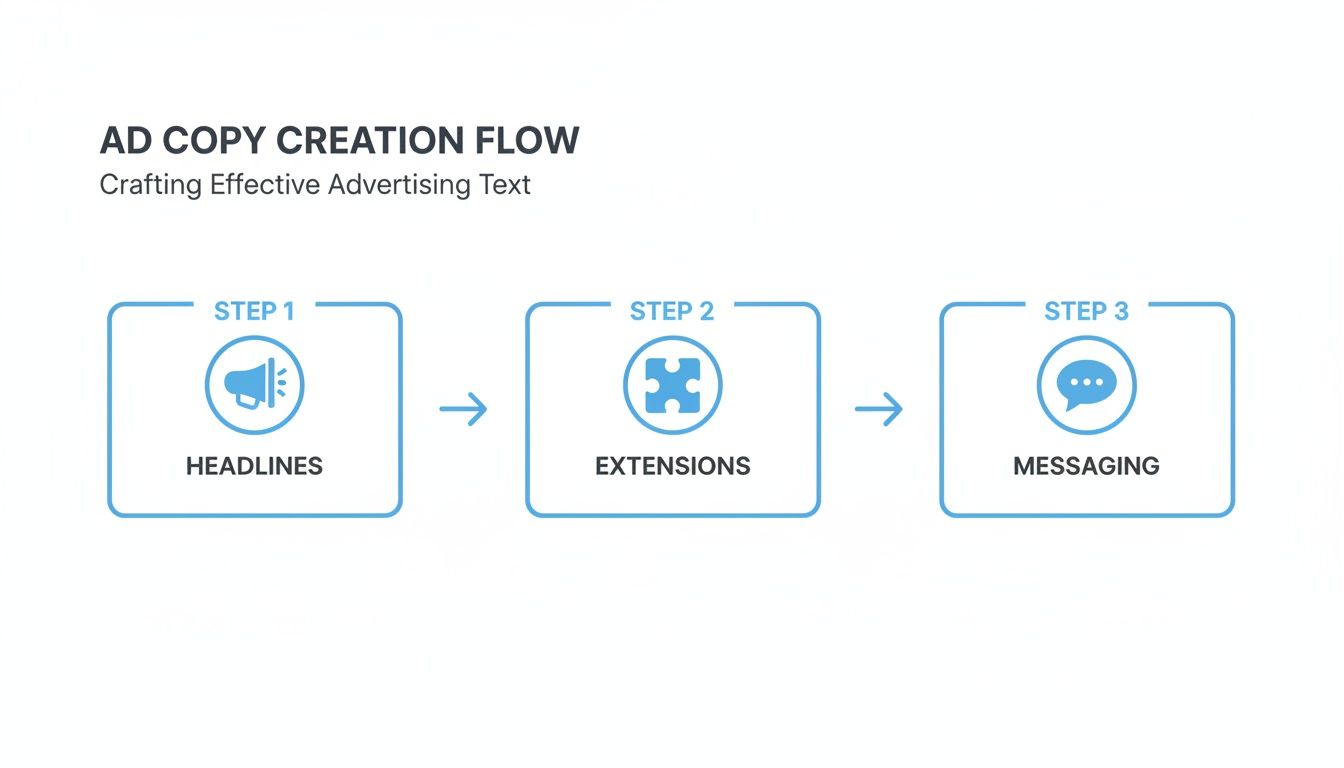
This flow shows how your headlines, extensions, and overall messaging must work in sync to attract buyers who are already thinking about a bigger purchase, setting the stage for your on-site strategy to work its magic.
Designing Product Pages for Bigger Baskets
Your product pages are your digital sales floor. A trade buyer might land on a page for a single item, but their actual project needs a whole list of materials. Your page’s job is to act like an expert assistant, making it dead simple to add everything they need in one go.
Forget those generic “You may also like” widgets that just show random similar products. You need to get specific and think in terms of the job itself. For example, a page for structural timber should dynamically suggest:
- Essential Fixings: Screws, nails, and bolts that are right for that specific grade of timber.
- Complementary Materials: Joist hangers, noggins, or any relevant metalwork.
- Required Tools: The right saw, drills, or levels needed to actually install it.
This isn’t just basic cross-selling; it’s proper, project-based selling. Research shows that making relevant product suggestions can lift revenue by 10-30%. For building suppliers, this figure is often much higher because everything is project-driven.
The real goal here is to shift the customer’s mindset from buying a single product to putting together a complete job list. When you bundle related items directly on the product page, you save them a massive amount of time and significantly boost the order value.
Optimising Your Ad Copy for Larger Orders (PPC for Building Suppliers)
Your ad copy is your first, and often only, chance to signal that you’re the right supplier for a big job. It needs to speak directly to trade buyers who are looking to place substantial orders, not just someone doing a bit of DIY.
This means moving beyond generic descriptions and focusing on hooks that scream value, bulk, and trade-specific benefits. Below is a breakdown of how to shift your ad copy from a low-AOV approach to one that actively encourages larger purchases.
Ad Copy Hooks for Increasing Order Value
| Copy Element | Standard Approach (Low AOV) | Optimised Approach (High AOV) |
|---|---|---|
| Headline | “Quality Plywood Sheets for Sale” | “Pallet Deals on Plywood – Trade Prices” |
| Description | “We stock a wide range of building materials. Fast delivery available.” | “Get project-ready pallets of plasterboard delivered to site next day. Free delivery on orders over £500.” |
| Call-to-Action | “Shop Now” | “Get a Bulk Quote” or “View Trade Packs” |
| Extensions | Sitelinks to individual product categories. | Sitelinks to “Bulk Discounts,” “Project Bundles,” and “Credit Accounts.” Use price extensions for multi-buy deals. |
As you can see, the optimised copy isn’t just selling a product; it’s selling a solution for a larger project. It uses language that resonates with professionals and highlights the financial and logistical benefits of buying more. This simple shift can make all the difference in the type of customer you attract.
Tuning Your Google Shopping Feed for Bulk Buys
Your Google Shopping feed is another incredibly powerful tool for pushing higher order values, but so many suppliers get it wrong. They just list individual products and completely miss the chance to advertise bulk deals directly in the search results.
You need to structure your feed to showcase value packs and multi-buy offers from the get-go. This means getting hands-on with a few key elements of your product data.
Strategic Product Titles
Your product titles need to shout “bulk.” A standard title like “Plasterboard Tapered Edge” is fine, but it won’t attract the big spenders. You need to restructure it to highlight the real value proposition.
- Good: Plasterboard Tapered Edge 12.5mm
- Better: 10-Pack Plasterboard Tapered Edge
- Best: Pallet Deal Plasterboard Tapered Edge (48 Sheets)
This simple tweak immediately catches the eye of buyers with large projects and helps filter out those just looking for a single sheet.
Using Custom Labels for Smart Bidding
Custom labels in your product feed are your secret weapon for smart bidding. They let you tag and segment products so you can bid differently on them. Use them to flag items that are perfect for high-value sales.
Create simple, effective labels like:
bulk_itemhigh_marginproject_bundle
By applying these labels, you can then create specific product groups inside your Shopping campaigns. This allows you to bid much more aggressively on these high-potential products, making sure they get maximum visibility in front of the right trade buyers. This kind of detailed feed management is fundamental for any building supplier serious about driving consistently higher order values.
PPC for Building Suppliers: Using Advanced Bidding to Maximise Profitability
Right, you’ve got your campaigns structured nicely and your ad copy is pulling in clicks. What’s next? This is where we get clever and make your data work a whole lot harder to drive actual profit. We’re talking about advanced bidding and smart remarketing strategies that turn insights into real returns by zeroing in on your most valuable customers.
It’s time to shift your thinking from just getting clicks to actively telling the ad platforms to chase users who are likely to spend more. For building suppliers, this move from chasing volume to securing value is crucial for landing those larger, more profitable orders day in, day out.
Embracing Value-Based Bidding
Most traditional bidding strategies are a bit blunt – they focus on getting the most clicks or conversions, treating every single sale as if it’s worth the same. But we both know that an order for a box of screws is a world away from a full pallet of C24 timber. Value-based bidding gets this.
This is where strategies like Target ROAS (Return on Ad Spend) completely change the game. By feeding your actual conversion value data back into Google Ads, you’re essentially telling the algorithm, “Go find me more people like my best customers.” It starts learning the behaviours of your high-value buyers and prioritises ad auctions that are likely to end in a big sale.
Of course, this needs rock-solid conversion tracking to work properly, but the payoff is huge. It completely changes the conversation from “how many sales did we get?” to “how much profit did our ad spend actually generate?” For a deeper look into the mechanics, check out our detailed guide on the nuances of Google Ads Smart Bidding.
Building Sophisticated Remarketing Audiences (PPC for Building Suppliers)
Let’s be realistic – not every visitor is going to land on your site and immediately place a massive order. Trade buyers, especially, are known for shopping around and comparing prices before committing. Remarketing is your way of staying top-of-mind with these high-potential customers, giving them a gentle nudge back to your site when the time is right.
The trick is to go way beyond a generic “all visitors” list. You need to get granular and create segmented audiences based on user behaviour that screams high purchase intent.
- High-Value Cart Abandoners: Go after users who loaded up their cart with multiple items or high-ticket products (like pallet deals) but got distracted before checkout.
- Bulk Category Viewers: Create a list of people who spent a good amount of time browsing your bulk categories, such as “Sheet Materials” or “Structural Timber.”
- Project-Based Researchers: Group together visitors who viewed a specific combination of related products – think cement, sand, and aggregate. This tells you they’re planning a particular job.
When you segment your audiences like this, you can hit them with remarketing ads that speak directly to their needs. Think messages about free pallet delivery or highlighting your stock availability for the exact project they were researching.
By re-engaging users who have already shown clear interest in bulk purchasing, you are investing your budget in the warmest possible leads. This focused approach dramatically increases the likelihood of turning a near-miss into a major sale.
Using Dynamic Remarketing for Cross-Sells
Dynamic Remarketing takes this a step further. Instead of a generic ad, it shows users the exact products they were looking at on your site. For building suppliers, its true power is in intelligently cross-selling and upselling.
Imagine a joiner was looking at a specific grade of C24 timber on your site. Your dynamic remarketing ad could pop up later showing them that same timber, but also featuring complementary items like joist hangers, structural screws, and wood preservative. It’s a powerful reminder that also helps them build a complete order, naturally pushing up the final transaction value.
This tactic works so well because it feels personal and genuinely helpful. You’re anticipating their needs and making it dead simple for them to get everything for the job in one go. You’ll need a well-optimised product feed to get this running, but the impact on your AOV can be massive. For UK SMEs in competitive trades, expert PPC management can lead to a 200% ROI—that’s £2 back for every £1 spent—and dynamic ads are a huge part of hitting numbers like that.
Common Questions on Driving Higher Order Values
Even with a solid plan, getting the specifics of PPC right for building suppliers throws up a lot of questions. Boosting your average order value (AOV) isn’t as simple as flicking a switch; it’s about nailing your budget, picking the right platforms, and being realistic about timelines.
This section gets straight to the point, tackling the most common queries we hear from building suppliers day in, day out. We’ll give you clear, practical answers to help you sharpen your approach and turn your PPC campaigns into a serious source of high-value trade orders.
How Much Should a Building Supplier Budget for PPC?
There’s no magic number, but a sensible starting point is usually between £1,500 and £5,000 per month. Honestly though, it’s far better to work backwards from your goals than to just pull a number out of thin air.
First, figure out your average trade order value and your profit margin. Let’s say a typical trade order is £800 and your margin is 25% (£200 profit). From there, you can work out a maximum cost-per-acquisition (CPA) that still leaves you with a healthy return. A classic mistake is underfunding campaigns; with UK construction CPCs anywhere from £1.50 to over £6.00, a small budget gets obliterated fast without giving you enough data to actually learn anything.
A decent budget isn’t just for running ads—it’s an investment in data. You need enough click and conversion data to spot which keywords, ads, and audiences are really driving those high-value orders.
Which PPC Platform Is Best for Reaching Trade Buyers?
For building suppliers, Google Ads is the undisputed champion. No question. When a trade buyer has an urgent need for a project, they head straight to Google Search with super-specific, high-intent keywords like “structural timber suppliers near me” or “C24 joists next-day delivery.”
But a complete strategy uses a mix of platforms:
- Google Shopping: Absolutely essential. It’s perfect for showing off specific products, multi-buy deals, and pallet pricing right there in the search results.
- Microsoft Advertising (Bing): Often overlooked, but Bing can deliver quality trade traffic at a lower CPC than Google. It’s a valuable audience of professionals that your competitors are probably ignoring.
- Meta (Facebook & Instagram): While it’s not the place for capturing initial search intent, Meta is brilliant for remarketing. You can get your brand back in front of users by their job title (e.g., ‘Construction Manager’ or ‘Site Foreman’) and stay visible for their next big project.
The smartest approach is to use Google to capture immediate demand, then lean on platforms like Meta to nurture those relationships and stay top-of-mind.
How Long Until PPC Increases My Average Order Value?
You’ll typically need 3 to 6 months to see a consistent, measurable lift in your average order value. While you can get traffic flowing within weeks, the first phase is all about gathering data and laying the groundwork.
The first couple of months are spent building out campaigns, testing keywords, and figuring out which ad messages actually resonate with a trade audience. The real AOV growth kicks in from month three. By then, you’ll have enough data to confidently switch to smarter bidding strategies like Target ROAS, launch targeted remarketing campaigns at people who abandoned high-value carts, and A/B test your landing pages with upsell and cross-sell offers. It’s a process of steady, data-led improvement, not an overnight win.
Should I Focus on Broad or Long-Tail Keywords?
To drive higher order values effectively, your PPC strategy has to be heavily weighted towards long-tail keywords. This is one of the most critical differences between a low-AOV campaign and a high-AOV machine.
Broad, general terms like “building supplies” or “timber” attract a real mixed bag of traffic. You get the low-value DIY crowd, students, and researchers all mixed in with the trade buyers you actually want. This inevitably drags your AOV down.
Contrast that with long-tail keywords. They signal a specific, professional need, usually for a larger quantity of materials. Just think about the intent behind queries like these:
- “fire-rated plasterboard pallet price”
- “bulk aggregate delivery kent”
- “trade account for C24 timber”
These searches have lower volume, sure, but their conversion rate for large, profitable orders is significantly higher. A balanced strategy might put a small slice of the budget on broader terms for brand visibility, but the core focus and spend must be on the specific, long-tail queries that lead directly to your ideal, high-spending trade customer.
At PPC Geeks, we specialise in creating data-driven PPC strategies that do more than just generate clicks—they drive profitable growth. Our UK-based team helps building suppliers like you increase average order values and attract high-spending trade accounts. Discover how we can transform your ad spend into measurable returns at https://ppcgeeks.co.uk.
Author

Search Blog
Free PPC Audit
Subscribe to our Newsletter

The Voices of Our Success: Your Words, Our Pride
Don't just take our word for it. With over 100+ five-star reviews, we let our work-and our satisfied clients-speak for us.

"We have been working with PPC Geeks for around 6 months and have found Mark and the team to be very impressive. Having worked with a few companies in this and similar sectors, I rate PPC Geeks as the strongest I have come across. They have taken time to understand our business, our market and competitors and supported us to devise a strategy to generate business. I value the expertise Mark and his team provide and trust them to make the best recommendations for the long-term."
~ Just Go, Alasdair Anderson