




In the ever-evolving landscape of digital marketing, understanding Pay-Per-Click (PPC) advertising is crucial for businesses aiming to enhance their online presence. This article delves into the core components of PPC within Google Ads, providing insights into how it operates and how businesses can leverage it effectively.
The Power Of PPC In Google Ads: Key Takeaways
- PPC stands for Pay-Per-Click, a model where advertisers pay for each click on their ads.
- Effective keyword research is essential for targeting the right audience.
- Ad creation involves crafting compelling content to attract clicks.
- Bidding on keywords determines ad placement and visibility.
- Performance monitoring allows for ongoing optimisation of campaigns.
What Is PPC?
PPC, or Pay-Per-Click, is an internet marketing model where advertisers pay a fee each time one of their ads is clicked. In the context of Google Ads, it allows businesses to bid for placement on Google’s sponsored links when users search for relevant keywords. Essentially, it’s a method of buying visits to your site rather than relying solely on organic traffic.
The Six Key Areas Of PPC In Google Ads
Understanding the mechanics of PPC in Google Ads can significantly enhance your advertising strategy. Here are the six key areas:
- Keyword Research
Advertisers must identify keywords that potential customers are likely to use when searching for their products or services. This step is crucial for targeting the right audience effectively. - Ad Creation
Creating ads that appear in Google search results is the next step. These ads can include text, images, or even videos, all designed to attract clicks and drive traffic to your website or landing page. - Bidding On Keywords
Advertisers bid on the chosen keywords, specifying how much they are willing to pay for each click. This bid, along with factors like ad relevance and landing page quality, determines whether the ad appears in search results and its position. - Pay For Clicks
One of the defining features of PPC is that advertisers only pay when someone clicks on their ad. The cost per click can vary widely based on keyword competitiveness, ad quality, and other factors. - Ad Placement
Ads can be placed at the top or bottom of Google search results or on partner websites through the Google Display Network. The placement depends on the type of campaign and settings chosen by the advertiser. - Performance Monitoring And Adjustments
Monitoring ad performance is vital. Advertisers can track impressions, clicks, and conversions, allowing them to adjust bids, ad copy, and keywords to improve overall performance.
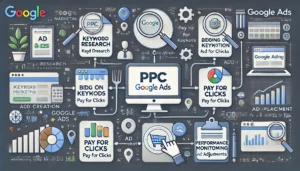
The Power Of PPC In Google Ads: The Goal Of PPC Advertising
The ultimate aim of PPC advertising is to lead viewers to click through to your website or app, where they can complete valuable actions, such as purchasing a product or signing up for a newsletter. This makes PPC a fundamental component of any digital marketing strategy, offering a fast, flexible, and highly measurable way to reach potential customers.
Conclusion
In conclusion, PPC in Google Ads is a powerful tool for businesses looking to enhance their online visibility and drive traffic. By understanding the key components of PPC, from keyword research to performance monitoring, advertisers can create effective campaigns that yield measurable results. If your business is spending significantly on PPC, consider seeking expert advice to optimise your strategy and improve your outcomes.
With the right approach, PPC can transform your digital marketing efforts and lead to substantial growth.