




PPC Management UK: Your Guide to Driving Growth for SMEs — Think of PPC management as the difference between owning a high-performance race car and actually winning a race with it. The car itself—the pay-per-click platform—has incredible potential, but without a skilled driver and a dedicated pit crew making constant adjustments, it’s just an expensive piece of kit sitting on the track. That’s what PPC management is all about.
PPC Management UK: What Is PPC Management and Why Does It Matter?
PPC isn’t a ‘set it and forget it’ channel. Far from it. It’s a continuous cycle of planning, tweaking, and analysing to make sure your ads hit the right people, at the right time, with the right message. Anyone can throw money at Google, but making that money work hard for you is another story entirely.
This hands-on approach is what separates a campaign that drains your bank account from one that fills it. A PPC manager doesn’t just launch your ads and cross their fingers. They live in the data, constantly making small, informed adjustments that add up to big results.
Core Responsibilities of a PPC Manager
Good PPC management in the UK is a collection of essential tasks, all working in harmony to drive growth. Think of it as the engine of your advertising efforts, with every part needing to be perfectly tuned.
Here’s what’s happening behind the scenes:
- Deep Keyword Research: Getting inside the heads of your UK customers to find the exact search terms they’re typing into Google when they need what you sell.
- Compelling Ad Creation: Writing ad copy and choosing images that don’t just blend in but actively grab attention and demand a click.
- Strategic Bid Management: Smartly adjusting bids to get you the most bang for your buck, ensuring you’re visible for the searches that matter without blowing your budget.
- Performance Analysis and Reporting: Constantly digging into the data to see what’s working, what’s not, and where the next opportunity lies.
It’s a classic mistake to think that a bigger ad budget automatically means more sales. The truth is, without sharp management, a bigger budget just helps you waste money faster. The real goal is to make every single pound you spend work as efficiently as possible.
The Value of Professional Oversight (PPC Management UK)
If you’re a busy business owner in the UK, trying to manage a PPC campaign on top of everything else is a recipe for overwhelm. The platforms are notoriously complex, and the digital marketplace is fiercely competitive. This is where getting a professional in your corner really pays off. An expert knows the landscape and can steer you around the common mistakes that cost businesses a fortune.
The stats back this up. In the UK, only 42% of marketing professionals say they’re happy with their Paid Search results, and a hefty 26% are actively dissatisfied. Why? It usually comes down to clumsy keyword targeting, wasteful bidding, or simply not optimising—all problems that a specialist manager solves day in, day out.
At the end of the day, professional PPC management isn’t just about running ads. It’s about delivering real, measurable results for your business. If this is all new to you, our detailed guide on what PPC advertising is is a great place to start. It’s the strategic partnership that turns your ad spend into tangible growth, from more website traffic to a steady stream of new leads and sales.
PPC Management UK: Choosing the Right PPC Platforms for Your UK Brand
Picking the right PPC platform is a bit like choosing the right tool for a job. You wouldn’t use a sledgehammer to hang a picture, would you? In the same way, you shouldn’t be trying to sell fast-fashion t-shirts on LinkedIn. Effective PPC management in the UK starts with knowing exactly where your ideal customers are hanging out online and, crucially, what they’re thinking when they’re there.
Each platform has its own unique audience and its own way of letting you talk to them. Are your customers actively hunting for a solution to a problem right now, or are they just casually scrolling through social media, open to discovering something new? Getting the answer to that question is the first step to building a PPC strategy that actually makes you money, instead of just burning through it.
This simple flowchart nails the logic behind getting expert help. It’s all about dodging those common, costly mistakes.
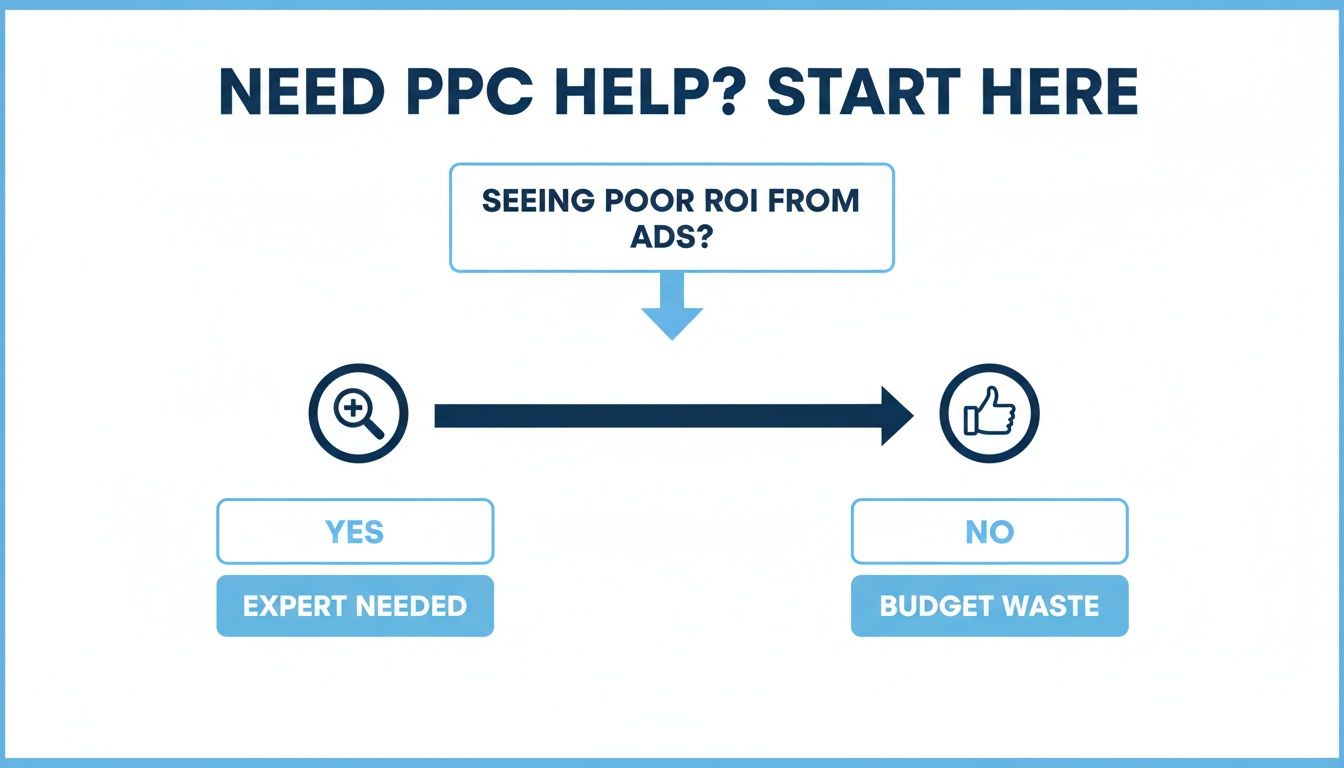
As you can see, going it alone without expert oversight is a fast track to draining your budget. A strategic approach, on the other hand, protects every pound you invest.
UK PPC Platform Comparison for SMEs and Ecommerce (PPC Management UK)
To help you navigate the options, here’s a straightforward comparison of the main players. This table breaks down the best uses for each platform, making it easier for UK businesses to decide where to focus their marketing efforts.
| Platform | Best For | Audience Type | Typical UK Use Case |
|---|---|---|---|
| Google Ads | Capturing active demand | Users actively searching for solutions or products | An emergency plumber in Manchester bidding on “24-hour plumber Manchester.” |
| Microsoft Ads | Reaching a mature, affluent audience with less competition | Slightly older, higher-income professionals and B2B decision-makers | A financial advisory firm in Surrey targeting high-net-worth individuals. |
| Meta Ads | Building brand awareness and creating demand | Users browsing based on interests, demographics, and behaviour | A Bristol-based online clothing boutique targeting fashion lovers aged 18-35. |
| LinkedIn Ads | High-value B2B lead generation | Professionals targeted by job title, industry, and company size | A London-based SaaS company advertising its software to UK Marketing Directors. |
This isn’t about picking just one; it’s about creating the right mix. A smart strategy often involves using different platforms together to guide customers from initial awareness right through to making a purchase.
Google Ads: The Powerhouse of Intent
Let’s be clear: Google Ads is the undisputed king of search advertising. It lets you get in front of people at the exact moment they’re looking for what you sell. For almost any business in the UK, it’s not just an option—it’s essential.
- Google Search Ads: These are the simple text ads you see at the top of Google. They are incredibly powerful for grabbing high-intent traffic because you’re targeting people who are literally typing in keywords related to your business.
- Google Shopping: If you’re an ecommerce brand in the UK, Google Shopping isn’t negotiable. It puts your products, prices, and pictures right there in the search results. It’s a visual, direct, and ridiculously effective way to drive sales.
- Performance Max (PMax): This is Google’s all-in-one campaign type, powered by AI. PMax uses machine learning to hunt down converting customers across all of Google’s channels—YouTube, Display, Gmail, you name it—all from one single campaign.
Google Ads is the foundation of most successful PPC strategies because it targets active intent. You’re not interrupting someone’s day; you’re offering the very solution they’re already looking for. This is why it so often delivers a rock-solid return on investment.
Microsoft Ads: The Underestimated Contender (PPC Management UK)
Too many advertisers sleep on Microsoft Ads (which you might remember as Bing Ads), and that’s a huge mistake. It can be an absolute goldmine. The audience here is typically a bit older, more affluent, and has more disposable income than your average Google user.
And the best part? Because fewer advertisers are on there, the competition is way lower. This usually means a lower cost-per-click (CPC) and a much healthier return on ad spend (ROAS). For B2B companies and brands targeting a more mature demographic in the UK, Microsoft Ads is a seriously valuable and cost-effective channel.
Social Media Ads: Building Audiences From Scratch
Social media platforms work on a totally different principle. Instead of targeting active searches, you’re targeting passive interest. You reach people based on who they are, what they like, and how they behave online. This makes social media brilliant for building brand awareness and actually creating demand where it didn’t exist before.
- Meta Ads (Facebook & Instagram): With its massive user base and incredibly detailed targeting, Meta is perfect for most B2C businesses. You can zero in on ridiculously specific audiences, making it a dream for ecommerce, local services, and brands that rely on strong visuals. Choosing where to put your money can be tough, which is why figuring out the difference between Google Ads versus Facebook Ads is vital.
- LinkedIn Ads: This is the undisputed home of B2B advertising. LinkedIn lets you target people by their exact job title, company size, industry, and even seniority. Yes, the costs are higher, but for high-value B2B services, the quality of leads you can generate is simply unmatched anywhere else.
Choosing the right blend of these platforms is what professional PPC management is all about. It’s how you make sure your message hits the right person, on the right platform, at the exact moment they’re ready to take action.
PPC Management UK: The Tangible Business Benefits of Professional PPC Management
Pouring money into professional PPC management isn’t just another line on your expense sheet; it’s a direct investment in real, measurable growth for your business. While SEO is busy building your long-term authority, PPC is out there delivering an immediate punch, getting your brand in front of motivated customers right when they’re ready to buy. It’s all about turning your ad spend into predictable revenue.
Think of it like this: SEO is like planting an orchard. It takes time, patience, and a whole lot of care before you see any fruit. Professional PPC, on the other hand, is like setting up a perfectly stocked fruit stand on the busiest street corner in town, ready to serve people who are actively looking for what you’re selling.

This instant visibility lets you go toe-to-toe with bigger, more established brands, carving out your piece of the market from day one.
Rapid Visibility and High-Quality Leads
One of the biggest wins with expert PPC management UK services is speed. You can get a campaign off the ground and start seeing traffic in a matter of hours, not months. For new product launches, seasonal promotions, or just consistent growth, that kind of agility is priceless.
And crucially, this isn’t just any old traffic. You’re reaching people who’ve literally put their hands up by typing a search query that screams, “I need what you’re selling!” This intent-driven approach means you’re not just collecting clicks; you’re generating leads and sales from people actively searching for a solution you provide.
Unmatched Budget Control and ROI Tracking (PPC Management UK)
Unlike a lot of other marketing channels, PPC gives you incredibly precise control over your budget and a crystal-clear view of your return on investment (ROI). Every single pound can be tracked, measured, and tied back to a specific result, whether that’s a filled-out form, a phone call, or a sale on your website.
Professional management ensures your budget isn’t just spent, but strategically invested. It’s about slashing waste, doubling down on what’s working, and proving the value of every single click through transparent, data-driven reporting. This clarity helps you make smarter business decisions.
UK businesses that get this right see fantastic returns. With total ad spend on major platforms soaring past £43 billion, well-run campaigns frequently hit a 200% ROI—that’s £2 back for every £1 you put in. It’s no wonder that 44% of businesses are happily spending between £500 and £10,000 every month to fuel this kind of growth. You can dive deeper into the numbers on UK PPC agency performance from our source.
Reclaim Your Time and Gain Market Insights
Let’s be honest, as a busy UK business owner, your time is your most precious commodity. Juggling all the moving parts of PPC—from keyword research and bid adjustments to writing ad copy and analysing data—is a full-time job in itself. Handing it over to specialists frees you up to focus on what you’re best at: running your business.
But it’s not just about the time you get back. Your PPC campaigns become an absolute goldmine of market intelligence. The data you get tells you:
- Exactly which search terms your customers use when they’re looking for your products.
- What ad messages truly connect with your target audience.
- How your offers stack up against the competition in real-time.
This kind of information is invaluable. It can shape your entire marketing strategy, influence product development, and even guide your overall business direction. Your advertising becomes a powerful research tool that fuels smarter, more strategic growth.
PPC Management UK: Understanding PPC Management Costs in the UK
One of the first, and let’s be honest, most important questions any UK business asks is, “So, how much is this actually going to cost me?” When it comes to PPC management, the answer isn’t a simple one-size-fits-all number. Agencies use a few common pricing models, and knowing how they work is key to finding the right fit for your business, budget, and goals.
Before we dive in, it’s vital to get one thing straight. There are always two separate costs to think about: your ad spend (the money that goes directly to platforms like Google or Meta) and the management fee (what you pay the agency for their time, tech, and expertise).
Common UK Agency Pricing Models
Most PPC agencies in the UK will structure their fees in one of three ways. There’s no secret “best” option here; it all comes down to what makes sense for your business and how predictable you need your costs to be.
Let’s break them down:
- Percentage of Ad Spend: This is probably the most common model you’ll come across. The agency fee is a set percentage of what you spend on ads each month, usually somewhere between 10% and 20%. It’s straightforward and scales up or down with your budget.
- Flat Monthly Fee: Just as it sounds, you pay a fixed fee every single month, no matter what your ad spend is. This gives you fantastic budget predictability, making it a firm favourite for SMEs and businesses that need to keep a tight rein on their monthly outgoings.
- Performance-Based Pricing: This model links the agency’s fee directly to results, like the number of leads you get or hitting a specific Return On Ad Spend (ROAS). It sounds great in theory, but it can be tricky to set up and is often better suited to businesses with crystal-clear, easily tracked conversion goals.
Which Pricing Model Is Right for You? (PPC Management UK)
Picking a model isn’t just about the numbers; it’s about finding an arrangement that aligns with how your business operates. A big ecommerce brand with huge seasonal swings in ad spend might find the percentage model is a perfect match. As they pour more money into their Christmas campaigns, the agency’s resources naturally scale with them.
On the other hand, a local plumbing business with a steady, consistent budget will likely prefer the certainty of a flat monthly fee. It takes all the guesswork out of financial planning.
The most important thing is transparency. A good UK agency will be completely upfront about their pricing. They should be able to clearly explain what you’re paying for and how their work delivers value that far outweighs their fee.
Realistic Cost Ranges in the UK Market
While prices can vary a fair bit, you can get a good idea of the ballpark figures here in the UK. For small businesses or startups just dipping their toes in, flat management fees often start from around £350 – £750 per month. This would usually cover a smaller ad spend and focus on getting one or two core campaigns running smoothly.
For more established SMEs spending more on ads (say, £5,000 – £20,000+ a month), the percentage model becomes more common. A 15% fee on a £10,000 monthly ad spend works out to a £1,500 management fee. It’s absolutely crucial to factor this into your total marketing budget. For a much deeper dive, check out our complete guide on how much PPC costs per month for UK businesses in 2025.
Ultimately, professional PPC management UK is an investment. It’s an investment in efficiency, expertise, and making sure your ad budget isn’t just leaking away on irrelevant clicks or clumsy campaigns. It’s about putting your money to work strategically to generate a real, measurable return for your business.
PPC Management UK:How to Choose the Right UK PPC Agency
Picking a partner for your PPC management UK strategy is one of the biggest decisions you’ll make for your business’s growth. This isn’t just about hiring another supplier; it’s about finding a genuine strategic partner who will feel like a true extension of your own team. The right agency will guard your budget like it’s their own, drive real, tangible results, and give you the market insights you need to get one over on your competition.
You’ll need to do a bit of detective work. It’s crucial to look past the slick sales pitches and really dig into what an agency is made of. A great agency relationship is built on a foundation of trust, total transparency, and a shared vision of what success actually looks like for your brand.
Vetting Potential PPC Partners
Before you even think about signing on the dotted line, you need to put potential agencies through their paces. A solid, structured vetting process will quickly help you tell the real experts from the ones who just talk a good game. The goal here is simple: find a team with both the technical chops and the business brain to get behind your objectives.
Here are the absolute non-negotiables you should be checking:
- Verify Their Google Partner Status: Being a Google Partner isn’t just a shiny badge. It means the agency has met Google’s tough requirements for client growth, ad spend, and team certifications. If they have Premier Partner status, that’s even better – it puts them in the top 3% of agencies.
- Confirm a UK-Based Team: For a UK-focused campaign, you need a team that lives and breathes the UK market. They’ll get the regional nuances, the subtle shifts in consumer behaviour, and the competitive landscape in a way an offshore team simply never could.
- Scrutinise Their Industry Experience: Don’t be shy about asking for case studies and concrete examples of their work with businesses like yours. An agency that has already tackled the challenges in your specific industry will get up to speed much quicker and deliver far better results from day one.
Key Questions to Ask During Consultations (PPC Management UK)
Once you’ve got a shortlist, the consultation is your chance to see how they think on their feet. Their answers will tell you everything you need to know about their approach, how transparent they are, and whether they’re the right cultural fit for your business.
Don’t hold back. Ask the tough questions. You’re about to trust them with your marketing budget, so you have every right to expect clear, confident, and straight answers.
- How do you define and measure success for a client like me? A great answer will zero in on your actual business goals (like leads or sales), not fluffy vanity metrics like clicks or impressions. They should be talking your language: Cost Per Acquisition (CPA) and Return On Ad Spend (ROAS).
- What does your client onboarding process look like? Any professional agency worth its salt will have a structured onboarding process. This should involve a deep dive into your business, your goals, your target audience, and a good look at your competitors.
- Who will be my day-to-day point of contact? You need to know if you’ll be speaking directly with the strategist actually working on your account or a more junior account manager. Direct access to the expert is always the better option.
A top-tier agency will never, ever guarantee a #1 ranking on Google. Promises like that are a massive red flag. Instead, they’ll talk you through a strategic process of testing, optimising, and scaling to achieve the best possible ROI within your budget.
Red Flags to Watch Out For
Knowing what to look for is only half the battle; knowing what to avoid is just as important. Certain agency practices should set alarm bells ringing immediately, as they’re often signs of a low-quality or even dishonest setup. If you’re serious about finding the right partner, understanding these warning signs is crucial. For a more in-depth look at what to expect from a leading provider, you can learn more about finding the right Google Ads agency in the UK and what sets the best apart from the rest.
Run a mile from any agency that:
- Uses Long, Inflexible Contracts: A confident agency knows their results will keep you around, not a restrictive 12-month contract. They’ll be happy to work on a rolling 30-day basis.
- Lacks Transparency in Reporting: You should always have full ownership of and access to your ad accounts. If an agency gets cagey about sharing data or hands over vague, confusing reports, it’s a huge red flag.
- Offers a ‘Secret Sauce’ or ‘Guaranteed Results’: There are no secrets in PPC. There’s just best practice, hard work, and smart strategy. Anyone promising a magic bullet is probably selling snake oil and will almost certainly underdeliver.
PPC Management UK: Common PPC Mistakes UK Businesses Make
Navigating the world of Pay-Per-Click can feel like walking through a minefield. One wrong step, and your budget can vanish with very little to show for it. It’s a story we hear all the time: even well-intentioned businesses in the UK fall into the same costly traps, turning potentially profitable campaigns into a serious drain on resources.
Understanding these frequent errors is the first step toward dodging them. It’s also the best way to appreciate the meticulous, detail-obsessed work that goes into professional PPC management UK services. A skilled agency doesn’t just launch ads; they actively guard your investment by steering you clear of these common blunders.

Let’s break down the most damaging mistakes we see and, more importantly, how to put them right.
Neglecting Negative Keywords
This is, without a doubt, the single most common and costly mistake in PPC. Think of it like casting a huge fishing net with massive holes in it. You might catch a few of the right fish, but you’ll also catch (and pay for) a whole load of rubbish you don’t want.
Imagine you’re a London-based company selling premium office chairs. Without adding negative keywords, you could easily end up paying for clicks from people searching for “free office chairs,” “second-hand office chairs,” or even “office chair repair.” Every single one of those clicks wastes your money because the searcher has zero intention of buying what you sell.
- The Damage: Wasted ad spend on completely irrelevant traffic, a lower click-through rate (CTR), and skewed performance data that makes it impossible to properly optimise your campaigns.
- The Solution: Build and continuously update a comprehensive negative keyword list. This isn’t a one-and-done job. Your list should include terms like “free,” “jobs,” “reviews,” “cheap,” and any other words that signal a user isn’t a potential customer.
Writing Generic Ad Copy (PPC Management UK)
Your ad copy is your digital shop window. If it’s bland, generic, and looks just like every other shop on the high street, nobody is going to stop and look inside. Far too many businesses make the mistake of writing one-size-fits-all ads that fail to connect with their audience’s specific needs or problems.
Good ad copy speaks directly to the searcher’s query and positions your business as the obvious solution. It uses strong calls-to-action (CTAs), highlights what makes you unique (your USPs), and builds a bit of trust right from the get-go.
Your ad isn’t just a link; it’s a promise. A generic ad promises a generic experience. A specific, compelling ad promises a targeted solution, which is far more likely to earn the click from a motivated buyer.
Sending Traffic to Unoptimised Landing Pages
This mistake is heartbreaking because you can do everything else right—perfect keywords, brilliant ad copy—and still fall at the final hurdle. Sending a potential customer from a highly specific ad to your generic homepage is a conversion killer. It creates a jarring experience and forces the user to do all the hard work of finding what you promised them.
If your ad promotes “Men’s Waterproof Hiking Boots,” the click must take users to a page showing exactly that: a clear selection of men’s waterproof hiking boots. Not your homepage, not your general footwear category, but the specific, relevant product page.
- The Damage: Sky-high bounce rates, abysmal conversion rates, and a poor Quality Score from Google, which ultimately drives up your advertising costs.
- The Solution: Create dedicated, high-converting landing pages for your ad groups. You need to ensure the headline, content, and call-to-action on the page directly mirror the promise made in your ad. The journey from click to conversion should feel seamless, logical, and completely effortless for the user.
Your PPC Management UK Questions, Answered
Jumping into paid advertising can feel like learning a new language, and it’s natural to have questions. We get asked a lot about the nuts and bolts of PPC, so we’ve put together some straight-talking answers to the most common queries from UK business owners.
How Long Before I See Any Results from PPC?
This is the big one, and the honest answer is: it depends. You’ll see traffic coming to your site almost straight away, which is great. But real, optimised results—the kind that makes a tangible difference to your bottom line—typically take around 3-6 months to dial in.
Think of it like tuning an engine. The first few months are all about data gathering. We’re testing different ads, figuring out which keywords actually lead to sales (and which ones just burn cash), and understanding what makes your specific audience tick. This initial period is crucial for building a strategy that delivers a predictable, consistent return on your investment.
What’s the Difference Between PPC and SEO?
It’s a classic question! Imagine your business is a shop on the high street.
- PPC (Pay-Per-Click) is like paying for a massive, flashing sign right outside your door. It gets you immediate attention and footfall right now. You pay for the prime spot, giving you speed and total control.
- SEO (Search Engine Optimisation) is like building a brilliant reputation over time. People hear about you, recommend you, and your shop becomes the go-to place in town. It’s a slower burn, but it builds long-term authority and trust that you don’t have to pay for directly.
The smartest digital strategies use both. PPC gives you quick wins and invaluable data you can use right away, while SEO builds that solid, lasting foundation for traffic and credibility.
Do I Need a Massive Budget to Get Started with PPC in the UK?
Not necessarily, but you do need enough to make meaningful decisions. If your budget is too small, you’re trying to find a needle in a haystack with a tiny torch. You just won’t get enough data to see what’s working.
Most agencies in the UK would suggest a minimum starting ad spend of £500-£1,000 per month. This gives enough room to properly test different ads and keywords. An expert can help you figure out a starting budget that actually lines up with your goals without just throwing money at the wall.
What’s a Good Return On Ad Spend for a UK Business?
Ah, the golden question! While you’ll often hear a 4:1 ratio (£4 back for every £1 spent) thrown around as a benchmark, it’s not a one-size-fits-all number. A “good” ROAS is completely unique to your business and your profit margins.
For instance, a high-end software company with huge margins might be thrilled with a 3:1 return. But a low-margin ecommerce store selling t-shirts might need to hit a 10:1 ratio just to make a decent profit. A proper agency won’t give you a generic number; they’ll work with you to define a target ROAS that actually supports your profitability.
Ready to stop guessing and start growing with a PPC strategy that actually delivers? The expert team at PPC Geeks is here to build and manage campaigns that bring in real, measurable results for UK businesses like yours.
Get your free, in-depth PPC audit today and discover what you’ve been missing.


