




Why Generic PPC Agencies Don’t Work for Trade and Building Product Businesses — Let’s be blunt: generic PPC agencies just don’t get the trade and building products sector. They try to apply a simple retail playbook to a complex industry, and it almost always ends in disaster. Why? Because they completely miss the mark on long sales cycles, the headache of tracking offline sales, and the intricate B2B buying journeys that define your world.
This fundamental knowledge gap leads directly to wasted ad spend, missed growth opportunities, and a dismal ROI.
The High Cost of a One-Size-Fits-All PPC Strategy
For a building product manufacturer or a trade supplier, hiring a generic PPC agency often feels like trying to hammer a screw. It just doesn’t work. These agencies are set up for fast-moving consumer goods or simple lead gen, where the journey from click to checkout is short and sweet.
They take the same tired templates they use for an online shoe shop and apply them to a business selling commercial roofing systems or bulk timber. It’s a recipe for failure because it ignores the bedrock realities of how your industry operates.
A generic agency might get excited about a high click-through rate, but they’re not asking the questions that actually matter to your bottom line:
- Are these clicks from architects specifying products for a project that won’t break ground for another six months?
- Is that “lead” a DIY enthusiast after a single sheet of plasterboard, or a contractor looking to open a high-value trade account?
- How on earth do you track a sale that starts with a click today but closes with a phone call to a regional sales rep a month from now?
The Inevitable Disconnect
This is where the disconnect truly hurts your budget. They start optimising for vanity metrics that look impressive in a monthly report but have zero connection to actual revenue. The result? A campaign that haemorrhages cash attracting the wrong crowd, while your ideal customers—the specifiers, contractors, and developers—are completely overlooked.
This isn’t just inefficient; it’s a strategic own goal. Understanding why PPC is so expensive is one thing, but realising a generic strategy just pours fuel on that fire without delivering results is the real eye-opener.
The image below shows exactly how this strategic mismatch plays out in the real world.
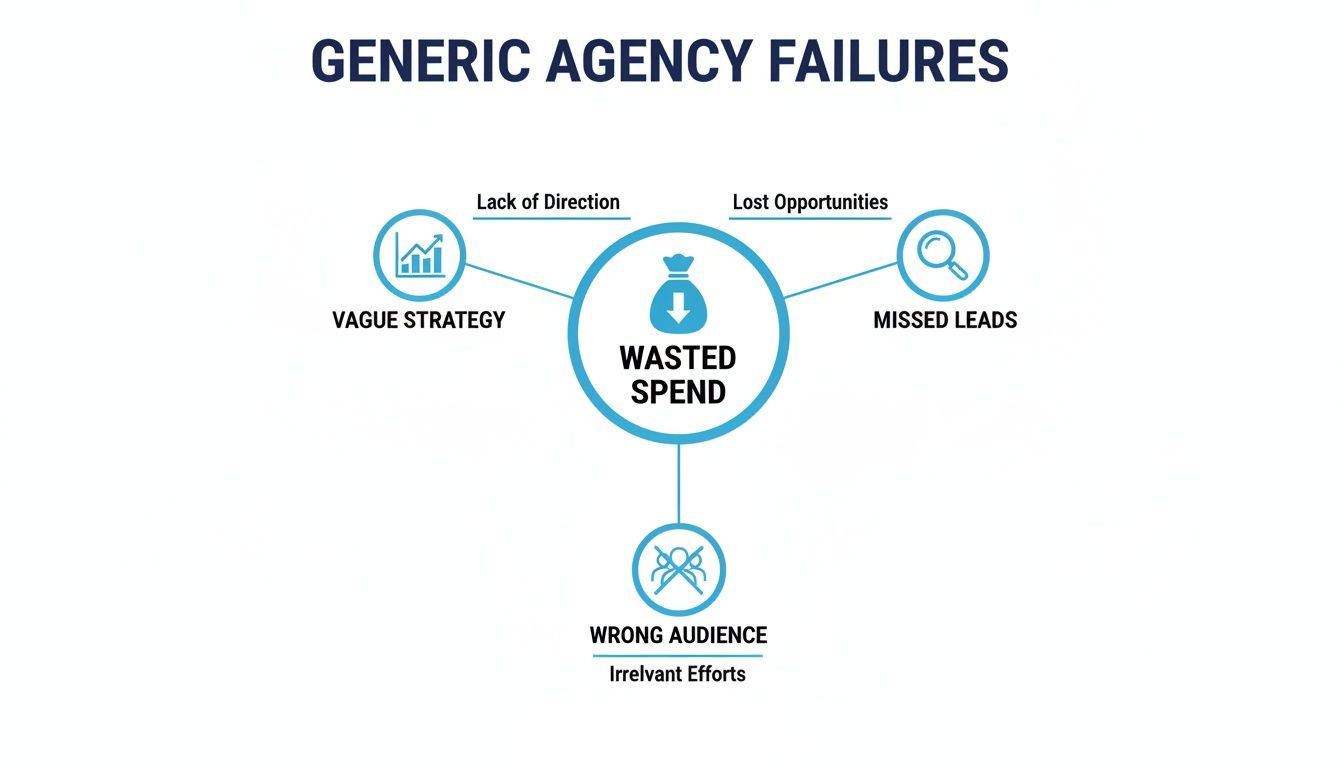
As you can see, a vague strategy aimed at the wrong people doesn’t just miss a few leads; it actively burns through your budget with nothing to show for it.
A generic approach treats every click as equal, failing to differentiate between a high-value tender inquiry and a low-value DIY question. This fundamental error is why so many trade businesses conclude that “PPC doesn’t work,” when in reality, their strategy was never designed to succeed in the first place.
Why Your Generic PPC Agency is Failing in the Building Sector
The trade and building products sector doesn’t play by the same rules as your average online shop or B2C service. When a generic agency, used to simple, quick sales, wades into this world, they’re immediately out of their depth. They just don’t get the complex, often messy, reality of how your business actually makes a profit.
It’s like giving a road map of London to a sailor trying to navigate the North Sea. The map itself isn’t wrong, but it’s completely useless for the environment they’re in. That’s what a generic PPC strategy is for your industry—the wrong map for a very unique terrain.
The Long and Winding Sales Cycle
Unlike buying a pair of trainers, nobody impulse-buys a pallet of bricks or a commercial HVAC system. The journey from a flicker of interest to a final sale can be incredibly long, weaving through multiple companies and decision-makers.
A typical project sale might unfold like this:
- Specification: Months, or even years, before a project breaks ground, an architect specifies your high-performance insulation for a new build.
- Tender: A main contractor wins the project and puts the job out to tender, inviting bids from subcontractors and suppliers.
- Quotation: A builders’ merchant quotes for the specified insulation as part of a much larger materials package for a subcontractor.
- Purchase: The subcontractor finally places the order with the merchant once that phase of construction begins.
Your average PPC agency only sees that first click from the architect. When no immediate sale pops up in their dashboard, they write it off as a worthless interaction. They’ve completely missed the fact that this single click was the seed for a £50,000-plus order down the line. They simply aren’t set up to track or value these long-term, multi-touchpoint sales.
The Offline Sales Chasm (Why Generic PPC Agencies Don’t Work for Trade and Building Product Businesses)
Here’s another massive blind spot for generic agencies: the chasm between online browsing and offline buying. A huge chunk of sales in this sector aren’t completed in a website checkout. They’re finalised in a branch, over the phone, or through a long-standing trade account.
Think about it. A local builder searches “composite decking suppliers near me” on his phone, clicks your ad, finds his nearest stockist, and drives over to pick up the materials. To a generic agency’s tracking software, that’s a bounced click and wasted ad spend. In reality, it was a valuable conversion that their simplistic setup was completely blind to.
Without the right systems to connect online ads to offline sales—like call tracking, CRM integrations, and in-store conversion data—a generic agency is flying blind. They will inevitably “optimise” away from the very campaigns that are driving your real-world revenue.
Complex Products and Speaking the Right Language
The building trade isn’t one single audience. The language, problems, and search habits of a plumber are worlds apart from those of a roofer, an architect, or a quantity surveyor. On top of that, your product catalogues are probably massive, full of technical jargon and thousands of SKUs.
A generic agency almost always makes two critical mistakes here:
- Lumping Everyone Together: They serve up the same generic ads and landing pages to everyone, failing to speak the specific language of each trade. The result? Low engagement and rubbish leads.
- Misreading Intent: They can’t tell the difference between a high-value search like “commercial grade fire door suppliers” and a low-value DIY query like “how to hang a door”. This means your budget gets burned attracting hobbyists instead of profitable trade customers.
This lack of nuance is a killer, especially when you’re trying to grab market share. Knowing how to create laser-focused campaigns is essential for understanding how UK building suppliers can compete with Screwfix and B&Q on Google Ads, a challenge most agencies are totally unprepared for. Properly managing complex product feeds and segmenting audiences by trade isn’t a standard PPC feature; it’s a specialist skill. It’s this deep industry knowledge that separates a true partner from a vendor just ticking boxes.
Why Generic PPC Agencies Don’t Work for Trade and Building Product Businesses: Where Generic Campaign Management Actually Fails
The high-level strategic mistakes are bad enough, but where a generic PPC agency really burns through your budget is in the day-to-day, technical weeds of managing your campaigns. This is where theory crashes into reality. Their lack of industry-specific knowledge translates directly into wasted money, day in, day out.
We’re not talking about minor oversights here. These are fundamental errors that cripple a campaign from the get-go. A generic agency might tick the boxes on a standard PPC checklist, but they completely miss the unique buying signals and conversion paths of the trade and building sector.
Fatally Flawed Conversion Tracking
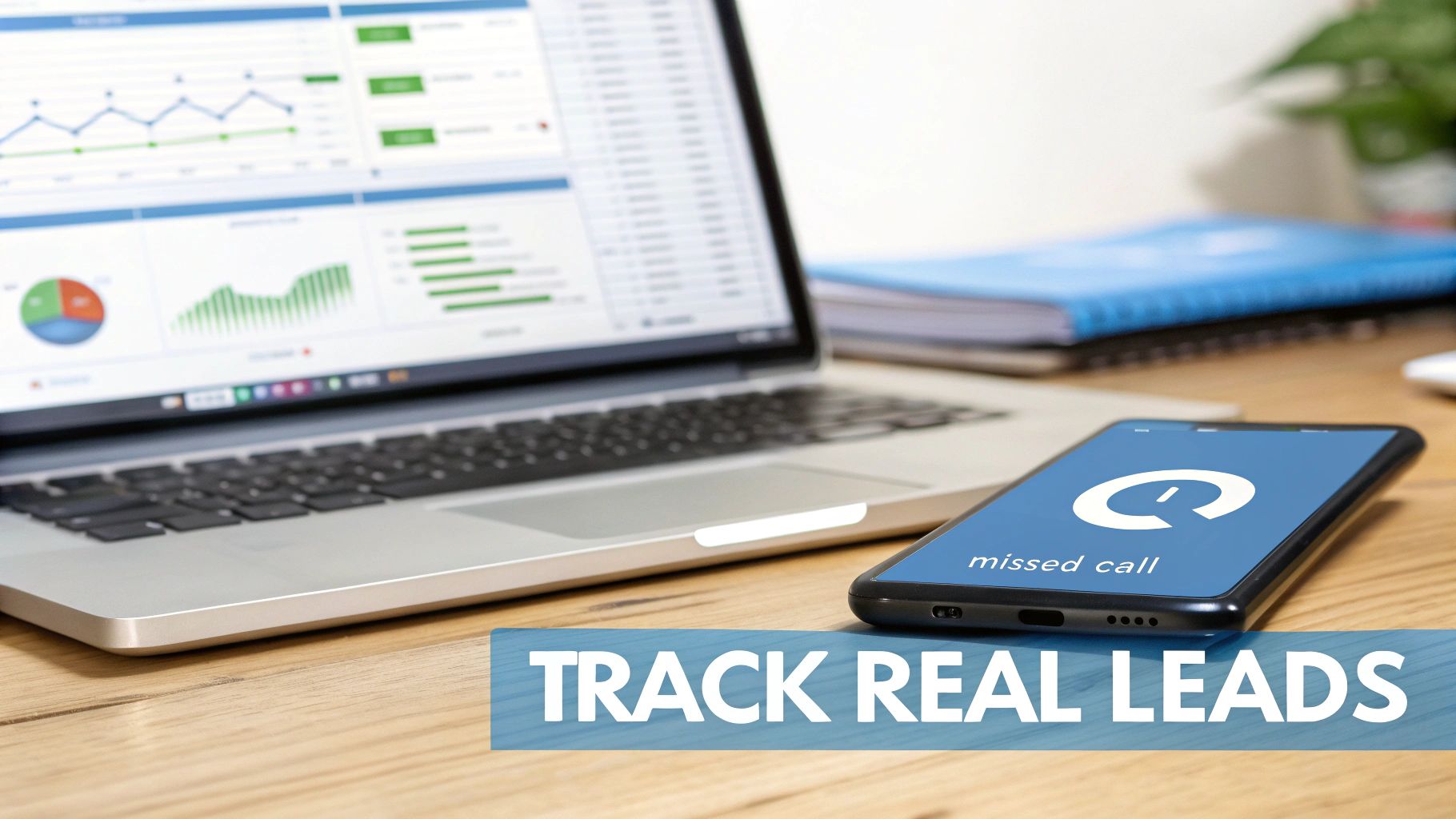
The single biggest technical failure, almost every single time, is inaccurate conversion tracking. A generic agency is programmed to look for one thing: an online form submission or an e-commerce checkout. For a business like yours, that’s a hopelessly incomplete picture.
Your most valuable leads often don’t bother with a “Contact Us” form. They pick up the phone to discuss a large order, request a quote for a complex project, or download a technical spec sheet before making a decision.
To a generic agency’s standard setup, a phone call from a contractor looking to open a trade account is invisible. They literally cannot see your most important conversions, which means they can’t optimise your campaigns to generate more of them.
This blindness leads them to pause high-performing campaigns and pour money into ones that generate low-value form fills, simply because it’s the only data they know how to measure. The consequences for your sales pipeline—and your budget—are disastrous.
Misaligned Bidding and Budget Burn (Why Generic PPC Agencies Don’t Work for Trade and Building Product Businesses)
Because their tracking is broken, their bidding strategies are inevitably out of sync with your actual business goals. Google’s automated bidding algorithms are powerful, but they are only as smart as the data you feed them.
When an agency can’t tell the difference between a lead for a £20,000 tender and a £20 DIY enquiry, the algorithm treats them as equals. This leads to some classic, costly bidding failures:
- Paying too much for low-value clicks: Your budget gets torched on hobbyists searching for “how-to” guides because the system can’t tell them apart from professionals.
- Underbidding on high-value terms: The algorithm won’t bid aggressively enough for valuable keywords like “bulk timber supply Manchester” because it has no data proving those clicks lead to profitable sales.
This isn’t a rare problem. Research shows that UK SMEs can waste up to 40% of their Google Ads budgets due to these exact pitfalls. Generic agencies often ignore negative keywords and fail to implement proper conversion tracking, leading to ads for ‘buy bricks near me’ showing up for irrelevant searches like ‘DIY bricklaying tips’.
The Negative Keyword Blind Spot
Finally, a classic sign of a generic approach is a weak or non-existent negative keyword strategy. Negative keywords are your campaign’s filter, stopping irrelevant search traffic from ever seeing your ads. In the trade sector, the line between commercial and consumer intent is incredibly fine.
A specialist understands your audience’s language. They know what to block. A generic agency simply doesn’t.
Example Failure:
- Your Ad: “Premium Oak Flooring Supplier UK”
- Your Target Customer Searches: “buy engineered oak flooring in bulk”
- A Generic Agency Lets You Pay For: “oak flooring scratch repair,” “free oak flooring samples,” and “oak flooring installation jobs”
Every single click from an irrelevant search is money straight down the drain. Without a deep understanding of the industry, a generic agency can’t possibly build the robust negative keyword lists needed to protect your ad spend. This is a critical distinction that highlights why hiring a specialist PPC agency trumps in-house management for most trade businesses. Specialists bring a pre-built understanding of these nuances, saving you money from day one.
Why Generic PPC Agencies Don’t Work for Trade and Building Product Businesses: The Specialist Blueprint for Measurable Success
After seeing where generic agencies go wrong, it’s clear you need a completely different game plan for the trade and building products sector. A specialist doesn’t just tick boxes on a standard PPC checklist; they work from a blueprint designed specifically for the quirks of your industry. This approach turns your ad spend from a hopeful expense into a predictable growth engine.
It all starts with a proper deep-dive onboarding process that goes way beyond asking who your target audience is. A specialist wants to get under the skin of your business. They’ll ask about profit margins on different product lines, the typical sales cycle for a specifier versus a contractor, and what a trade account is actually worth over its lifetime.
This isn’t just them being nosy. This granular data is the raw material they need to build a powerful, finely-tuned PPC machine.

Building a Full-Funnel Tracking System
The first job is to build a tracking system that sees the entire customer journey, not just the first click. This means going far beyond basic website form submissions and setting up a robust measurement framework that connects every dot.
A specialist’s tracking setup will almost always include:
- Dynamic Call Tracking: This is clever stuff. It assigns a unique phone number to each user, so every single inbound call can be traced right back to the specific campaign, ad group, and keyword that prompted it. No more guesswork.
- CRM Integration: This is the real game-changer. By hooking your Google Ads account directly into your CRM system, the agency can see which clicks become qualified leads, which leads get quoted, and which quotes turn into actual, paying customers with real revenue attached.
- Offline Conversion Imports: This is the crucial final piece. It allows the agency to feed offline sales data—from those phone calls or in-person deals—back into Google Ads. This teaches the algorithm which keywords are actually driving your most profitable business.
This level of detail is non-negotiable for understanding your true ROI. To get a better handle on this, check out our guide on how trade suppliers should track PPC ROI from click to credit account.
Precision Targeting and Bidding (Why Generic PPC Agencies Don’t Work for Trade and Building Product Businesses)
With accurate, full-funnel data flowing through the system, a specialist can use bidding and targeting strategies that are simply out of reach for a generic agency. They stop treating every click as equal and start optimising for real business value.
A specialist agency moves the goalposts from chasing cheap clicks to acquiring high-value customers. They use your own sales data to tell Google’s algorithm precisely what a good lead looks like, allowing it to hunt for more of them with surgical precision.
This is where the magic happens. Instead of a blanket “Maximise Conversions” strategy based on flimsy website enquiries, they can build custom bidding models. For example, they might tell the algorithm to bid 3x more aggressively for a user who downloads a technical specification sheet compared to someone who just browses a product page. Why? Because the data shows that the specifier is far more likely to become a high-value customer.
This data-led approach is what separates the winners from the losers. It’s no wonder that a staggering 73% of small business PPC campaigns fail within 90 days; generic agencies just don’t have the precision required for niche UK trade keywords like ‘bulk cement suppliers Manchester’. Without a specialist blueprint, they are simply set up to fail. You can read more about these common PPC failures on imarkinfotech.com.
This blueprint isn’t some secret formula; it’s a methodical process built on a deep understanding of your industry. It ensures every pound of your ad spend is working towards a measurable business outcome, not just racking up meaningless clicks.
Why Generic PPC Agencies Don’t Work for Trade and Building Product Businesses: How To Vet Your Next PPC Agency
Choosing a new PPC agency can feel like a high-stakes gamble, especially when you’ve been burned by a one-size-fits-all approach before. To sidestep the same old mistakes, you need a vetting process that slices right through the slick sales pitches and gets to the heart of what they actually know about your industry.
It all comes down to asking questions that a generic agency just can’t answer convincingly. Arm yourself with a checklist designed to expose any gaps in their understanding of the trade and building products sector. A true specialist won’t just have the answers; they’ll welcome these questions as a chance to show you what they’re made of.
Questions That Expose a Generalist
When you get them on the phone, push past the usual queries about their “process.” The real test is to throw them scenarios unique to your business. The quality of their answers will tell you everything you need to know.
Here are the essential questions to get you started:
- Offline Conversion Tracking: “How do you plan to track and attribute sales that start with an online click but close over the phone or in a branch?” A vague, waffly answer here is a massive red flag. A specialist will immediately start talking about call tracking, CRM integrations, and offline conversion imports. They’ll get it.
- Long Sales Cycles: “Show me a case study from a business with a sales cycle as long as ours. How did you measure success and justify the ad spend in the months before the revenue actually landed?” They should be able to speak confidently about tracking micro-conversions (like spec sheet downloads or quote requests) and connecting them to the final sale down the line.
- Audience Segmentation: “How would you approach a campaign targeting architects differently from one targeting on-site contractors?” You’re looking for an answer that goes deeper than just job titles. They should touch on different keywords, messaging that speaks to each audience’s pain points, and tailored landing page experiences.
- Technical Expertise: “What’s your process for building a negative keyword list for a business like ours?” They should instantly fire back with examples like filtering out DIY-ers, job seekers, and academic research terms to stop your budget from being wasted.
Focus On KPIs That Actually Matter (Why Generic PPC Agencies Don’t Work for Trade and Building Product Businesses)
A generic agency will try to dazzle you with vanity metrics like (Why Generic PPC Agencies Don’t Work for Trade and Building Product Businesses) clicks and impressions. Sure, those numbers look good on a report, but they often have zero connection to your bottom line. You have to insist on a conversation centred on Key Performance Indicators (KPIs) that measure real-world business impact.
The most crucial shift you can make is from measuring online activity to measuring genuine commercial outcomes. If an agency can’t track and report on what truly drives revenue, they can’t effectively manage your account.
Before you go any further, it’s vital to agree on what success looks like. The table below outlines the KPIs that should be front and centre in any discussion.
Essential PPC KPIs for Trade and Building Product Businesses
| KPI | Why It Matters | What to Look For |
|---|---|---|
| Cost Per Qualified Lead (CPQL) | This filters out the tyre-kickers. It measures the cost to get a lead your sales team actually considers a genuine opportunity, not just a random form fill. | A clear process for defining what makes a lead “qualified” and a system for tracking it, often involving CRM integration. |
| Lead-to-Close Rate | This is the ultimate test. What percentage of PPC leads actually become paying customers? It directly connects your marketing spend to sales success. | The agency should be eager to work with your sales data to prove the value they’re delivering beyond the initial click. |
| True Return on Ad Spend (ROAS) | This isn’t just online sales divided by ad cost. It demands factoring in the total value of offline and phone sales that originated from your campaigns. | An agency capable of implementing sophisticated tracking to give you a complete, accurate picture of your profitability. |
| Customer Lifetime Value (CLV) | This separates the good agencies from the great ones. They shouldn’t just focus on the first sale, but on acquiring customers who will spend with you for years to come. | A strategic approach that considers the long-term value of a customer, not just the immediate win. |
Ultimately, demanding that an agency focuses on these metrics forces them to align their efforts with your business goals. If they push back or seem confused, you know they aren’t the right partner to help you grow.
It’s Time to Choose a Partner, Not Just Another Agency
Picking a PPC agency isn’t just another item on your to-do list; it’s a strategic decision that will shape your company’s future. For businesses in the trade and building products sector, getting this choice right is absolutely critical. The proof is in the pudding: generic, one-size-fits-all PPC agencies just don’t cut it. Their approach is a surefire way to burn through your budget and leave a trail of missed opportunities.
Sustainable growth demands a partner who truly gets your world. Someone who knows the difference between a specifier and a subcontractor, and who can connect the dots between an online click and an offline trade account. You need a team that builds campaigns to generate profitable leads, not just hollow traffic stats. It’s all about turning your ad spend into a predictable, reliable engine for revenue.
Look Beyond the Click
This means digging deeper than surface-level metrics and focusing on what actually moves the needle for your business. A specialist partner will be obsessed with tracking genuine ROI, not just clicks. They’ll protect your budget and squeeze every last drop of value out of it, which is more important than ever.
Why? Because the threats are real and growing. Projections show UK businesses are on track to lose a staggering £186 million to PPC click fraud in 2025 alone, with a shocking 40% of campaigns hit by fake clicks. This issue disproportionately hurts trade SMEs who are often stuck with generic agencies that don’t have the specialised tools to spot and block these sophisticated attacks. You can get the full picture on the rising costs of UK click fraud over at PPCShield.io.
Choosing a specialist isn’t an expense; it’s an investment in efficiency, security, and long-term profitability. It’s the difference between merely running ads and building a powerful, resilient growth engine for your business.
It’s time to stop pouring your marketing budget into a generic strategy that was never built for you in the first place. The first step towards a more profitable approach is to get a clear, honest look at where your money is really going. An expert audit can uncover the hidden potential in your account and lay out a clear roadmap to start winning.
Any Lingering Questions?
It’s completely normal to have a few questions buzzing around before you decide to move on from a generic PPC provider. Making a switch feels like a big step, so let’s tackle the most common concerns head-on. We want you to feel confident you’re making the right move for your business’s growth.
These are the practical, real-world questions we hear all the time, cutting right to the chase on cost, expertise, and what the transition actually looks like. Let’s clear the air.
Can’t a Generic Agency Just Learn Our Industry?
You might think, “Sure, they’re smart, they can learn.” And you’re right, they can. The problem is who pays for their education. When a generic agency learns on the job, they’re using your ad budget for their tuition fees, making all the predictable mistakes and wasting your money while they figure out the unique quirks of your market.
A specialist agency walks in on day one already knowing the landscape. They’ve run hundreds of campaigns for businesses just like yours and have a mountain of industry data to draw from.
They have already made and learned from the costly mistakes a generic agency is about to make with your budget. They bring proven strategies, refined negative keyword lists, and an innate sense of what separates a high-value lead from a time-waster, saving you money from the very beginning.
Is a Specialist Agency Really Affordable?
This is a classic case of looking at the price tag instead of the value. True affordability isn’t about the monthly management fee; it’s about your return on investment (ROI). A “cheaper” generic agency that burns through your ad spend with little to show for it is the most expensive option of all.
Think about it this way: if a specialist eliminates 30-40% of wasted ad spend and doubles your qualified leads, the value they provide dwarfs their fee. The real cost isn’t what you pay the agency; it’s the lost revenue from missed opportunities and the money you’re pouring down the drain on clicks that go nowhere. A specialist is obsessed with making every single pound you spend work harder for your bottom line.
What’s the First Step to Making a Switch?
The easiest and most logical first step is to get a professional, no-obligation audit of your current ad account. It’s a low-risk, high-insight move that gives you a crystal-clear picture of the opportunities you’re currently missing out on.
An experienced specialist will dig into your campaigns, pinpoint exactly where the money is being wasted, and show you a clear, data-driven plan for how to fix it. This process isn’t about vague promises; it’s about showing you the concrete potential for growth based on your own account’s data, turning a fuzzy idea into a specific, actionable strategy.
Ready to see what a specialist approach can actually do for your business? The team at PPC Geeks offers a completely free, in-depth PPC audit. We’ll show you exactly where your money is going and how you can get a much better return. Stop guessing and start growing with a strategy built for the trade and building products sector.
Get your free audit today from PPC Geeks and see the difference for yourself.