




Audience targeting is all about focusing your marketing firepower on a specific group of people – the ones most likely to become your customers. Instead of casting a wide, expensive net and hoping for the best, it lets you concentrate your budget and message on a relevant audience. This turns your campaigns from a bit of a guessing game into a calculated strategy for growth.
Demystifying Audience Targeting

Imagine trying to sell premium steaks to a room full of vegetarians. It’s a loud, expensive, and ultimately pointless exercise. That’s pretty much what marketing without a clear focus looks like.
Audience targeting flips this script completely. Think of it as moving from shouting your message from a rooftop to having a meaningful, one-on-one conversation with a handpicked group of people who are genuinely interested in what you have to say.
This approach is the art and science of figuring out who will get the most value from your products or services. It means breaking down a massive market into smaller, more manageable segments based on what they have in common. These segments can be defined by all sorts of things:
- Demographics (age, location, gender)
- Interests (hobbies, what they read or watch)
- Behaviours (past purchases, websites they’ve visited)
- Psychographics (their values, lifestyle, and personality)
Why It Is a Game Changer for SMEs
For UK small and medium-sized enterprises (SMEs), getting audience targeting right isn’t just a “nice-to-have” – it’s absolutely essential for competing against the big players. By focusing your resources, you make every marketing pound work that much harder.
This precision is especially powerful in digital advertising. Just look at the trends: the UK advertising sector recently sailed past £40 billion in revenue, with digital making up around 81% of the total ad spend. That’s a huge shift towards data-driven strategies.
By speaking directly to the people most likely to convert, you stop wasting money on clicks that go nowhere. This targeted approach is essential for maximising your budget and achieving a positive return on investment, particularly within PPC campaigns.
When you truly understand who you’re talking to, you can craft messages that really resonate, building stronger customer relationships and driving real results. You can find out more about how this all fits together in our guide on what PPC is and how it works.
Understanding the Core Types of Audience Targeting
Once you know who you want to talk to, the next step is figuring out how to find them online. Audience targeting methods are like different lenses you can use to bring your perfect customer into sharp focus. Each approach gives you a unique way to slice up the market, letting you move from broad assumptions to precise, effective advertising.
Getting your head around these core types is the foundation of any successful campaign. This visual gives you a clear breakdown of the main categories.
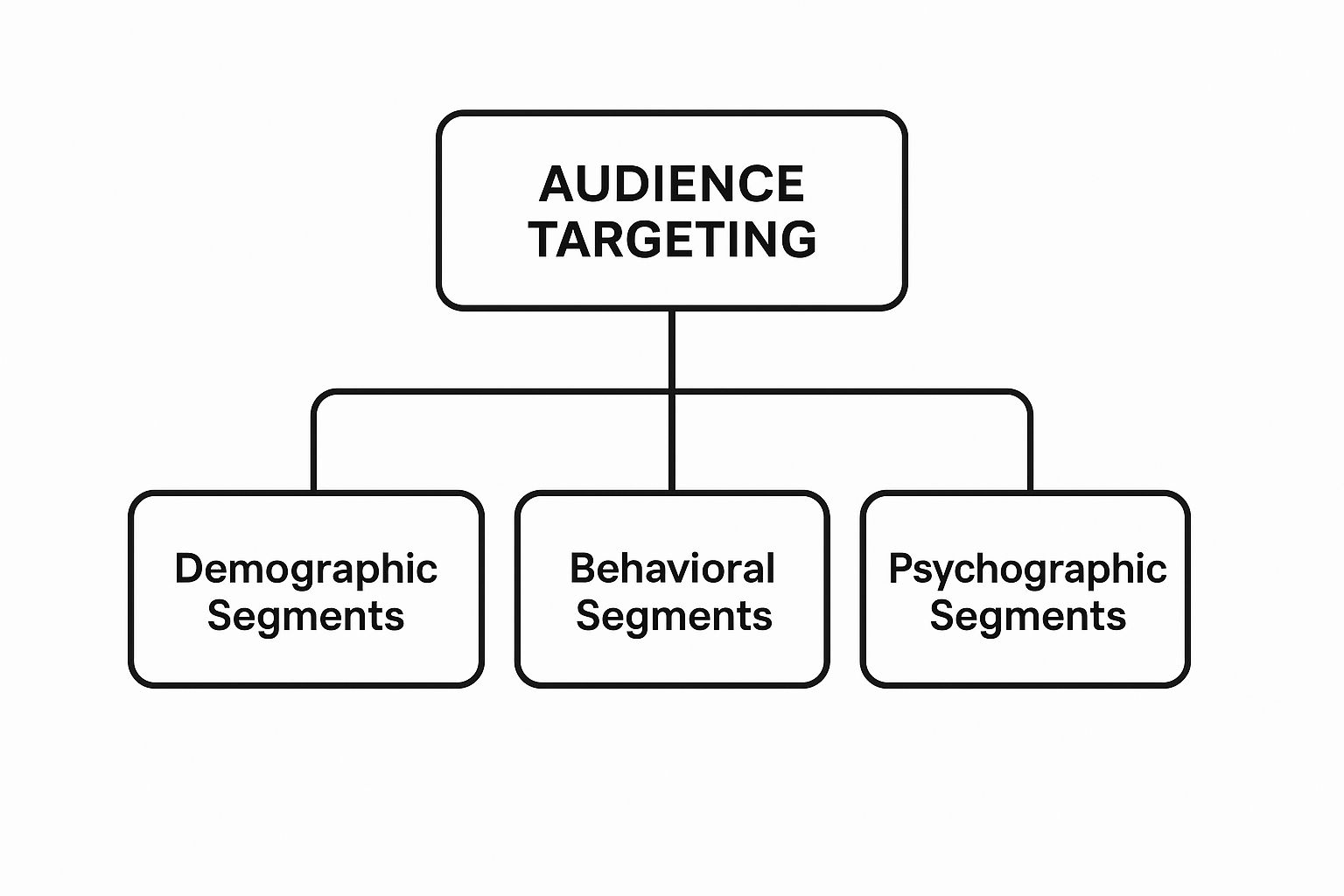
As you can see, targeting often starts with broad methods like demographics before getting into the more granular behavioural and psychographic strategies.
Demographic Targeting: Who Your Audience Is
Demographic targeting is usually the first port of call when building an audience. It groups people based on objective, statistical data—the basic “who” and “where” of your customer base. This information is foundational because it provides a clear, measurable snapshot of a particular group.
Common demographic data points include:
- Age and Gender: The most basic identifiers.
- Location: From country and city right down to a specific postcode.
- Income Level: Their estimated earning bracket.
- Education and Occupation: Their professional background and qualifications.
For example, a Bristol-based retirement planner would use demographic targeting to focus their ads on homeowners aged 55+ within a certain radius of their office. This makes sure their message about pension planning hits a relevant local audience and avoids wasting money on younger people who aren’t their target clients.
Psychographic Targeting: Why They Make Decisions
While demographics tell you who people are, psychographics tell you why they do what they do. This method goes much deeper, splitting audiences based on their internal characteristics—their values, attitudes, interests, and lifestyles. It’s all about getting inside their heads and understanding their motivations.
Psychographic targeting is how you connect with customers on an emotional level. You’re aligning your brand’s story with their personal values, creating a bond that’s much stronger and more memorable than simple demographics could ever manage.
Think about a sustainable fashion brand in Brighton. They’d use psychographic targeting to find consumers who prioritise ethical sourcing and environmentalism. Their ads would tap into a shared value system, connecting with an audience that actively seeks out eco-friendly products, regardless of their age or income.
Behavioural Targeting: What Your Audience Does
Behavioural targeting is arguably the most powerful method going because it’s based on what users actually do, not just what they say they’re interested in. This strategy groups people based on their online activities, like their browsing history, past purchases, and interactions with your website or app. It’s about targeting based on proven intent.
Consider an online specialty food shop. With behavioural targeting, they can create a specific audience of users who added gourmet cheeses to their basket but never checked out. They can then serve these users a targeted ad reminding them of the items they left behind, maybe with a small discount to nudge them over the line. With the average cart abandonment rate sitting around 70%, this is a massive opportunity you can’t afford to miss.
Key Audience Targeting Methods at a Glance
Each of these methods gives you a different piece of the puzzle. To make it easier to see how they stack up against each other, here’s a quick comparison.
| Targeting Type | What It Is | Example Use Case |
|---|---|---|
| Demographic | Groups people by objective data like age, location, and income. | A luxury car dealership in London targeting ads to high-income individuals aged 40+ in affluent postcodes. |
| Psychographic | Segments audiences based on values, interests, and lifestyles. | An outdoor adventure gear shop targeting people who follow hiking blogs and are members of conservation groups. |
| Behavioural | Targets users based on their online actions, like past purchases or site visits. | An online bookshop retargeting ads to users who recently viewed science fiction novels on their website. |
Combining these approaches is where the real magic happens. For UK eCommerce brands looking to blend these strategies effectively, our guide on eCommerce PPC strategies for reaching UK shoppers offers deeper insights and practical tips.
How Targeting Supercharges Your PPC Campaigns
It’s one thing to know the different types of targeting, but it’s another to see how they directly fatten up your bottom line. When it comes to Pay-Per-Click (PPC) campaigns, audience targeting isn’t just a nice-to-have feature; it’s the very engine that drives your results.
Without it, you’re just throwing money at clicks and hoping for the best. With it, you’re making a calculated investment in people who are actually likely to become customers. This is where theory meets profit. By concentrating your ad spend on a hand-picked group of people, you shift from shouting into a crowd to having a meaningful conversation, making sure every pound you spend has the best possible chance of bringing a return.
Boost Your Ad Performance and Lower Costs
Think about it: when your ads pop up in front of people who are genuinely looking for what you sell, they’re far more likely to click. That immediate jump in your click-through rate (CTR) sends a huge positive signal to platforms like Google Ads. A high CTR basically tells Google, “Hey, people find this ad really useful.”
This relevance is a massive piece of your Quality Score, which is Google’s yardstick for figuring out your ad rank and how much you’ll fork out for each click. A better Quality Score translates directly into tangible benefits:
- Better Ad Positions: You’ll climb higher up the search results page, getting you more eyeballs.
- Lower Cost Per Click (CPC): You end up paying less for each click than your competitors who have sloppier, less relevant ads.
In short, showing your ads to the right audience kicks off a brilliant feedback loop. Your ads do better, Google rewards you with lower costs and prime ad estate, and your budget suddenly stretches a whole lot further.
Drive Higher Conversion Rates
Getting the click is only half the job. The real prize is the conversion. Smart audience targeting means the people landing on your website aren’t there by mistake. They’ve arrived because your ad struck a chord, speaking directly to a need or an interest they already have.
This perfect match between what the user wants and what your landing page offers is where the magic happens. Because the visitor is essentially pre-qualified, your message, products, or services will resonate on a much deeper level. The result? A much smoother, more natural journey from that initial click to a conversion, whether that’s a sale, a form submission, or a phone call.
A well-targeted campaign makes your landing page feel like the perfect answer to a visitor’s question. This seamless experience dramatically increases the likelihood of conversion because you are meeting their exact needs at the right moment.
For UK SMEs, this is a game-changer. It means your hard-earned budget isn’t being frittered away on clicks from people who were never going to buy from you. Instead, every penny goes towards attracting traffic with a real, measurable chance of becoming a loyal customer. That makes audience targeting a true cornerstone of sustainable growth.
A Practical Guide to Building Your Customer Persona
Knowing the theory is one thing, but putting it into practice is where the magic happens. The goal now is to take that fuzzy idea of a ‘target audience’ and sharpen it into a clear, relatable profile we call a customer persona. This isn’t just some fluffy marketing exercise; it’s about building a fictional character who embodies your ideal customer. It gives your whole team a single, consistent person to focus on.
Think of it this way. Instead of shouting your marketing message into a faceless crowd, you’re having a conversation with “Sarah.” She’s a 34-year-old marketing manager from Manchester, and her biggest headache is time management. See how that changes things? Instantly, your messaging can become more direct, more helpful, and a whole lot more human.
Start with the Data You Already Have
The best place to kick things off is with the goldmine of information you’re already sitting on: your current customers. These are the people who’ve already bought into what you do, making them the perfect blueprint for finding more people just like them. Your first job is to get stuck into the analytics.
Tools like Google Analytics are your best friend here. In just a few clicks, you can uncover some serious truths about who’s visiting your site and, more importantly, who’s converting. Look for the patterns in:
- Demographics: Jump into the age, gender, and location reports. Who are your most active and engaged visitors?
- Interests: Have a look at the Affinity Categories and In-Market Segments. This tells you about their hobbies and what they’re actively looking to buy right now.
- Behaviour: Which channels are bringing in your best customers? Is it organic search, social media, or something else? And what pages do they spend the most time on once they arrive?
This hard data gives you a solid, factual skeleton to build your customer persona around.
Gather Deeper Psychographic Insights
Once you’ve got the ‘what’, it’s time to figure out the ‘why’. This is where you dig into the psychographic stuff—the goals, the headaches, and the motivations that actually drive their buying decisions. While analytics are brilliant, sometimes the old-fashioned way is the best way: just ask them.
A simple, well-designed survey can give you more actionable insight into your customer’s mindset than months of guesswork. Understanding their pain points, in their own words, is the secret to creating marketing that genuinely connects.
You don’t need a massive, complicated system for this. A short survey fired off to your email list or even a few friendly phone calls to your most loyal customers can uncover an incredible amount of useful info. Try asking questions like:
- What was the biggest challenge you were facing that made you look for a solution like ours?
- What are you trying to achieve right now, either at work or in your personal life?
- What does a really successful outcome look like for you after using our product/service?
When you combine the hard data from your analytics with these real-world insights, you can start building a truly detailed persona. Give them a name, a job title, and a list of their daily frustrations. This profile then becomes your north star, making sure every single bit of marketing you create is aimed squarely at the right person.
Choosing the Right Platforms for Targeting UK Audiences
Knowing your ideal customer is half the battle; the other half is knowing where to find them online. Each digital platform has its own unique strengths, and picking the right mix is absolutely crucial for a UK SME looking to get the most out of its budget. This isn’t about being everywhere—it’s about being in the right places.
Think of it like fishing. You wouldn’t use the same bait and spot to catch trout as you would for cod. In the same way, the platform you choose has to match where your customers hang out and what they’re looking for.
Capturing High-Intent Customers with Google Ads
When a potential customer has a problem they need to solve right now, where do they go? Google. This makes Google Ads the undisputed champion for grabbing the attention of high-intent users at the very moment they’re searching for a solution.
Someone typing “emergency plumber in Manchester” isn’t just browsing; they have a burst pipe and need help immediately. By targeting specific keywords and locations, your business can pop up as the perfect answer. This is where you can capture leads who are ready to convert, making it an incredibly powerful tool for service-based businesses and retailers. If you need more advice on this, check out our guide on https://ppcgeeks.co.uk/ppc/how-to-improve-google-ads-performance/.
Building Awareness and Community on Social Media
While Google Ads is fantastic for capturing active demand, social media is where you create it. Platforms like Facebook, Instagram, and TikTok are perfect for building brand awareness and connecting with people based on their interests and lifestyles. It’s less about the hard sell and more about starting a conversation.
Social media is a massive arena for audience targeting in the UK. Facebook, for example, still has a user base of 38.3 million people here, which is a whopping 64.6% of the eligible audience aged 13 and over. Its ad reach has also grown by 3.2%, showing it’s as relevant as ever for marketers.
Your choice of social platform depends entirely on your audience. A local café might use Facebook’s powerful demographic tools to reach community groups, while a B2B software company will find LinkedIn’s professional data essential for reaching decision-makers.
Choosing Your Platform Mix
Let’s be clear: no single platform is a silver bullet. The most effective strategies almost always use a combination, with each one playing a distinct role in the customer’s journey.
- Google Ads: Best for capturing immediate, high-intent demand from people actively searching for what you sell.
- Facebook & Instagram: Ideal for visual brands and building a community, using detailed demographic and interest targeting to build awareness.
- LinkedIn: The go-to platform for B2B services, letting you target by job title, industry, and company size.
- TikTok & Pinterest: Excellent for reaching younger demographics or audiences interested in creative, visual inspiration and lifestyle content.
By carefully selecting your platforms, you make sure your marketing budget is invested efficiently, putting your message right in front of your ideal UK customers where they’re most likely to listen.
Tried-and-Tested Best Practices for Smarter Targeting
Getting audience targeting right isn’t a “set it and forget it” job. Think of it as your pre-flight check before any campaign launch; running through these steps makes sure your efforts are effective, ethical, and ready for take-off.
A classic mistake is getting too specific, too soon. It’s much better to start with a fairly broad audience and then narrow it down using real performance data. This stops you from cutting out potential customers before your campaign even gets a chance to learn anything. Let the data be your guide.
Always Be Testing and Refining
Your audience is always changing, so your targeting needs to keep up. Continuous A/B testing is absolutely essential if you want long-term success. This simply means you need to be actively trying out different audience segments to see which ones get you the best results.
- Test Different Creatives: Does a certain image or headline click better with a specific demographic?
- Compare Audience Types: Pit a lookalike audience against an interest-based one. Which one gives you a lower cost per conversion?
- Dig into the Data: Regularly check your campaign metrics to spot your most profitable segments, then shift your budget to back the winners.
This constant cycle of testing and improving is the real secret to consistent growth. For more hands-on advice, our guide on PPC optimisation tips for maximising your ROI digs into even more strategies.
Match Your Message and Respect Privacy
Smart targeting is more than just finding the right people; it’s about saying the right thing to them. Your ad creative, copy, and landing page all need to speak directly to the segment you’re targeting. When they all line up, you create a smooth, persuasive journey for the customer.
In the UK, doing things ethically and putting privacy first is non-negotiable. Complying with GDPR isn’t just a legal hoop to jump through; it’s how you build trust with your audience, showing them you respect their data.
Finally, you can’t ignore how people are browsing. In the UK, smartphones drove a massive 58.34% of digital ad revenue, which tells you everything you need to know: mobile advertising is king. This trend means a mobile-first marketing strategy is a must, ensuring your campaigns look and work great on the devices your audience actually uses. Discover more insights about the UK’s digital advertising market.
Ready to put these best practices to work with a team of experts? PPC Geeks builds data-driven PPC strategies that get real results, boosting your traffic and sales while cutting out wasted spend. https://ppcgeeks.co.uk/