




So, what exactly is ChatGPT sponsored content? In simple terms, it’s promotional material that a brand pays to publish, but with a twist: AI tools like ChatGPT have helped create it. This could be anything from brainstorming initial ideas for a blog post to polishing the final ad copy. The key thing to remember is that it always needs a human in the driving seat to check for quality and authenticity.
Understanding ChatGPT Sponsored Content
It helps to think of ChatGPT not as some robot author churning out finished articles, but more like a creative co-pilot. For brands and marketers, it’s a seriously powerful assistant that speeds things up without completely taking over the controls. This human-AI collaboration is where you’ll find the real magic of ChatGPT sponsored content.
Instead of staring at a blank page, marketers can now get the AI to spit out campaign themes, article outlines, or different versions of social media captions in seconds. This partnership lets the human experts focus on the important stuff: strategy, fine-tuning the message, and adding that unique brand personality an algorithm just can’t fake.
The Spectrum of AI Assistance
Using AI in sponsored content isn’t an all-or-nothing deal. It can play a tiny role, like a quick grammar check, or a much bigger one, like drafting an entire article from a detailed brief. This flexibility makes it a handy tool at pretty much every stage of the marketing process.
Here’s a look at how brands and influencers are already using it:
- Idea Generation: Coming up with dozens of angles for a new product launch. It’s a great way to smash through creative blocks and find some fresh perspectives.
- Initial Drafting: Getting a structured first draft for a sponsored blog post or a video script. This gives a human writer a solid foundation to build on.
- Copy Optimisation: Tweaking headlines, calls-to-action (CTAs), and ad copy for PPC campaigns. You can test different tones to see what your audience responds to best.
- Content Repurposing: Turning a long sponsored article into a series of punchy tweets, a LinkedIn post, and an email newsletter snippet—all in a fraction of the time it used to take.
At its heart, using ChatGPT for sponsored content is all about working smarter, not harder. It frees up marketers from the boring, repetitive tasks, so they can pour more energy into high-level strategy and building a genuine connection with their audience.
Balancing Opportunity with Responsibility (ChatGPT Sponsored Content)
The upsides are obvious. Marketing teams can produce more content, test out more ideas, and react to market changes much faster. A task that might have taken days, like mapping out a social media campaign across multiple platforms, can now be sketched out in a matter of hours. This speed is a massive advantage.
But with great power comes great responsibility, as they say. The ease of creating content introduces new risks, like accidentally pumping out generic stuff that sounds like everyone else, or publishing factual errors. On top of that, the legal and ethical need to be transparent about using AI becomes even more critical. As we’ll get into, figuring out how to handle these challenges is the key to using this tech properly. The goal is to give human talent a boost, not to automate authenticity out of existence.
ChatGPT Sponsored Content: Navigating Disclosure Rules and Brand Safety

Jumping into AI for your workflow isn’t just about getting a shiny new toy; it comes with a whole new set of responsibilities. The world of ChatGPT sponsored content sits right at that tricky intersection of tech-speed and legal headaches, where being transparent isn’t just nice—it’s the law. In the UK, if you don’t clearly flag paid partnerships or the use of AI, you’re not just risking consumer trust, you’re inviting trouble from the regulators.
Think about it. You launch an influencer campaign, and ChatGPT helped write most of the scripts. If you’re not upfront about that, your audience could feel duped, thinking they’re hearing the influencer’s own, unscripted thoughts. This is exactly the sort of thing that gets organisations like the Advertising Standards Authority (ASA) and the Competition and Markets Authority (CMA) interested.
Their main rule is dead simple: ads need to look like ads. When someone sees sponsored content, it should be screamingly obvious that it’s commercial. Shoving AI into the mix just adds another layer of complexity, raising questions about authenticity that brands have to tackle head-on.
The UK Rules on Transparency
The rulebook in the UK is all about being clear and honest. For brands using AI to whip up sponsored content, this means you need to be open about both the paid partnership and how it was made. While there are no specific laws yet that scream “You must disclose AI!”, the existing advertising codes pretty much point you in that direction.
The ASA’s CAP Code, which covers most ads outside of TV and radio, is firm on one thing: marketing can’t be misleading. If a big chunk of your creative work was done by an algorithm, keeping that quiet could easily be seen as misleading your audience.
The golden rule here? Don’t be vague. If an average person would feel surprised or even cheated after finding out AI was heavily involved in creating the content they just saw, you probably need to disclose it.
So, how does this look in the real world? Let’s break it down.
- Sponsored Blog Posts: If ChatGPT helped draft that article, a simple line at the top or bottom is your best bet. Something like, “This post was created with [Brand] and with a little help from AI tools for research and drafting.”
- Social Media Campaigns: On platforms like Instagram or TikTok, the usual
#ador(AD)is a must. If AI wrote the caption or the script, chucking in#AIassistedadds that extra bit of honesty. - Digital Adverts: You don’t have much space in a PPC ad, so disclosure is tough. But the landing page that ad clicks through to? That’s where you need to be transparent if the content there was AI-generated.
Protecting Your Brand from AI Risks (ChatGPT Sponsored Content)
Getting the legal stuff right is one thing, but keeping your brand safe is a whole other ball game. Letting an AI take the creative reins without a human keeping a close eye is like giving the new intern the keys to your social media accounts with zero training. Things can go wrong, fast.
If left unchecked, AI can create a few headaches that could seriously tarnish your reputation. For a start, AI models are known to “hallucinate”—basically, they make stuff up and present it as fact with total confidence. Imagine a sponsored article for a health product that gets the dosage information wrong. The fallout could be huge.
On top of that, AI can sometimes produce content that’s just a bit… off. It might be subtly off-brand, biased, or even offensive. An AI trained on the wild west of the internet can accidentally reflect society’s worst biases. You could end up with ad copy that alienates a whole chunk of your audience or content that completely clashes with your company’s values.
To keep your brand safe, you need a solid internal policy for using AI in sponsored content. This isn’t about banning it, but about setting up some smart guardrails.
Key Pillars of an AI Usage Policy:
- Human Oversight is Mandatory: Nothing generated by AI should ever see the light of day without a proper review from a human expert. They need to know your brand voice, your values, and how to spot a “fact” that isn’t one.
- Define Clear Use Cases: Be specific about what AI is good for (like brainstorming ideas or writing first drafts) and what needs a purely human touch (like customer testimonials or your mission statement).
- Establish Disclosure Standards: Create simple, consistent rules for when and how your team discloses AI use in all ChatGPT sponsored content. This keeps everyone on the same page and stops you from accidentally breaking the rules.
ChatGPT Sponsored Content: Keeping Your AI Content Authentic and On-Brand
Let’s be honest, one of the biggest red flags with ChatGPT sponsored content is its tendency to sound… well, generic. If you rely too heavily on the AI without giving it proper direction, you can end up with content that feels lifeless, has zero personality, and reads like a thousand other articles already out there. This digital echo chamber is the absolute enemy of a strong brand identity.
Authenticity is what builds real connections with your audience. It’s your unique stories, your specific industry take, and that distinct voice that makes your brand stick in people’s minds. When AI churns out content, it’s pulling from a massive, generalised dataset, which is why the results are often bland and middle-of-the-road. The real challenge isn’t just making content faster; it’s making sure that content still sounds like you.
Adopting the Human-in-the-Loop Model
The best way to fight back against generic AI content is by using a human-in-the-loop model. This approach changes how you see ChatGPT – it’s not an automated writer, but a seriously powerful assistant. The AI does the heavy lifting, like drafting an outline or getting the first version down, while a human editor comes in to provide that crucial finishing touch.
Think of it like a top chef using a food processor. The machine can chop vegetables with incredible speed and precision, but the chef is still the one choosing the best ingredients, perfecting the seasoning, and plating the final dish. It’s the human’s expertise, taste, and creative vision that turn a simple meal into something exceptional.
In the world of sponsored content, the human-in-the-loop ensures that AI’s speed is guided by human creativity and brand knowledge. This partnership allows you to scale production without sacrificing the authenticity that your audience values.
Techniques for Injecting Your Brand Voice (ChatGPT Sponsored Content)
So, how do you take a sterile AI draft and breathe some life into it? It all comes down to the editing and refinement process. This is where you infuse the content with personality and truly make it your own.
Here are a few practical techniques to try when editing AI-generated drafts:
- Weave in Unique Brand Stories: ChatGPT has no idea about your company’s history or its proudest moments. Add in anecdotes about how you started, a fantastic customer success story, or a behind-the-scenes look at your team. These are the kinds of narratives an AI can’t invent, and they build a powerful emotional connection.
- Add Personal Insights and Opinions: A generic draft will state industry facts, but it won’t have a point of view. Jump in with your expert opinions, challenge a common assumption, or share a lesson you learned the hard way. This positions your brand as a genuine thought leader, not just another content machine.
- Fine-Tune the Tone and Language: Read every single sentence out loud. Does it sound like something your CEO would actually say? Tweak the vocabulary, sentence structure, and rhythm until it perfectly matches your established brand voice, whether that’s witty and informal or professional and authoritative.
If you’re creating paid ads, learning how to write better prompts will give you a much stronger starting point. You can check out some great ChatGPT ad examples and the prompts used to create them to see how being specific leads to far better, more on-brand results.
Upholding Integrity with Fact-Checking
Beyond your brand voice, getting the facts right is non-negotiable. AI models can sometimes “hallucinate” – meaning they present false information with complete confidence. A sponsored post riddled with factual errors can destroy consumer trust and seriously damage your brand’s credibility.
You absolutely must have a rigorous fact-checking process in place. Every statistic, claim, and technical detail generated by an AI has to be verified by a human expert against reliable, primary sources.
A Simple Fact-Checking Workflow:
- Isolate Claims: Go through the AI draft and highlight every specific data point, statistic, or factual statement.
- Verify with Primary Sources: Cross-reference each claim against reputable sources like industry reports, academic studies, or official government data. Never, ever trust a statistic without tracking down its origin.
- Attribute Where Necessary: For key data points, think about citing the source directly in your content. This boosts transparency and builds confidence with your readers.
By combining AI’s drafting power with meticulous human oversight, you create a solid system for producing high-quality, authentic, and trustworthy ChatGPT sponsored content.
ChatGPT Sponsored Content: A Practical Workflow for AI-Powered Content
Moving from theory to practice means you need a solid process. Using ChatGPT for your sponsored content isn’t about just clicking a button and hoping for the best. It’s about building a repeatable workflow that blends AI’s speed with crucial human judgement. A good system is the secret to consistency, quality, and making sure every piece of content feels like you.
This workflow lays out the journey from a blank screen to a published article, giving you a clear, step-by-step guide. By sticking to this process, you can confidently create ChatGPT sponsored content that’s both quick to produce and actually works.
The image below shows the basic idea, highlighting just how important the human touch is.
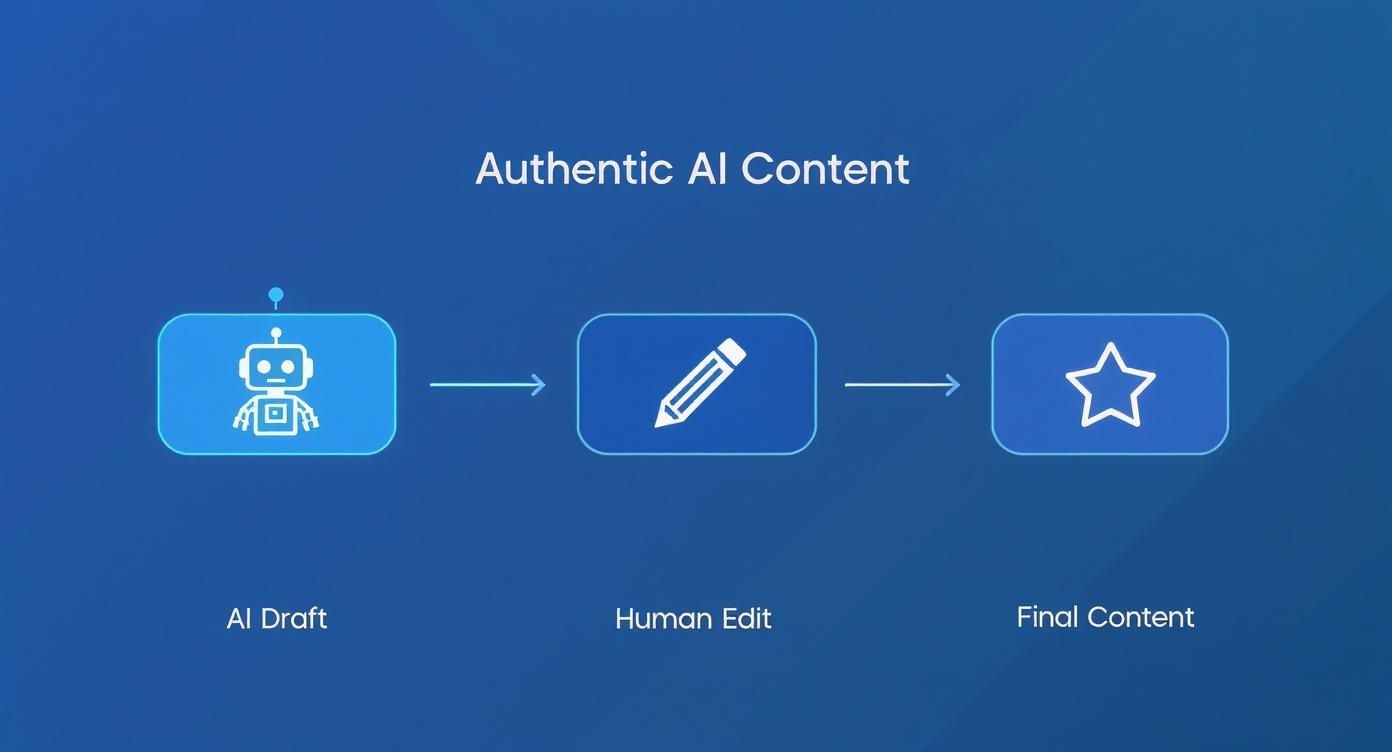
As you can see, the AI draft is just the starting block. It’s the human editing phase that really turns it into high-quality, final content.
Step 1: Ideation and Prompt Engineering
Every great piece of content begins with a solid idea, and ChatGPT can be a fantastic brainstorming partner. But instead of just asking for “blog post ideas,” you need to get good at prompt engineering. This just means giving the AI specific context, rules, and goals to work with.
Think of a well-written prompt as a detailed creative brief. It should always include:
- The Target Audience: Who are you talking to? (e.g., “UK-based ecommerce managers”)
- The Content Goal: What do you want them to do? (e.g., “Sign up for a free audit”)
- The Brand Voice: What’s the personality? (e.g., “Expert, approachable, and data-driven”)
- Keywords: Which SEO terms need to be in there? (e.g., “Google Shopping optimisation”)
- The Format: What are you actually making? (e.g., “A 1000-word sponsored blog post”)
For example, a weak prompt is: “Write a blog post about PPC.” A much, much better one would be: “Act as a specialist PPC strategist. Generate five compelling blog post titles for a UK audience of SME owners who are new to Google Ads. The tone should be helpful and professional, focusing on topics like budget management and avoiding common mistakes.”
Step 2: Drafting and Initial Generation (ChatGPT Sponsored Content)
Once you’ve got a strong idea and a detailed prompt, it’s time to let ChatGPT generate the first draft. This is where the AI really shines, quickly churning out a structured piece of content, whether that’s an article outline, social media copy, or even a video script. This first pass can save you hours of work.
But you have to treat this draft as raw material—it’s the lump of clay you need to shape. It will probably have the basic information you asked for, but it’s going to be missing the nuance, specific examples, and unique insights that make content genuinely valuable. The AI gives you the skeleton; your team has to add the muscle and personality.
Step 3: The Human Refinement Phase
This is, without a doubt, the most important stage in the whole process. This is where the “human-in-the-loop” model really comes to life, as an editor, writer, or brand manager meticulously works through the AI-generated text. For creating high-quality ChatGPT sponsored content, this step is absolutely non-negotiable.
The refinement process involves a few key actions:
- Fact-Checking: You must verify every single statistic, claim, and data point against credible sources. AI can “hallucinate” and state incorrect information with total confidence.
- Brand Voice Infusion: Rewrite sentences and phrases to sound like your brand. Weave in company-specific stories, case studies, and expert opinions that only your team would know.
- Flow and Readability: Reorder paragraphs, smooth out the transitions between ideas, and make sure the whole thing reads logically. Break up big walls of text with formatting like bullet points and subheadings.
- Compliance Check: Double-check that all the necessary disclosures for sponsored content are included and that the piece follows ASA guidelines.
Think of this stage as your quality control checkpoint. No AI-generated text should ever go live without passing through this intensive human review. It is the single most important step in protecting your brand’s authenticity and integrity.
For brands deep in the world of paid advertising, this workflow is particularly vital. If you need a hand putting these strategies into practice, looking into specialist ChatGPT advertising services can provide the expert oversight required to ensure your campaigns are both AI-assisted and powerfully effective.
Step 4: Final Approval and Publication (ChatGPT Sponsored Content)
After the human refinement phase, the content should look worlds away from the initial AI draft. The last step is a formal approval process, where a senior team member or the client gives it one final look. This is just to make sure it hits all the strategic goals and is ready to be published.
By making these steps a system, you build a reliable content production engine. It uses AI for speed but relies on human expertise for quality, authenticity, and that final spark of creativity. This balanced approach is the key to scaling your sponsored content efforts without sacrificing what makes your brand unique.
ChatGPT Sponsored Content: Measuring Performance and Optimising Campaigns
Knocking out ChatGPT sponsored content is a great start, but it’s only half the battle. The real magic happens when you figure out what’s working and use that knowledge to make your next campaign even better. It’s one thing to create content faster; it’s another to make it more effective. This is where measurement and optimisation come in, turning your AI assistant into a proper data-driven marketing machine.
Think of it like a Formula 1 team. The engineers use AI to design a lightning-fast car (your content), but it’s the data from the practice laps (your campaign metrics) that tells them how to fine-tune it for race day. Without that performance data, you’re just driving blind.
The good news is that ChatGPT can be your co-pilot for the optimisation phase, too. You can get it to whip up different versions of your sponsored content for A/B testing, helping you quickly nail down exactly what makes your audience tick.
Running A/B Tests with AI Assistance
A/B testing, or split testing, is simply comparing two versions of your content to see which one gets better results. This used to be a bit of a slog, but AI has massively sped up the entire process.
Just ask ChatGPT to generate multiple variations of your key campaign elements. For instance:
- Headlines: “Generate five different headlines for a sponsored article about sustainable packaging. Make three of them data-driven and two of them emotionally driven.”
- Calls-to-Action (CTAs): “Write three alternative CTAs for a Facebook ad. The goal is to drive free trial sign-ups. Use urgent, benefit-focused, and question-based formats.”
- Ad Copy: “Rewrite this ad copy for a younger, Gen Z audience. Use more informal language and include relevant emojis.”
By putting these different versions out there, you can gather real-world data on what works best and then double down on the winning message.
Key Performance Indicators to Track (ChatGPT Sponsored Content)
When you’re measuring the success of your ChatGPT sponsored content, you need to look past the vanity metrics. ‘Likes’ are nice, but they don’t pay the bills. Instead, keep a close eye on the key performance indicators (KPIs) that tell you what’s really going on.
Essential KPIs for Sponsored Content:
- Engagement Rate: This shows how much your audience is actually interacting with your content through comments, shares, and saves. A high engagement rate is a great sign that your content is hitting the mark.
- Click-Through Rate (CTR): This is the percentage of people who see your content and click the link. A strong CTR tells you that your headline and ad copy are compelling enough to grab attention.
- Conversion Rate: This tracks how many people took the desired action after clicking—whether that’s making a purchase or signing up for a newsletter. This is the ultimate test of whether your content is driving real business results.
- Return on Ad Spend (ROAS): This calculates the revenue you generate for every pound you spend on ads. A healthy ROAS means your campaign is not just effective, but profitable.
These are the numbers that provide the hard evidence needed to justify your marketing budget and shape your future strategy.
Creating a Powerful Feedback Loop
This is where things get really clever. The performance data from your campaigns shouldn’t just be left to gather dust in a spreadsheet. It needs to feed directly back into your next round of content creation. This creates a continuous feedback loop that makes your AI prompts smarter and more effective over time.
For example, if your data shows that headlines framed as questions get a 25% higher CTR than statements, you can immediately update your prompt strategy.
Your new prompt might become: “Generate five headlines for our next campaign. They must all be framed as questions, as this format has proven most effective with our target audience.”
This data-informed approach transforms ChatGPT from a simple content generator into a genuine strategic partner. This kind of optimisation cycle is absolutely vital in a crowded market. With the United Kingdom’s digital advertising expenditure projected to hit £38.07 billion in 2025, and a £930 million investment in influencer marketing, it’s clear we’re in a commercial environment where data-driven efficiency is king.
By analysing campaign results, you refine your understanding of everything from creative direction to pricing. To dig deeper, you can also explore our guide on how ChatGPT impacts ad pricing and campaign budgeting. This feedback loop ensures your ChatGPT sponsored content doesn’t just get made faster—it gets better, more targeted, and more profitable with every single campaign you launch.
ChatGPT Sponsored Content: Reaching UK Audiences with AI-Driven Content
To get your ChatGPT sponsored content to really hit home, you have to know the local scene. Crafting campaigns for the UK market isn’t a copy-and-paste job; it demands a bit of finesse, taking into account how different regions adopt tech and behave online.
Just throwing generic content out there and hoping for the best is a fast track to burning through your ad budget. Instead, the smart play is to follow the data and see where AI-assisted messages will land with the biggest impact. There’s a noticeable digital divide across the UK, with tech hotspots like London and Manchester showing far higher engagement with AI tools compared to more rural spots.
What this means for you is that your strategy needs to be laser-focused. A campaign aimed at tech-savvy Gen Z and Millennials in London will look completely different to one targeting professionals in other parts of the country.
Targeting Key Demographics
The data is pretty clear: certain groups are much more open to content that has that AI flavour. By early 2025, around 1 in 5 UK internet users said they were actively using ChatGPT, but the numbers get really interesting when you start drilling down. London is leading the charge, with 30% of its online population on board. Dig even deeper, and you’ll find that young Londoners aged 15-25 are all over it, with usage hitting a massive 57%. You can get more of these demographic nuggets from the Tarantulo study on UK ChatGPT usage.
This paints a very clear picture for your sponsored content efforts. Your campaigns will almost certainly get better traction and a healthier ROI if you concentrate on urban centres and younger, digitally native generations.
These audiences aren’t just familiar with tools like ChatGPT; they’re often the early adopters who actually appreciate brands that speak their language.
Focus your AI-assisted campaigns on audiences that are already part of the conversation. Targeting young, urban professionals and students in tech-centric cities like London, Manchester, or Bristol is a data-backed strategy for maximising engagement and campaign success.
To really connect with these groups, your content needs to feel authentic and relevant. Getting a solid grip on how to build effective ChatGPT brand partnerships is vital for creating campaigns that feel genuine rather than robotic. When you line up your message with the interests and digital habits of these key demographics, you can create sponsored content that doesn’t just reach them—it actually resonates.
Got Questions? We’ve Got Answers
Is It Legal to Use ChatGPT for Sponsored Content in the UK?
Yes, it’s perfectly legal to create sponsored content with the help of ChatGPT. The golden rule, however, is transparency. Here in the UK, the Advertising Standards Authority (ASA) is very clear: marketing has to look like marketing.
If you’re leaning heavily on AI to produce the content, you need to let your audience know. While there isn’t a specific law with “AI” written into it just yet, not mentioning it could be seen as misleading under the current advertising codes. So, always label your sponsored posts clearly and think about adding a straightforward note about AI’s role in the process. It’s all about keeping that trust with your readers.
How Can I Ensure AI Content Matches My Brand Voice?
The best way to do this is to keep a ‘human in the loop’. Think of ChatGPT as a very capable junior copywriter or a creative assistant, not the final author. It’s there to give you a solid starting point.
To get the best results, feed the AI with your brand guidelines, show it examples of your best content, and give it specific instructions on the tone you’re after. But the most crucial step? A human editor must always review, tweak, and polish the output. That final human touch is where you’ll weave in your unique brand stories, personality, and insights that an algorithm simply can’t invent.
Can AI Help with SEO for Sponsored Blog Posts?
Absolutely. ChatGPT can be a brilliant sidekick for your SEO efforts. It’s great at brainstorming keywords, mapping out topic ideas, drafting optimised meta descriptions, and structuring an article with SEO-friendly headings. It can really speed up the groundwork for your sponsored content.
But—and this is a big but—you can’t just take its word for it. Always double-check its keyword suggestions with a proper SEO tool like SEMrush or Ahrefs. The final article must always be written for people first, search engines second. AI gives you a launchpad, but human strategy and expertise have to pilot the mission.
Ready to blend the efficiency of AI with expert human oversight in your campaigns? The team at PPC Geeks builds data-driven strategies that deliver real results. Check out our services at https://ppcgeeks.co.uk/ and get your free audit today.