




How to Choose a Digital Marketing Agency: Your Practical Guide — Before you even think about shortlisting agencies, the real work starts inside your own business. Seriously. A great agency partnership is built on a foundation of clarity—you need to know exactly what you want to achieve and what you’re prepared to invest to get there.
Skipping this step is a recipe for disaster, often leading you to an agency that’s a terrible fit for your business model or just way out of your financial league. Getting this groundwork sorted means you can lead the conversation with purpose and confidence.
How to Choose a Digital Marketing Agency: Laying the Groundwork for Your Agency Search

The first thing to do is get specific. Vague goals like “increase brand awareness” or “get more leads” are impossible to track and, frankly, set any agency up to fail. You have to define what success actually looks like in hard numbers.
Think more along these lines:
- Increase marketing qualified leads (MQLs) from organic search by 30% within six months.
- Lower our customer acquisition cost (CAC) on paid social by 15% this quarter.
- Improve the conversion rate on our main service pages from 2% to 4%.
Giving potential agencies tangible targets like these provides a clear brief. They can instantly see if your goals are realistic and start thinking about a proper strategy, rather than just guessing what you want.
Defining Your Budget as an Investment
Once your goals are crystal clear, it’s time to talk money. Too many businesses see marketing as a cost, but it’s an investment in growth. Your budget shouldn’t be a random figure plucked from thin air; it needs to be directly linked to your revenue targets and what it’ll realistically take to hit them.
You’ll come across a few common pricing models:
- Monthly Retainer: This is the most common. You pay a fixed fee each month for ongoing work like SEO or PPC management.
- Project-Based Fees: A one-off cost for a defined project, like a website redesign or a specific content campaign.
- Performance-Based: A model where the agency’s fee is tied directly to the results they generate, like a percentage of ad spend or revenue.
Figuring out your budget is also a massive part of the in-house vs. agency debate. An agency might look like a big monthly expense, but it’s often far more cost-effective than hiring, training, and paying for the tools for a full-time specialist.
Choosing between these options is a strategic decision. If you’re weighing it up, getting your head around the pros and cons of in-house vs agency marketing can bring some much-needed clarity before you sign on the dotted line. Doing this homework means that when you do start talking to agencies, you’re not just shopping on price but looking for a financial partnership that actually makes sense.
Evaluating an Agency’s Real-World Expertise

Every agency is going to tell you they’re an expert. That’s a given. Your job is to cut through the noise and find one with proven expertise that’s directly relevant to your business. It’s all too easy to get swept up in a slick sales pitch, but the real acid test is their track record. Have they delivered tangible results for businesses like yours?
A “full-service” agency might sound impressive on paper, but if you’re a B2B SaaS company, you need a partner who lives and breathes LinkedIn campaigns and lead nurturing. You don’t want an agency whose main experience is flogging products on Shopify. The secret is to look for a specialist.
Look for Relevant Sector Experience (How to Choose a Digital Marketing Agency)
An agency that has deep experience in your sector already speaks your language. They get your customers, your unique challenges, and the competitive pressures you’re up against every day. This isn’t just a “nice to have”—it’s a critical factor that dramatically shortens the learning curve and gets you results, faster.
When you start talking to potential agencies, get straight to the point. Ask them directly:
- Have you worked with other companies in the [your industry] sector?
- Can you show us results from a campaign with goals similar to ours?
- What specific hurdles have you helped businesses like us clear?
Their answers will quickly tell you if they’re a genuine specialist or just a generalist trying to win another contract. A true expert will discuss your industry’s benchmarks and KPIs with total confidence.
Scrutinise Their Case Studies
Think of case studies as an agency’s CV, but you’ve got to read between the lines. Vague claims like “we increased traffic” are massive red flags. You’re looking for specific, quantifiable outcomes that connect marketing activity directly to business growth.
A great case study doesn’t just show ‘what’ they did; it explains ‘why’ they did it and proves the commercial impact. Look for metrics that matter to your bottom line, not just vanity metrics like impressions or clicks.
For instance, a compelling case study for a local trades business would show something concrete: “We achieved a 25% increase in qualified phone enquiries within three months by optimising their Google Business Profile and running targeted local service ads.” That’s specific and tied directly to a business goal. Diving into real-world examples of how UK PPC agencies delivered results will give you a much better feel for what strong evidence actually looks like.
Verify Their Credentials and Thought Leadership (How to Choose a Digital Marketing Agency)
Beyond their own case studies, look for external validation of their expertise. Industry certifications are a solid place to start. A Google Premier Partner badge, for example, isn’t just a shiny logo; it means the agency has met strict performance, ad spend, and certification requirements set by Google.
Also, have a look at the people on their team. Do their key strategists have solid LinkedIn profiles that back up their experience? Do they write for industry blogs, speak at events, or publish insightful articles? Genuine thought leadership shows a real passion for their craft and a commitment to staying on top of the latest trends. This is a crucial piece of the puzzle when figuring out how to choose a digital marketing agency that will be a proactive partner, not just a supplier.
How to Choose a Digital Marketing Agency: Finding a Partner, Not Just a Provider

Technical skills and a flashy portfolio are important, but they don’t tell the whole story. A truly great agency relationship feels like an extension of your own team, built on a foundation of open communication and genuinely shared goals. You’re looking for a cultural fit, not just another supplier to add to your accounts payable list.
Those initial calls are a brilliant litmus test. Pay close attention to the questions they ask you.
A potential partner will be digging deep. They’ll want to know about your business model, your profit margins, and your long-term vision. They’re trying to get inside your world so they can actually help you succeed. In stark contrast, a simple provider will barely let you get a word in before launching into their well-rehearsed sales pitch. If the conversation feels one-sided, that’s a massive red flag.
Look Beyond Vanity Metrics
One of the quickest ways to separate the pros from the pretenders is to look at their reporting. You need to know exactly what you’ll be getting each month, because a glossy PDF filled with vanity metrics like impressions and clicks is completely useless. Sure, those numbers might look impressive on the surface, but they tell you absolutely nothing about business growth.
What you really need is reporting that gives you actionable insights. A top-tier agency will deliver dashboards that connect their marketing activities directly to your core business objectives, focusing on metrics like:
- Lead Quality Score: How many of the leads they’re generating are actually sales-ready?
- Cost Per Acquisition (CPA): How much does it really cost to win a new customer through each channel?
- Return on Ad Spend (ROAS): For every pound you put in, what revenue are you getting out?
These are the numbers that matter. When you’re on those discovery calls, ask to see a sample report or dashboard. If they get cagey or can’t provide one, it probably means their reporting process isn’t as solid as they claim.
Communication and Proactivity Are Everything
Think about how you like to work. Do you need a weekly check-in call, or is a detailed monthly email summary enough? A good agency will be flexible, but they should also have a clear, structured process for keeping you in the loop. Unclear communication is one of the biggest reasons agency relationships fall apart.
A proactive agency isn’t a “nice to have”—it’s a must-have. You shouldn’t ever be in a position where you’re chasing them for updates or asking what’s happening next. A real partner brings new ideas to the table, flags potential problems before they grow, and is constantly on the lookout for ways to improve performance.
At the end of the day, when you’re figuring out how to choose a digital marketing agency, you’re selecting a team that will have a direct impact on your company’s future. You need to feel confident they are just as invested in your success as you are. That shared commitment is the bedrock of a partnership that delivers real, lasting results.
Digging for Authentic Client Experiences
An agency’s website will always show you the highlight reel. But client reviews and references? That’s where you find out what it’s really like to work with them day-to-day.
Moving past the polished case studies to get to the unvarnished truth is a critical part of choosing the right digital marketing partner.
Start your detective work on third-party review platforms. Sites like Clutch, Trustpilot, and even an agency’s own Google Business Profile are goldmines for candid feedback from real clients. Don’t just glance at the star rating; get into the comments. That’s where you’ll find the context behind both glowing praise and frustrated complaints.
A single poor review isn’t always a deal-breaker. Sometimes a partnership just isn’t the right fit. What you’re really looking for are patterns. If multiple reviews bring up missed deadlines, shoddy communication, or a lack of proactive ideas, those are massive red flags. They point to a deeper, systemic problem within the agency.
The infographic below shows some of the most common themes you’ll find in client feedback.
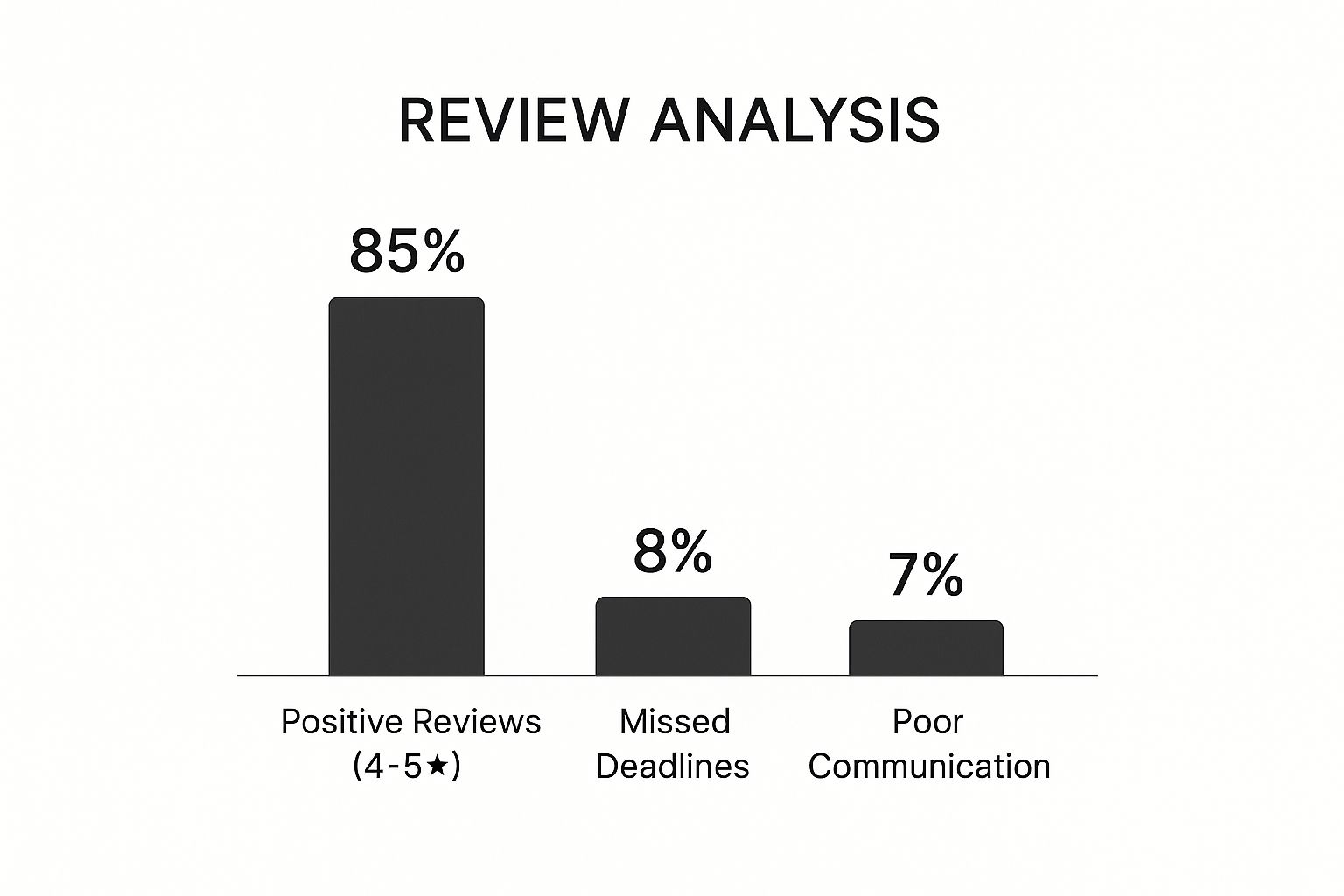
As you can see, while most experiences are positive, recurring problems like poor communication are the kind of operational issues you need to be on high alert for.
Speaking Directly to Their Clients (How to Choose a Digital Marketing Agency)
Once an agency makes it onto your shortlist, it’s time to ask if you can speak with one or two of their current clients. Any decent agency will be more than happy to provide references. This is your chance to get a genuine feel for what working with them is actually like.
But just asking, “Are you happy with them?” is a waste of an opportunity. You need to go deeper. Prepare a few specific, open-ended questions designed to uncover how the agency performs when the pressure’s on.
Asking a reference how an agency handled a challenge is far more revealing than asking about their successes. Every campaign has its hurdles; you want to know if you’ll have a proactive problem-solver or a team that disappears when things get tough.
Here are a few questions I’ve found to be particularly insightful when speaking to references:
- Can you describe their communication and reporting process? How responsive are they?
- Could you share an example of a time they brought a new, proactive idea to the table?
- And the most important one: Tell me about a time a campaign wasn’t going as planned. How did the agency handle it?
The answers to these questions will give you a much clearer picture of an agency’s character and reliability than any sales pitch ever could.
How to Choose a Digital Marketing Agency: Why UK Market Knowledge Is Non-Negotiable
Picking a digital marketing agency without a deep-rooted understanding of the UK market is a bit like trying to navigate London with a map of New York. Sure, the basics of digital marketing might seem universal, but how you apply them is intensely local. A strategy that works wonders in the US or Europe can fall completely flat here.
The UK isn’t one single market. What clicks with consumers in Manchester is different from what works in Brighton. A campaign that resonates in Scotland might miss the mark entirely in Wales. An agency with boots on the ground gets these subtle, yet absolutely critical, distinctions.
Cultural and Regional Nuances Matter
An agency that truly gets British culture knows how to create campaigns that feel genuine. They understand the specific humour, the seasonal shifts in mood, and the right tone to strike on different platforms. This local insight is your best defence against making costly and frankly embarrassing mistakes that can turn off your target audience in a heartbeat.
This local knowledge translates directly into smarter strategy. A UK-based team will just know:
- The key purchasing seasons: They’ll think beyond Christmas, factoring in the impact of Bank Holidays, school half-terms, and other UK-specific events that drive spending.
- Regional search terms: They’ll optimise for “solicitors” not “attorneys,” and they’ll know the local slang that powers those all-important ‘near me’ searches.
- Platform preferences: They know which social media platforms are actually gaining traction with specific UK demographics, making sure your budget goes where your customers are.
You’re not just hiring a team to run ads; you’re bringing on a partner who understands the cultural fabric your brand exists in. That’s a massive competitive edge that a generic, overseas agency simply can’t offer.
The sheer scale of the UK digital market makes this expertise even more vital. With revenue from digital ads in the UK projected to rocket past £40 billion in 2025, the competition is fierce. Social media is the most popular channel, with a massive 89% of UK businesses using it, while 77% invest in SEO. On top of that, local SEO is a powerhouse, driving nearly half (46%) of all Google searches. A UK-focused agency knows how to cut through this noise and get your business noticed. For a closer look at the data, you can discover more about these digital marketing facts.
To help you prioritise, here’s a look at the most important digital marketing channels for UK businesses. Understanding their adoption rates can help you focus your questions when you start talking to agencies about their service offerings.
Key Digital Marketing Channels in the UK
| Channel | Business Adoption Rate | Strategic Importance |
|---|---|---|
| Social Media Marketing | 89% | Essential for brand building, community engagement, and direct sales. |
| Search Engine Optimisation (SEO) | 77% | Crucial for long-term organic visibility and attracting high-intent traffic. |
| Content Marketing | 75% | Builds authority, educates customers, and supports SEO efforts. |
| Email Marketing | 73% | High ROI channel for nurturing leads and retaining customers. |
| Pay-Per-Click (PPC) Advertising | 68% | Drives immediate, targeted traffic and is highly measurable. |
| Local SEO | 46% (of all searches) | Non-negotiable for businesses with physical locations or local service areas. |
This table shows just how competitive the main channels are. Having an agency that has mastered these in a UK context is the difference between blending in and standing out.
Navigating UK-Specific Regulations
Beyond cultural fluency, a UK-based agency is your first line of defence when it comes to compliance. Getting to grips with the complexities of GDPR and the ASA (Advertising Standards Authority) guidelines isn’t optional—it’s a legal requirement.
An agency that isn’t intimately familiar with these rules could accidentally expose your business to serious legal and financial trouble. A seemingly minor slip-up in how you handle user data, for example, could result in eye-watering fines under GDPR. Having a team that lives and breathes UK law is a fundamental part of protecting your business. For businesses in the capital, the competitive landscape has its own set of challenges, as detailed in this guide to digital agencies in London.
When you get down to it, prioritising an agency with proven UK experience isn’t just a preference. It’s a core requirement for effective, compliant, and culturally relevant marketing that actually connects with customers and drives real growth.
How to Choose a Digital Marketing Agency: Decoding the Agency Proposal
Right, you’ve shortlisted your agencies, and now the proposals are landing in your inbox. This is the moment of truth. It’s where an agency needs to stop talking and start showing you a concrete, strategic plan.
A generic, copy-and-paste proposal is a massive red flag. If it feels like they could have sent it to any business, they probably have. You’re looking for a document that proves they’ve actually listened to you and understood your unique challenges and goals.
Don’t just skip to the price tag at the end. A cheap but vague proposal is far more dangerous than a detailed, strategic one that costs a bit more. Does it clearly break down the scope of work? Can you see exactly what they’ll deliver and when? A top-tier proposal will often include a 90-day plan, giving you a crystal-clear picture of what to expect right from the get-go.
Key Questions to Clarify
Before you even think about signing on the dotted line, make sure you have solid answers to these questions:
- Who, specifically, is going to be my day-to-day contact?
- What are the exact contract terms? How much notice do I need to give?
- How are you actually going to measure and report on performance?
A proposal is more than just a quote. It’s a direct reflection of an agency’s commitment, strategic thinking, and transparency. It should leave no room for doubt about their process, pricing, or the people you’ll be working with.
Getting your head around the different pricing models is also essential. To help you with that, our guide on Google Ads agency pricing breaks down all the common structures you’re likely to come across.
Your Top Questions Answered
When you’re close to picking a digital marketing agency, a few practical questions always pop up. It’s totally normal. Getting straight answers is the key to making a choice you feel good about—one that fits your budget and your vision for the business.
Let’s run through some of the most common questions we get from UK business owners just like you.
How Much Should a UK Agency Cost?
This is the big one, isn’t it? Agency costs can be all over the place, depending on what you need and their level of experience. For a small business dipping its toes in with one service, like SEO or PPC, you’re typically looking at a retainer of £1,000 – £3,000 per month.
If you’re a more established company aiming for a bigger, multi-channel strategy, you should expect to set aside somewhere in the region of £3,000 – £10,000+ per month. The crucial thing here is to think about the value and potential return you’ll get, not just hunting for the lowest price tag.
Specialist vs Full-Service Agency: Which Is Better? (How to Choose a Digital Marketing Agency)
Honestly, this comes down to what you need right now. If you’ve got a specific, burning problem—say, a Google Ads account that’s just haemorrhaging cash—a specialist PPC agency has the deep, focused know-how to dive in and stop the bleeding, fast.
On the other hand, if your goal is to build a strong, consistent brand across different platforms and you’d rather have one single point of contact driving the strategy, a full-service agency is almost always the more straightforward and efficient choice.
What Are the Biggest Red Flags to Spot?
As you figure out how to choose a digital marketing agency, you need to keep your eyes peeled for a few warning signs. The big ones? Anyone guaranteeing you a ‘#1 on Google’ ranking should set alarm bells ringing. Same goes for agencies pushing long-term contracts with no get-out clause or being frustratingly vague about their actual strategy.
A great partner is transparent from day one. They set realistic expectations and are genuinely curious about your business from the very first chat. If communication is poor during the sales process, that’s often a preview of the service you’ll get later.
The UK’s digital ad market is fierce. With search advertising alone pulling in a massive £13.1 billion in 2022, you need an agency that delivers real, measurable value. To see how other channels like social media and video advertising contribute, you can discover more insights about digital marketing statistics.
Ready to stop guessing with your ad spend and start seeing tangible results? The team at PPC Geeks builds data-driven PPC campaigns that deliver proper growth for UK businesses. Get your free, in-depth audit today and find out what your account is truly capable of at https://ppcgeeks.co.uk/.