
PPC for Ecommerce UK: A Guide to Driving Sales

PPC for Ecommerce UK: A Guide to Driving Sales – For any ecommerce business, PPC is your direct line to customers.Think of it as a direct-to-consumer advertising model where you pay for clicks to get immediate, highly targeted traffic straight to your product pages. It’s hands-down the fastest and most controllable way to put your products right in front of shoppers who are actively searching for what you sell. That makes it an absolutely essential strategy for growing an online store.
PPC for Ecommerce UK: Why PPC Is Your Ecommerce Growth Engine
Let’s be honest, waiting around for organic traffic to build up is a slow, often painful game. While SEO is a non-negotiable long-term strategy, pay-per-click advertising gives you that instant visibility and those measurable results you need right now. It’s a powerful accelerator for your online store’s growth, letting you get in the game and compete for customers from day one.
Picture this: a new artisan coffee brand launches into what is a very crowded market. By using targeted Google Shopping ads, they can instantly pop up alongside established giants the moment someone searches for “organic single-origin coffee beans.” This isn’t just about being seen; it’s about putting your product directly in the path of a high-intent buyer at the exact moment they’re ready to pull out their wallet.
Immediate Impact and Control
Unlike SEO, which can take months to really show significant results, a well-put-together PPC campaign can start driving traffic and sales within hours of going live. This speed gives you incredible agility. You get immediate control over who sees your products, exactly how much you spend, and the specific message they receive.
The real power of PPC lies in its predictability. You can directly control your ad spend and measure your Return On Ad Spend (ROAS), which lets you scale your marketing with confidence and make data-backed decisions about your budget.
This level of control is fundamental for any ecommerce success. It means you can test new product launches, push seasonal offers, and react quickly to market trends without having to wait for search engine algorithms to catch up. For a deeper look into the nuts and bolts, you can check out our guide on what PPC advertising is and how it all works.
To help you visualise where PPC fits in, here’s a quick comparison against its long-term counterpart, SEO.
PPC vs Organic Search for Ecommerce (PPC for Ecommerce UK)
A quick comparison to help you understand the distinct roles PPC and SEO play in your overall ecommerce strategy and where to invest for immediate vs. long-term results.
| Attribute | PPC Advertising | Organic Search (SEO) |
|---|---|---|
| Speed to Results | Immediate (within hours/days) | Slow (months to years) |
| Cost Model | Pay-per-click | “Free” clicks, but requires ongoing investment |
| Traffic Control | High and direct | Indirect, influenced by algorithms |
| Visibility | Top of search results (paid section) | Below ads, in organic listings |
| Sustainability | Stops when you stop paying | Builds long-term, lasting value |
| Best For | Promotions, new launches, quick sales | Brand authority, evergreen content |
This table makes it clear: PPC is your go-to for speed and control, while SEO builds the foundational, long-term authority. A winning strategy uses both.
Driving High-Quality Traffic
The data on this is overwhelming. In the UK ecommerce scene, PPC is a critical growth driver, with around 80% of businesses using it to fuel their sales. What’s really telling is that PPC traffic converts at a rate about 50% higher than organic traffic.
This highlights its incredible efficiency in turning browsers into buyers. It proves you’re not just buying random traffic; you’re investing in clicks from users who are already much further along in their buying journey.
Laying the Groundwork for PPC for Ecommerce UK
Jumping straight into building ads without a solid plan is a fast track to burning through your budget. Before you even think about writing ad copy, you have to get the foundation right. This initial setup is what really separates profitable PPC for ecommerce from expensive experiments that go absolutely nowhere.
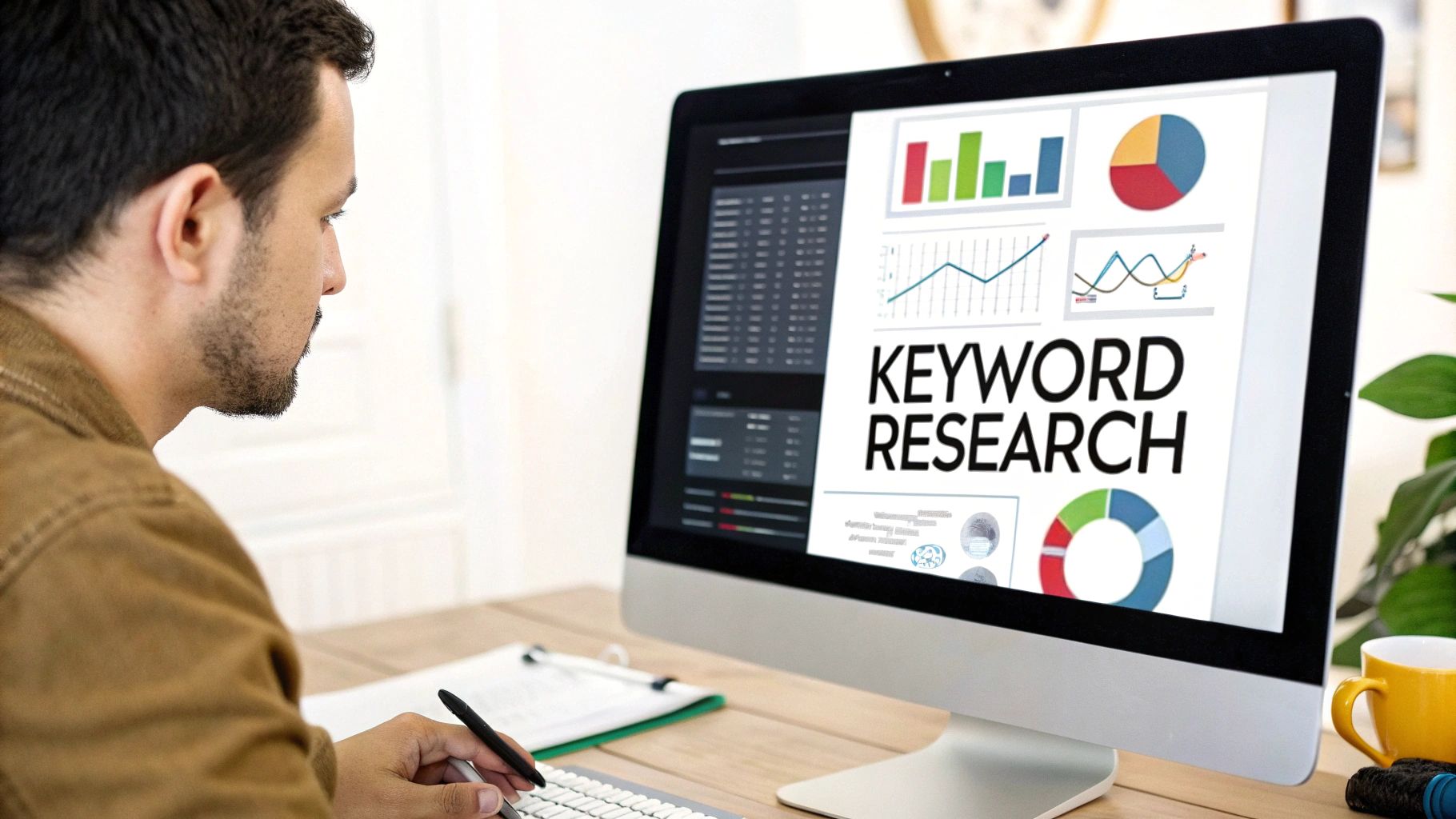
A winning campaign starts with getting inside your customers’ heads and figuring out what they’re actually searching for. This means doing some deep-dive keyword research, looking past the obvious broad terms to find the specific phrases that scream “I’m ready to buy.”
Getting Ecommerce Keyword Research Right
Your aim isn’t just to find popular keywords; it’s to uncover transactional keywords. These are the longer, more specific phrases that show clear buying intent. Just think about the difference between someone typing “running shoes” versus “buy black Nike running shoes size 10”. That second searcher is miles closer to pulling out their wallet.
To find these golden nuggets, you’ve got to think like your customer. Get specific about your product attributes and build your keyword lists around them.
- Product-specific terms: Don’t forget the brand, model, and colour. A great example is “Smeg KLF03 kettle in cream”.
- Problem-solving terms: Go after searches that your product solves. Someone might be looking for “durable waterproof walking boots for hiking”.
- Demographic-focused terms: If you sell to a specific group, call them out. Think “vegan leather handbags for women”.
This level of detail is what gets your ads in front of the most relevant people possible, which massively boosts your chance of making a sale.
Structuring Your Account for Success (PPC for Ecommerce UK)
One of the most common mistakes I see is people chucking all their keywords and products into one or two massive campaigns. A much smarter way to do it is to structure your ad account so it mirrors your website’s navigation. If your online shop has categories for “Men’s T-Shirts,” “Women’s Jeans,” and “Children’s Shoes,” then your Google Ads account should have campaigns or ad groups to match.
This mirrored structure isn’t just about keeping things tidy. It has a direct impact on your Quality Score. When your keywords, ads, and landing pages are all tightly aligned, Google rewards you with lower click costs and better ad positions.
This systematic approach makes your account much easier to manage and your performance tracking crystal clear. You can see at a glance which product lines are doing well and shift your budget to back the winners, maximising your return.
Setting Up Flawless Conversion Tracking
Last but by no means least, the most critical piece of the foundation is setting up accurate conversion tracking. If you skip this, you’re basically flying blind. You absolutely have to know which clicks are turning into sales, which products are selling, and what your actual return on ad spend (ROAS) is.
Properly installing tracking pixels from platforms like Google Ads and Meta isn’t optional; it’s essential. This lets you track the key actions people take on your site, like:
- Adding an item to the basket
- Starting the checkout process
- Completing a purchase
Armed with this data, you can see exactly which campaigns, ad groups, and keywords are making you money. That insight is the key to optimisation—it lets you cut spending on what’s not working and double down on what is.
PPC for Ecommerce UK: Choosing the Right Platforms and Campaign Types
One of the quickest ways to burn through your advertising budget is by trying to be everywhere at once. Spreading your spend too thinly across every platform under the sun just dilutes your impact. A much smarter way to approach PPC for ecommerce is to be strategic, picking the platforms and campaign types that actually make sense for your products, your audience, and your goals.
It’s all about focusing your firepower where it counts most. Think about user intent. When someone is actively searching for a product you sell, you need to be right there, front and centre. This is where a platform like Google Ads isn’t just an option; it’s essential for capturing high-intent buyers the moment they’re ready to pull out their wallets.
Mastering the Google Ads Ecosystem
For the vast majority of ecommerce brands, Google Ads is the undisputed starting point. It’s an absolute powerhouse for capturing existing demand, but simply being on the platform isn’t enough. Knowing which campaign type to use is what separates the brands that thrive from those that just throw money away.
Here are the workhorses you should be prioritising:
- Google Shopping Ads: These are your bread and butter. The visual, product-focused listings at the top of the search results are non-negotiable for ecommerce. They put your product image, price, and brand name directly in front of active shoppers, which naturally leads to much higher-quality clicks.
- Search Ads: This is classic PPC for a reason. You bid on keywords to show text ads to people who are literally typing in what they want to buy. They’re perfect for nabbing those very specific, high-intent searches like “buy hypoallergenic dog food online.”
- Performance Max (PMax): This is Google’s all-in-one, AI-driven campaign type. It uses machine learning to push your ads across the entire Google network—Search, Shopping, YouTube, Display, the works—to hunt down converting customers wherever they might be hiding.
To get a better grip on how these all fit together, it’s worth exploring the different Google Ads campaign types available for your business to see which ones align with your specific strategy.
The image below offers some solid tips for writing ad copy that actually grabs attention and makes people want to click.
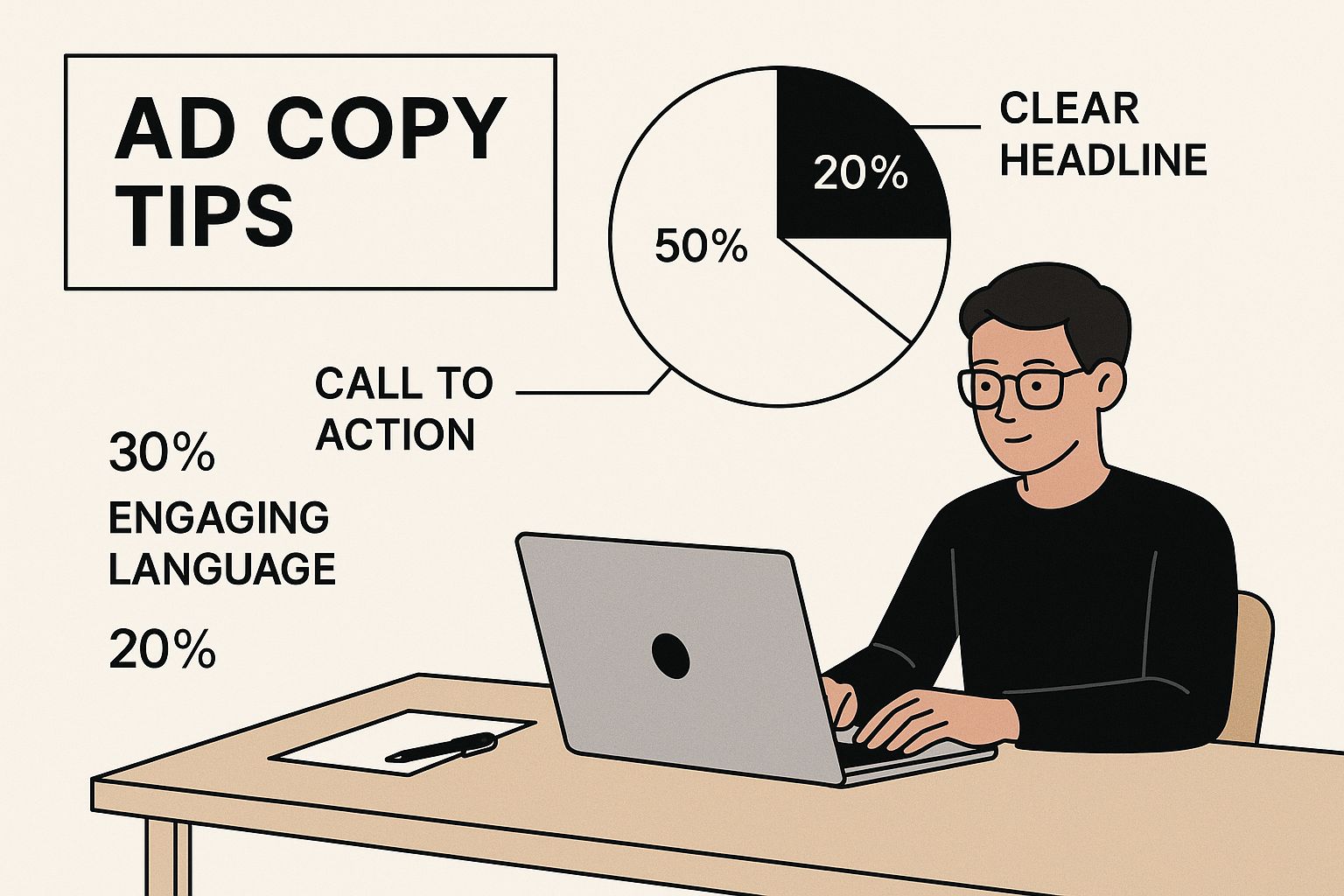
The main takeaway? Good ad copy is never vague. It’s clear, concise, and laser-focused on solving a customer’s problem or fulfilling a desire.
Expanding to Visual and Social Platforms (PPC for Ecommerce UK)
While Google is brilliant for capturing the demand that’s already there, visual platforms are where you go to create it. Channels like Meta (Facebook and Instagram) and Pinterest are absolute goldmines for product discovery, building a brand personality, and running incredibly powerful retargeting campaigns.
Imagine this: a customer adds a pair of boots to their cart on your website but gets distracted and leaves. With Meta’s dynamic ads, you can pop up in their Instagram feed later that day, showing them an ad with those exact boots, gently reminding them to finish what they started. That’s powerful stuff.
Deciding where to invest your ad budget isn’t always straightforward. This table breaks down the core strengths of the top platforms to help you align your spending with your marketing goals, whether that’s building brand awareness or driving direct sales.
Where to Invest Your Ecommerce Ad Spend
| Platform | Best For | Key Campaign Type |
|---|---|---|
| Google Ads | Capturing high-intent buyers actively searching for products. | Shopping, Search, Performance Max |
| Meta (FB/IG) | Product discovery, brand building, and powerful retargeting. | Dynamic Product Ads, Carousel Ads |
| Inspiring purchases and reaching users in planning mode. | Shopping Ads, Promoted Pins | |
| TikTok | Driving viral trends and reaching younger demographics. | In-Feed Ads, Branded Hashtag Challenges |
Ultimately, your ideal platform mix really comes down to your product. A visually stunning fashion brand will likely clean up on Instagram and Pinterest. On the other hand, a store selling highly specialised industrial parts will almost certainly get more bang for its buck by focusing its budget on Google Search and Shopping.
PPC for Ecommerce UK: Crafting Ads and Landing Pages That Convert
Let’s be blunt: a click that doesn’t lead to a sale is a wasted opportunity and a hole in your budget. The real magic of successful PPC for ecommerce isn’t just getting the click; it’s what happens afterwards. It’s all about turning a curious browser into a happy customer by creating a seamless journey from your ad to your checkout.
Your ad copy is your first handshake, and you’ve got about two seconds to make it a good one. It needs to be sharp, compelling, and laser-focused on what makes your product irresistible. Don’t just sell a jacket; sell the feeling of being warm and stylish on a cold day.
Writing Ad Copy That Sells
The secret to ad copy that actually works is specificity. Vague, generic headlines are the digital equivalent of beige wallpaper – they just get ignored. You need to pull out your unique selling propositions (USPs) and put them front and centre in your ad text.
What do you do better than anyone else? Shout about it.
- Free Next-Day Delivery: This is a massive conversion driver. In a world of instant gratification, fast and free shipping wins.
- 5-Year Warranty Included: This screams quality and builds instant trust. You’re not just selling a product; you’re selling peace of mind.
- Handmade in the UK: This is a powerful hook for customers who value quality, supporting local, and craftsmanship.
When you embed these trust signals directly into your headlines and descriptions, you’re answering questions before they’re even asked. This pre-qualifies your traffic, meaning the people who click through are much more likely to be serious about buying.
A well-crafted ad does more than just earn a click; it sets the expectation for what comes next. The messaging must be perfectly consistent from the ad to the landing page to keep that trust and momentum going.
Creating a Seamless Landing Page Experience
Once someone clicks your ad, the job is only half done. The landing page has to deliver on the promise you just made. If your ad screamed “50% Off Winter Coats,” that offer had better be the first thing they see on the page, not buried three clicks deep.
This continuity is non-negotiable. The product page you’re sending traffic to needs to be meticulously designed to convert. This goes way beyond just looking pretty; it’s about building confidence and making it ridiculously easy to buy. For a deeper dive, exploring proven PPC landing page best practices will give you a rock-solid framework.
Make sure your product pages have these essentials nailed down:
- High-Resolution Imagery: People can’t touch or feel your products online, so your images and videos have to do the heavy lifting. Show every angle, every detail.
- Compelling Product Descriptions: Ditch the dry, technical specs. Tell a story. Solve a problem for the customer. Use language that focuses on the benefits, not just the features.
- Visible Customer Reviews: Social proof is everything. Star ratings and genuine customer testimonials need to be impossible to miss.
- A Clear Call-to-Action (CTA): Your “Add to Basket” button should pop. Use a contrasting colour and clear, action-driven text. No one should ever have to search for it.
- Trust Signals: Display secure payment logos (Visa, Mastercard, PayPal), make your returns policy obvious, and show off any awards or accreditations you’ve earned.
Honestly, even tiny tweaks here can have a huge impact. A/B testing the colour of your CTA button or removing just one unnecessary field from your checkout form can be the difference that lifts your conversion rate, turning more of that hard-won ad spend into actual revenue.
PPC for Ecommerce UK: Optimising Your Campaigns With Data
Getting your ads live is just the first step. The real magic happens during optimisation. This is where you pivot from simply spending money to actively making money, turning cold, hard data into profitable campaign decisions. It’s about thinking like a data-driven marketer, which means ignoring the noise and homing in on the numbers that actually move the needle for your ecommerce sales.
Forget about vanity metrics like clicks and impressions. For any ecommerce business worth its salt, your focus needs to be razor-sharp on the figures that directly impact your bank balance. These are the metrics you should be living and breathing.
Key Ecommerce PPC Metrics to Watch
Your campaign dashboard is overflowing with numbers, but only a handful truly tell you if you’re winning or losing. To get a proper handle on your PPC for ecommerce, you absolutely must master these three:
- Return On Ad Spend (ROAS): This is the big one. It’s the simplest way to see how much revenue you’re generating for every single pound spent on advertising. A ROAS of 5:1 means you’re bringing in £5 for every £1 you put in. It doesn’t get much clearer than that.
- Cost Per Acquisition (CPA): This tells you, on average, how much it costs to secure one sale. Knowing your CPA inside and out is fundamental to understanding your profit margins and setting realistic budgets that won’t sink the ship.
- Conversion Rate: This is the percentage of people who click your ad and actually follow through with a purchase. If this number is low, it’s a massive red flag, usually pointing to a problem with your landing page experience or a mismatch between your ad and your audience.
For a deeper dive, we’ve put together a guide on the essential ecommerce PPC reporting metrics that every busy UK business owner needs to keep an eye on.
Practical Optimisation Techniques (PPC for Ecommerce UK)
Once you’re tracking the right things, you can start making smart, informed tweaks to push your performance higher. The key is not to change everything at once. Focus on small, consistent improvements – they really do compound over time.
A brilliant place to start is by building out your negative keyword list. This is you telling Google which search terms you absolutely don’t want your ads showing up for. For instance, if you’re selling premium leather shoes, you’ll want to add words like “cheap,” “repair,” and “second-hand” to your negative list. This one simple action can stop you from haemorrhaging cash on clicks from people who were never going to buy from you anyway.
Another powerhouse technique is A/B testing your ad copy. Run two slightly different versions of an ad against each other – maybe one has a different headline, or a tweaked call-to-action – and let the data tell you which one wins. You might find that a headline screaming “Free Next-Day Delivery” blows a simple product name headline out of the water. This is a never-ending process of testing and learning that helps you find the perfect message for your customers.
Optimisation isn’t a one-and-done job; it’s a constant cycle of refining your targeting, your messaging, and your bids to squeeze more performance out of your budget. The aim is to make your campaigns more efficient and more profitable, week after week.
Letting AI Handle the Heavy Lifting
Manually tweaking your bids around the clock? It’s just not possible. This is where automation becomes your best friend in the PPC world. Today’s ad platforms are packed with powerful artificial intelligence, and getting comfortable with these tools is essential if you want to stay ahead of the competition.
AI is truly a game-changer for UK ecommerce brands, helping us use our budgets more intelligently and get far better results. AI-powered tools can give you predictive analytics to forecast how products might perform, while Smart Bidding strategies work in real-time, automatically adjusting your bids to go after the most valuable conversions. This can have a massive, direct impact on your ROAS.
By handing over the granular bidding decisions to the algorithm, you free yourself up to focus on the big-picture strategy – things like creative testing, competitor analysis, and exploring new markets. You let the machine do the maths, while you do the marketing.
Common Questions About Ecommerce PPC
Even the most solid plan can leave you with a few nagging questions. When you’re new to the world of PPC for ecommerce, it’s totally normal to wonder about budgets, timelines, and what success actually looks like. We hear these queries all the time from online business owners, so let’s tackle the big ones head-on.
So, How Much Should I Actually Spend?
This is always the first question, and the honest answer is: there’s no single magic number. A much better approach is to work backwards from your business goals rather than plucking a figure out of thin air. You need to figure out your target Cost Per Acquisition (CPA) and how many sales you’re aiming for each month.
Let’s walk through a quick example. Imagine your average order is worth £100 and you operate on a 25% profit margin, giving you £25 profit per sale. You might decide you’re comfortable spending up to £20 to bring in a new customer. If your goal is to hit 50 sales a month, your starting budget is £1,000 per month (£20 CPA x 50 sales). See? This data-led method is way more effective than just guessing.
How Long Until I See Results? (PPC for Ecommerce UK)
Another big one. While you can start getting traffic the moment a campaign goes live, seeing a positive, profitable return takes a bit longer. The first phase is all about gathering crucial data.
You should mentally prepare for a “learning period” of at least 30 to 90 days. During this time, the ad platforms are figuring out who your ideal customers are, and you’re collecting the performance data needed to make smart decisions. This is when you’ll start answering questions like:
- Which search terms are just wasting my money? (negative keywords)
- Which headlines get people to click and convert? (ad copy testing)
- What changes on my product pages convince more people to buy? (landing page optimisation)
Judging a campaign’s success in the first week is a classic mistake. Real optimisation is a marathon, not a sprint. The patience you show in this initial data-gathering phase is what pays off with long-term, sustainable growth.
Can I Do PPC Myself or Should I Hire Someone?
The million-dollar question. Going it alone and managing PPC campaigns in-house can look like a great way to save money, but it comes with a seriously steep learning curve. These platforms are complex beasts, and rookie mistakes get expensive, fast. A professional who specialises in ecommerce PPC has already made those mistakes and can fast-track your path to getting results.
Bringing in a specialist agency gives you immediate access to a deep well of expertise. They live and breathe the nuances of things like Google Shopping feed optimisation and advanced bidding strategies that you might not even know exist. While it’s an investment, that cost is often completely cancelled out by avoiding wasted ad spend and hitting your sales targets much, much quicker.
Think of it as hiring a pro to get the job done right from day one.
Ready to stop guessing and start growing? The team at PPC Geeks builds data-driven PPC strategies that deliver real results for ecommerce brands. Get your free, in-depth audit today. Learn more at https://ppcgeeks.co.uk.
Author

Search Blog
Free PPC Audit
Subscribe to our Newsletter

The Voices of Our Success: Your Words, Our Pride
Don't just take our word for it. With over 100+ five-star reviews, we let our work-and our satisfied clients-speak for us.

"We have been working with PPC Geeks for around 6 months and have found Mark and the team to be very impressive. Having worked with a few companies in this and similar sectors, I rate PPC Geeks as the strongest I have come across. They have taken time to understand our business, our market and competitors and supported us to devise a strategy to generate business. I value the expertise Mark and his team provide and trust them to make the best recommendations for the long-term."
~ Just Go, Alasdair Anderson