




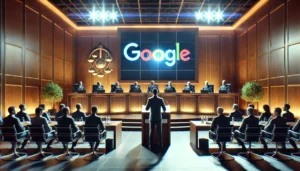
The long-awaited conclusion of the Google Ads antitrust case has arrived, with closing arguments presented by both the U.S. Department of Justice (DOJ) and Google. This trial, which has significant implications for the future of digital advertising, centres on allegations of monopolistic practices by Google in the online advertising market.
Key Takeaways
- The DOJ claims Google controls 91% of the publisher ad server market and 87% of the advertiser ad network market.
- Google argues that its market share is only about 10% when considering broader digital advertising categories.
- A ruling against Google could lead to significant changes in its advertising operations, including potential divestitures.
Google Ads Antitrust Case Concludes: Background of the Case
The trial, which began in September in a Virginia federal court, has been a focal point in the ongoing scrutiny of big tech companies. The DOJ alleges that Google has leveraged its dominance in ad exchanges and publisher ad servers to stifle competition and inflate costs for advertisers, while simultaneously reducing revenue for publishers.
Julia Tarver-Wood, a DOJ lawyer, stated, “This technology may be modern, but the practices are as old as monopolies themselves.” The government contends that Google’s acquisitions, such as DoubleClick and AdMeld, were strategic moves to suppress competition.
Google’s Defence
In response, Google’s legal team argues that its market position is a result of efficiency and innovation, which ultimately benefits small and medium-sized businesses. Google maintains that its practices have stimulated competition rather than diminished it. Karen Dunn, a lawyer for Google, suggested that the DOJ’s claims are outdated and do not reflect the current advertising landscape.
Google also challenges the DOJ’s market definitions, asserting that it faces intense competition from rivals like Meta and Amazon, particularly in emerging advertising sectors.
Google Ads Antitrust Case Concludes: Implications for the Digital Economy
The outcome of this case could reshape the digital advertising industry. If the court rules against Google, it may be forced to divest parts of its ad tech business, significantly altering its operations. Tarver-Wood emphasised that a loss for Google could benefit competitors like Microsoft, Meta, and Amazon, who are gaining market share as Google’s dominance wanes.
Broader Legal Context
This case is part of a larger legal battle for Google, which is also facing scrutiny over its search engine monopoly. A recent ruling determined that Google holds a monopoly in search, prompting the DOJ to propose measures such as divesting its Chrome browser.
Google Ads Antitrust Case Concludes: What Lies Ahead
As Judge Leonie Brinkema prepares to deliver her ruling, the implications of this case extend beyond Google. The decision could set a precedent for how antitrust laws are applied to big tech firms in the future. Legal experts anticipate that the case may not end with the trial’s conclusion, as appeals could extend the legal battle to the U.S. Supreme Court.
In summary, the Google Ads antitrust case marks a critical juncture in the ongoing debate over the power of big tech companies and their impact on the digital economy. The ruling will likely have far-reaching consequences for the advertising landscape and the regulatory environment surrounding technology firms.
Sources
- DOJ and Google clash in final round of Ad tech antitrust trial, Social Samosa.
- Judge hears closing arguments on whether Google’s advertising tech constitutes a monopoly | Chattanooga Times Free Press, Chattanooga Times Free Press.
- Google’s ad tech monopoly case draws to a close , Republic World.
- Closing Arguments Delivered In Google Ad Tech Monopoly Case, Silicon UK.
- DOJ Says Google Controls 91% Of Ad Market; Google Says 10%, Search Engine Journal.
- DOJ Presents Final Argument in Adtech Antitrust Suit vs. Google, Adweek.
- Google and the DOJ make their final arguments in the ad tech monopoly case – The Verge, The Verge.
- Why the DOJ’s Google Ad Tech Case Matters to You | TechPolicy.Press, Tech Policy Press.